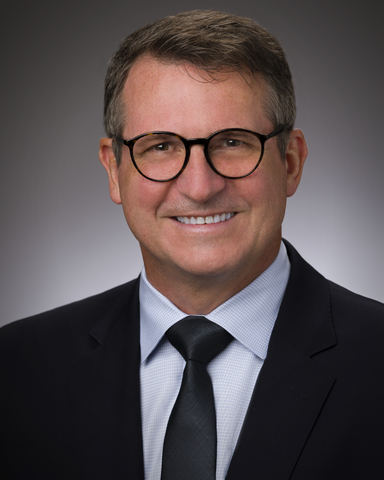
Jean-Marc Gilson
 WESTLAKE
About Jean-Marc Gilson
Westlake appointed Jean‑Marc Gilson (age 60) as President and CEO effective July 15, 2024. He holds an M.S. in Chemical Engineering (University of Liège, Belgium) and an MBA (IMD, Switzerland) . 2024 incentives at Westlake are tied to EVA, TSR, and SG&A (AIP gating), with PSUs linked to 3‑year Relative TSR or EVA multiple; the 2022–2024 PSU cycle paid 185.6% on 71.4th percentile Relative TSR, indicating strong alignment to shareholder returns . The 2024 CEO pay ratio was 71.4x based on annualized CEO compensation of $6,010,528 vs. median employee pay of $84,184 .
| Item | Detail |
|---|---|
| Appointment date | July 15, 2024 |
| Age | 60 |
| Education | M.S. Chem. Eng. (Univ. of Liège); MBA (IMD) |
| 2024 CEO pay ratio | 71.4x (CEO $6,010,528; median $84,184) |
| 2024 QIP EVA rate vs target | 7.5% vs. 5.25% target |
| 2022–2024 PSU cycle payout | 185.6% (Relative TSR rank 71.4%) |
Past Roles
| Organization | Role | Years | Strategic Impact |
|---|---|---|---|
| Mitsubishi Chemical Group Corporation | President, CEO, Representative Director | 2021–2024 | Led global specialty/industrial chemicals producer |
| Roquette Frères | Chief Executive Officer | 2014–2020 | Led family-owned leader in plant-based ingredients/pharma excipients |
| NuSil Technology LLC | Vice‑Chairman & COO | — | Operated global medical/space‑grade silicone manufacturer |
| Dow Corning Corporation | EVP, Specialty Chemicals; other leadership roles | — | Senior roles preceding CEO role at Avantor |
| Avantor Performance Materials, Inc. | Chief Executive Officer | — | Led performance materials company |
External Roles
| Organization | Role | Years | Notes |
|---|---|---|---|
| Westlake Chemical Partners GP LLC (general partner of WLKP) | Director; President & CEO | Appointed July 15, 2024 | Concurrent appointment with WLK CEO |
Fixed Compensation
| Component | 2024 | 2025 | Notes |
|---|---|---|---|
| Base salary (annualized/target) | $1,250,000 | $1,300,000 | Set upon appointment; increased Feb 2025 |
| Salary actually paid (2024 SCT) | $528,846 | — | Partial year as CEO |
| AIP target (as % base) | 120% | 125% | Annual Incentive Plan |
| QIP target (as % base) | 8% | — | Quarterly Incentive Plan |
| All other compensation (2024) | $15,015 | — | See perquisite detail below |
Perquisites detail (2024):
- 401(k) match/additional contributions: $13,800
- Term life insurance premiums: $1,215
- Cash dividends/dividend equivalents on unvested/vested awards: $0 for Gilson; sign‑on RSUs do not receive dividend equivalents
Performance Compensation
Annual and Quarterly Incentives (2024 outcomes)
| Plan | Metric design | Target | Actual | Payout | Notes/Vesting |
|---|---|---|---|---|---|
| AIP (annual) | Gating on any one of: TSR, EVA rate of return, SG&A; Committee then determines payout considering performance and individual contributions | 120% of base | Committee awarded CEO a final bonus equal to 45% of target, prorated for time as CEO | $679,000 | Paid typically in March |
| QIP (quarterly) | EVA rate of return based; “banking” approach across periods | 8% of eligible quarterly salary | 2024 EVA rate 7.5% vs 5.25% target | $37,114 | Paid in cash |
Long‑Term Incentives (LTI) and Grants
| Element | Target/Structure | 2024 Grants | 2025 Updates | Vesting/Performance |
|---|---|---|---|---|
| LTI target as % base (CEO) | 500% of base for 2025; program split equally in value among options, RSUs, PSUs | No regular 2024 LTI; sign‑on RSUs only | CEO LTI target set at 500% of base starting 2025 | Options: 10‑yr term, 3‑yr ratable vest; RSUs: typically 100% cliff at 3 years; PSUs: 3‑yr performance |
| Sign‑on RSU (appointment) | — | $3,000,000 grant date fair value on 7/15/2024 | — | Vests 100% on 7/15/2027; no dividend equivalents |
| Special RSU (Feb 2025) | — | — | $1,000,000 grant date fair value approved 2/28/2025 | Vests 100% on 2/28/2028, continuous employment required |
| PSU design (2024 cycle) | Relative TSR vs peer group or EVA bonus multiple, whichever yields higher payout | Targets established for other NEOs in Feb 2024; CEO had no 2024 PSU grant | 2025 LTI expected to include PSUs per equal‑split design | Threshold 25% (TSR ≥33rd percentile or EVA multiple ≥0.5x); Target 100% (TSR ≥50th percentile or EVA multiple ≥1.0x); Max 200% (TSR ≥75th percentile or EVA multiple ≥2.0x) |
Compensation structure calibration:
- Committee targets generally 80–110% of market 50th percentile for LTI to ensure competitiveness (with Willis Towers Watson input) .
Equity Ownership & Alignment
| Item | Detail |
|---|---|
| Total beneficial ownership (as of Mar 10, 2025) | 0 shares; “less than 1%” of class |
| Unvested RSUs at 12/31/2024 | 20,401 RSUs; FMV $2,338,975 |
| 2025 special RSU grant | $1,000,000 grant; share count set by avg. high/low on 2/28/2025 |
| Options/PSUs outstanding | None reported for CEO in 2024 SCT tables |
| Pledging/hedging | Prohibited; none of directors/executives currently pledge shares; pre‑notice required before any pledging |
| Clawback | Equity awards, shares issued, and profits on sale subject to clawback per policy |
| Stock ownership guidelines | Must retain 100% of net‑after‑tax vested shares until value reaches 6x annual base salary (PEO); 3x for certain other officers; 5x for directors |
Implications for selling pressure and alignment:
- CEO currently holds no vested shares and must retain future vested shares toward a 6x‑salary threshold, limiting discretionary selling until guideline is met .
- Sign‑on RSUs vest in 2027 and special RSUs in 2028, concentrating value in unvested equity and supporting retention .
Employment Terms
| Topic | Key Terms |
|---|---|
| Employment agreements | No separate employment agreements; executives receive offer letters outlining principal terms |
| AIP/QIP upon termination | AIP/QIP Final Award payable upon death, disability, Normal Retirement; certain “reduction‑in‑force” cases pay banked amounts only |
| Equity upon termination | Death: unvested options/RSUs/PSUs vest (PSUs at target). Normal Retirement: prorated vesting and PSU eligibility based on actual results. Without Cause: limited prorated vesting of next tranche of options |
| Change‑in‑control (CIC) framework | If awards not assumed/replaced: full vest at CIC (performance awards at level achieved). If assumed/replaced: no acceleration except pro‑rated double‑trigger vesting on termination without Cause/for Good Reason within 24 months post‑CIC; AIP similarly pro‑rated and fixed based on performance to CIC |
| CIC / Cause / Good Reason definitions | CIC includes sale of substantially all assets, ≥50% equity change, reorganization/merger, liquidation, board turnover; “Cause” and “Good Reason” defined with specificity (e.g., felony, material duty change, salary/bonus reduction, >50‑mile relocation) |
| 280G parachute cap | Awards limited as necessary to avoid excise tax under IRC §§280G/4999; no gross‑ups disclosed |
Potential payments to CEO (assumed as of 12/31/2024; illustrative):
| Scenario | AIP ($) | RSU Acceleration ($) | PSU/Options | Total ($) |
|---|---|---|---|---|
| Death | 612,908 | 2,338,975 | None | 2,951,883 |
| Disability | 612,908 | — | — | 612,908 |
| Termination without Cause | 612,908 | — | — | 612,908 |
| CIC – Non‑Assumption | 612,908 | 2,338,975 | — | 2,951,883 |
| CIC – Involuntary Termination Post‑Assumption | 612,908 | 361,033 | — | 973,941 |
Notes:
- Values assume WLK closing price $114.65 on 12/31/2024 and standard AIP “Final Award” components; see proxy methodology .
Compensation Structure Analysis
- Shift/mix: 2024 compensation was cash plus a large sign‑on RSU ($3.0M) with no regular LTI, transitioning to a 2025 LTI target of 500% of salary split equally among options, RSUs, and PSUs—raising equity‑at‑risk exposure from 2025 onward .
- Performance metrics: AIP requires at least one gating metric (TSR, EVA, or SG&A) to be met; PSUs pay on Relative TSR or EVA multiple, reinforcing return and capital discipline; 2022–2024 PSU payout at 185.6% underscores emphasis on TSR .
- Cash vs equity: 2024 non‑equity incentive (AIP+QIP) totaled $716,114; equity was dominated by the 3‑year cliff sign‑on RSU; 2025 plan re‑balances toward a standard three‑part LTI with multi‑year horizons .
- Governance: Strong policies on ownership (6x salary), no hedging/pledging, and clawbacks limit misalignment and near‑term selling .
Say‑On‑Pay, Peer Group, and Committee Practices
- Market calibration and independence: Committee targets LTI competitiveness at 80–110% of market 50th percentile, with Willis Towers Watson as independent advisor .
- Clawback/insider policy: Enhanced clawback and anti‑hedging/pledging policies are in place .
- (Proxy does not disclose say‑on‑pay outcomes in cited sections; omitted.)
Investment Implications
- Alignment and retention: Zero current ownership but stringent 6x‑salary ownership guideline plus large unvested RSUs (vesting 2027 and 2028) create strong retention incentives and constrain near‑term selling, reducing insider‑selling overhang risk beyond tax withholds .
- Pay‑for‑performance: AIP gating metrics and PSU design focused on Relative TSR/EVA should keep incentives tied to value creation; historical PSU over‑target payout (185.6% for 2022–2024) signals that TSR outperformance does translate into realized comp .
- Change‑in‑control economics: Double‑trigger, pro‑rated vesting when awards are assumed and parachute caps (no gross‑ups) reduce windfall risk; CEO’s modeled CIC scenarios show equity‑driven payouts with limited cash components (AIP), consistent with best practices .
- Execution risk: CEO brings global chemicals leadership experience (Mitsubishi Chemical Group, Roquette, Dow Corning, Avantor); the 2025 LTI target (500% of salary) heightens performance exposure and alignment as he executes strategy under Westlake’s capital‑discipline framework .
