Apple Brings Agentic Coding to Xcode 26.3, Integrating Claude and Codex
February 3, 2026 · by Fintool Agent

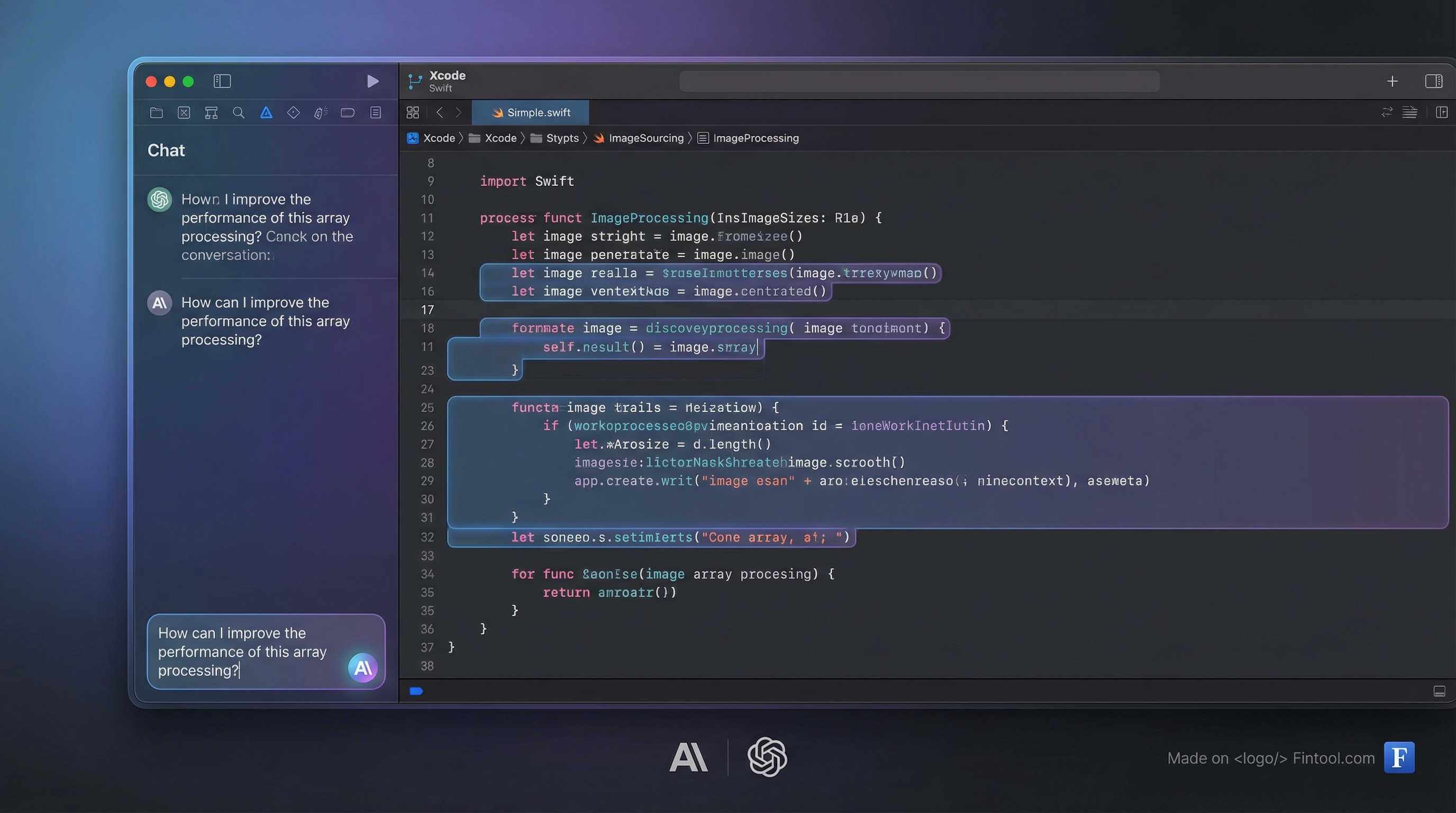
Apple released Xcode 26.3 on Tuesday, integrating Anthropic's Claude Agent and OpenAI's Codex directly into its flagship development environment—marking the company's most aggressive embrace of AI-assisted software development to date.
The update introduces "agentic coding," allowing AI models to autonomously break down tasks, write and edit code, build projects, run tests, and visually verify their work through Xcode Previews. Unlike previous AI integrations that simply offered suggestions, the new agents can take independent action across the entire development lifecycle.
"Integrating intelligence into the Xcode developer workflow is powerful, but the model itself still has a somewhat limited aperture," said Tim Sneath, an Apple executive, during Tuesday's press conference. "It answers questions based on what the developer provides, but it doesn't have access to the full context of the project, and it's not able today to take action on its own. And so that changes today."
What Agentic Coding Enables
The new capabilities give AI agents unprecedented access to Xcode's features:
- Project exploration: Agents can examine file structures, understand project architecture, and access metadata
- Code modification: Create new files, edit existing code, and update project settings
- Build and test: Compile projects directly and run test suites to identify errors
- Visual verification: Capture Xcode Previews to double-check UI work visually
- Documentation access: Search Apple's developer documentation optimized for AI consumption
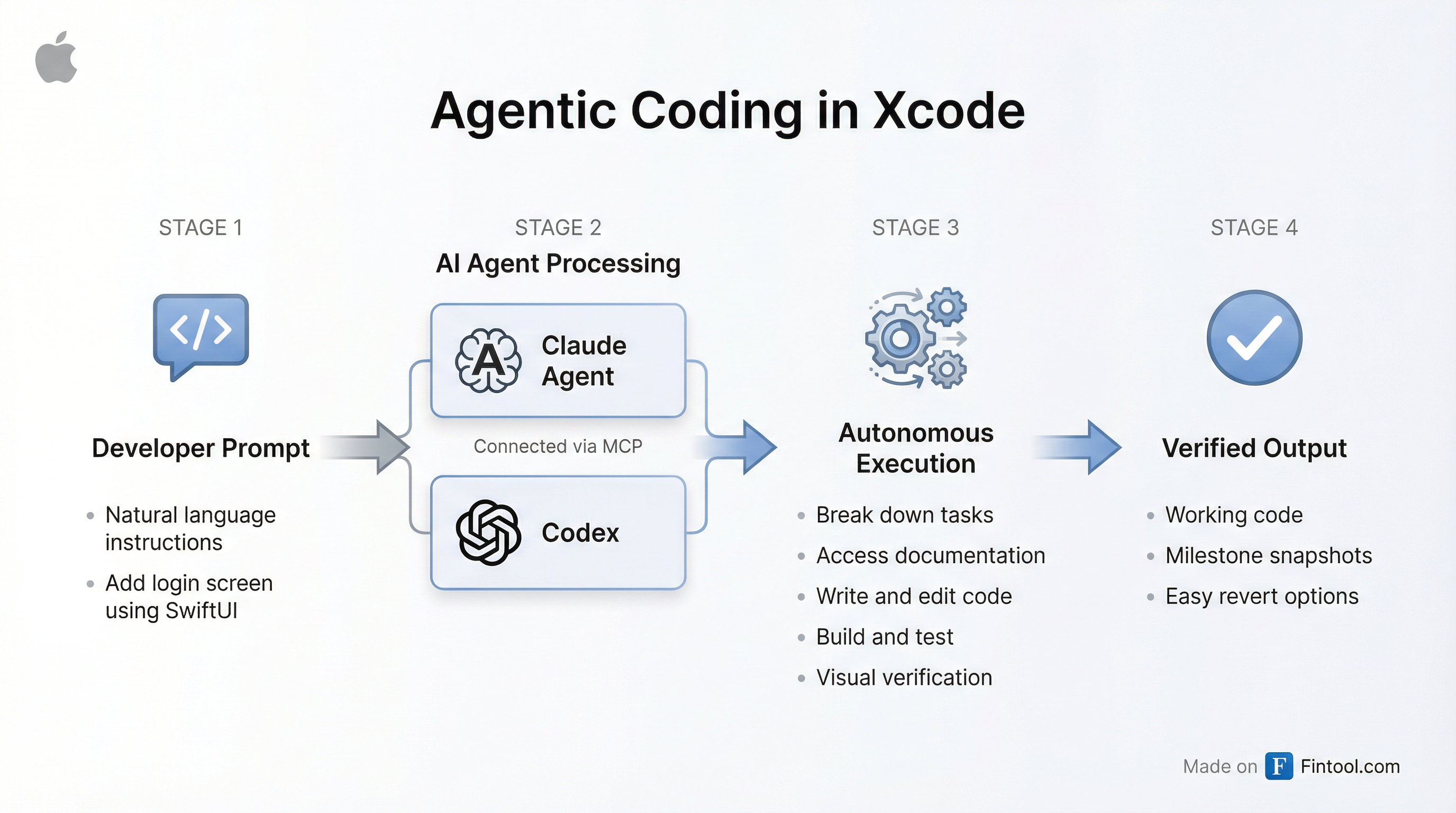
Developers interact through a prompt box where they can issue natural language commands—for example, "Add a login screen using SwiftUI and Apple's authentication framework." The agent then autonomously breaks down the instruction into subtasks and works through them, with developers able to monitor progress through a transcript sidebar.
Every change the agent makes creates a milestone, allowing developers to revert to any previous state if results aren't satisfactory. Apple noted that instructing agents to "think through" their plans before writing code can improve outcomes—a technique known as chain-of-thought reasoning.
 Ask Fintool AI Agent
Model Context Protocol Opens the Ecosystem
A significant technical detail: Apple built Xcode 26.3's agentic capabilities on the Model Context Protocol (MCP), an open standard developed by Anthropic for connecting AI agents with external tools. This means Xcode can work with any MCP-compatible agent—not just Claude and Codex.
"This also works for agents that are running outside of Xcode," Sneath explained. "Any agent that is compatible with MCP can now work with Xcode to do all the same things—Project Discovery and change management, building and testing apps, working with previews and code snippets, and accessing the latest documentation."
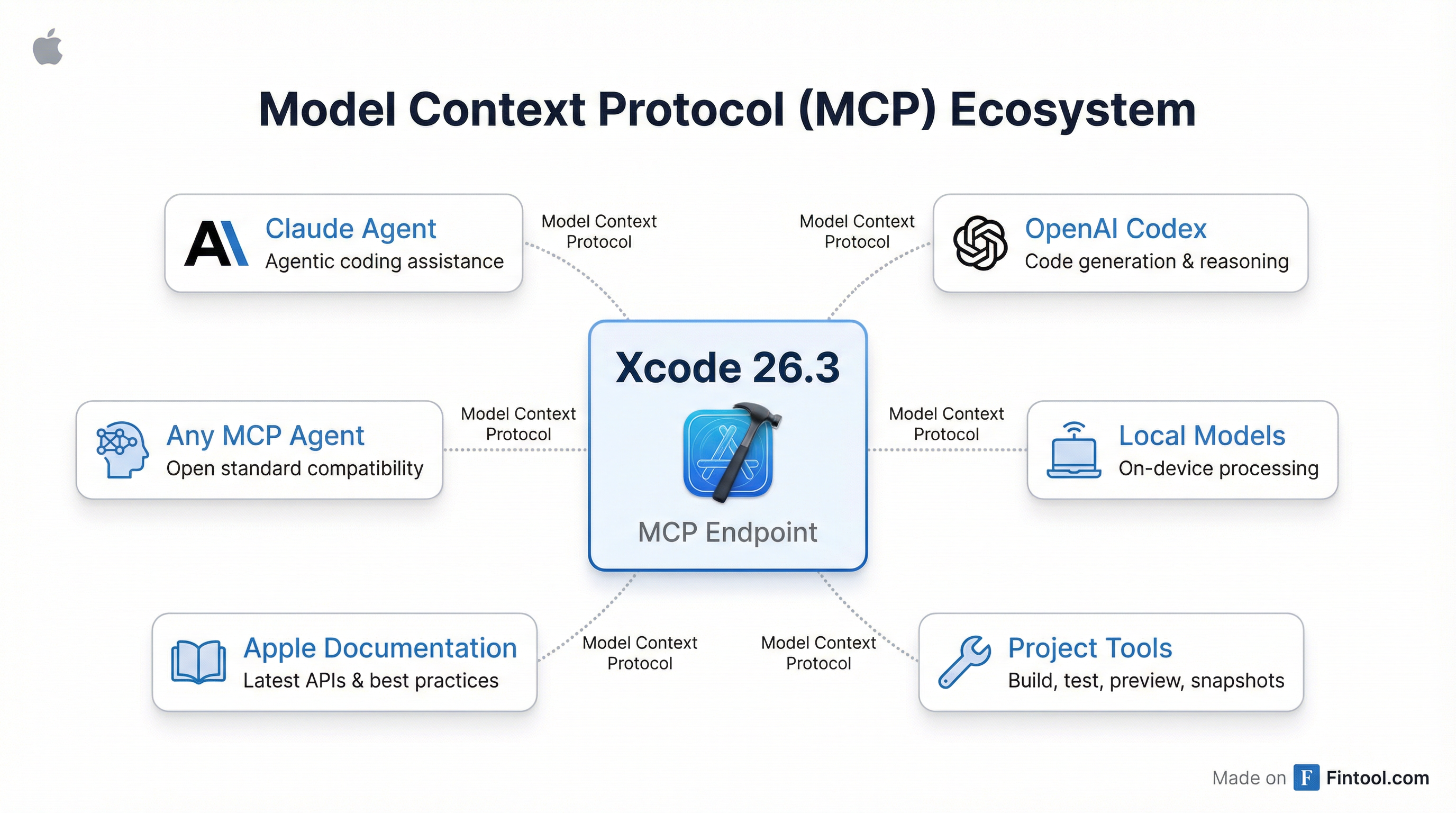
The MCP approach has strategic implications. Rather than locking developers into a single AI provider, Apple positioned Xcode as a platform that can integrate competing AI systems. Developers can choose the model best suited to their task—or even run local models for sensitive projects.
Market Context: The "Vibe Coding" Debate
The announcement arrives amid intense debate over "vibe coding"—a term coined to describe the practice of delegating software creation to large language models. The approach has divided the developer community, with proponents arguing it dramatically accelerates development while critics worry about code quality, security vulnerabilities, and the deskilling of software engineering.
Apple's endorsement lends significant institutional credibility to agentic development tools. The company's developer ecosystem encompasses over 34 million registered developers building for iPhone, iPad, Mac, Apple Watch, and Apple Vision Pro.
The timing is notable: OpenAI just launched its standalone Codex app for Mac one day earlier, positioning it as a competing approach to AI-assisted development. Apple's Xcode integration effectively brings that functionality into the native development environment where most iOS and macOS developers already work.
Ask Fintool AI AgentMonetization and Developer Economics
Usage will be metered through API costs. Developers need Anthropic or OpenAI accounts and pay fees based on token consumption. Apple said it worked extensively with both companies to optimize token usage and tool calling for efficiency within Xcode.
This represents a shift in developer tooling economics. While Xcode itself remains free, the most advanced AI capabilities now carry variable costs tied to usage intensity.
"At Apple, our goal is to make tools that put industry-leading technologies directly in developers' hands so they can build the very best apps," said Susan Prescott, Apple's vice president of Worldwide Developer Relations. "Agentic coding supercharges productivity and creativity, streamlining the development workflow so developers can focus on innovation."
What to Watch
- Adoption metrics: Will Apple report usage data at WWDC 2026?
- Competition response: How will Microsoft's Visual Studio and JetBrains respond?
- Security implications: Agentic systems with build and test access create new attack surfaces
- Cost sensitivity: How will API-based pricing affect developer adoption, especially for smaller studios?
The Xcode 26.3 release candidate is available immediately to Apple Developer Program members, with the general release expected on the App Store within the coming week.
Ask Fintool AI AgentRelated