BlueScope Rejects $8.8B Steel Dynamics Bid: 'An Attempt to Buy Us on the Cheap'
January 07, 2026 · by Fintool Agent

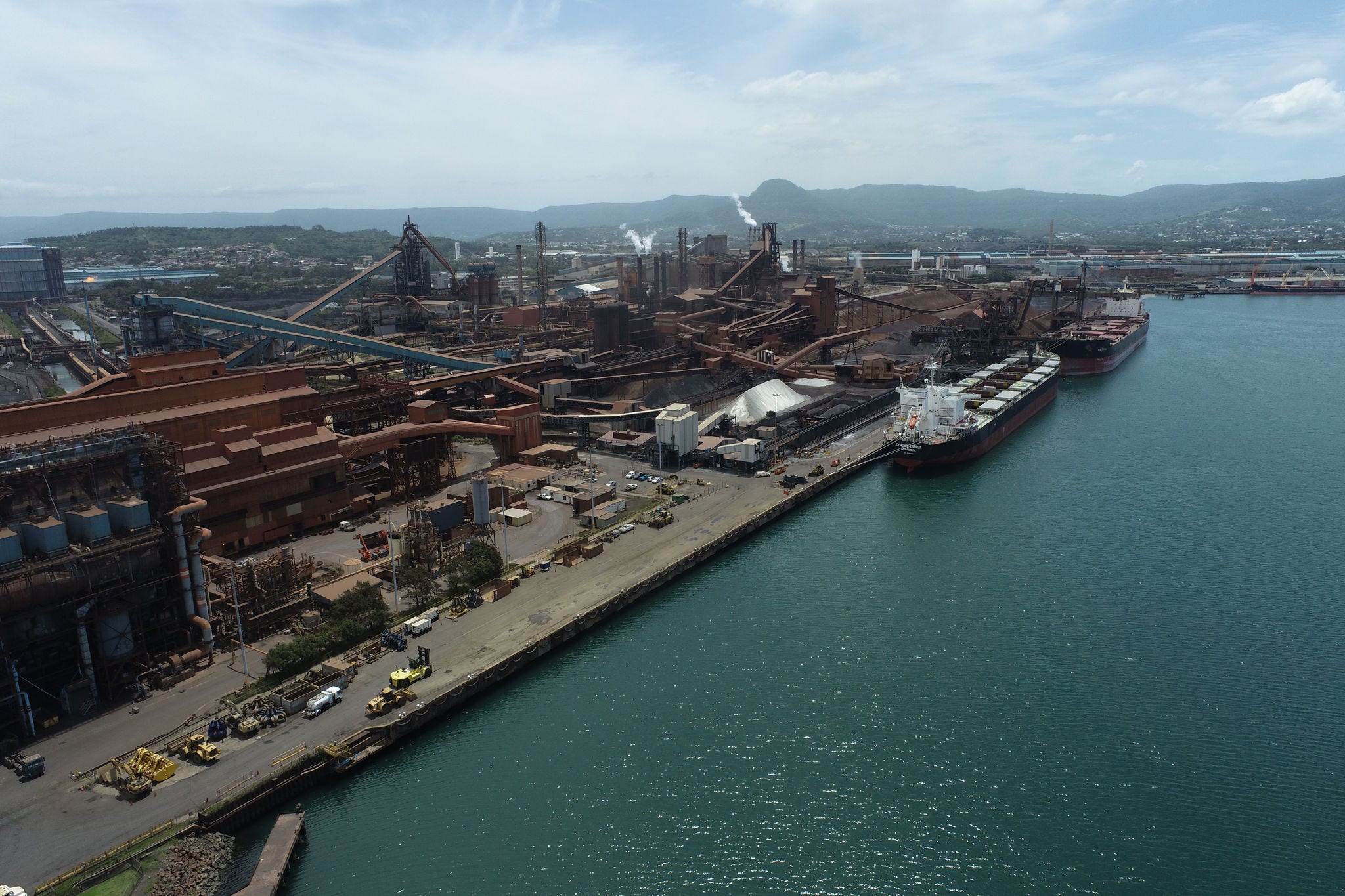
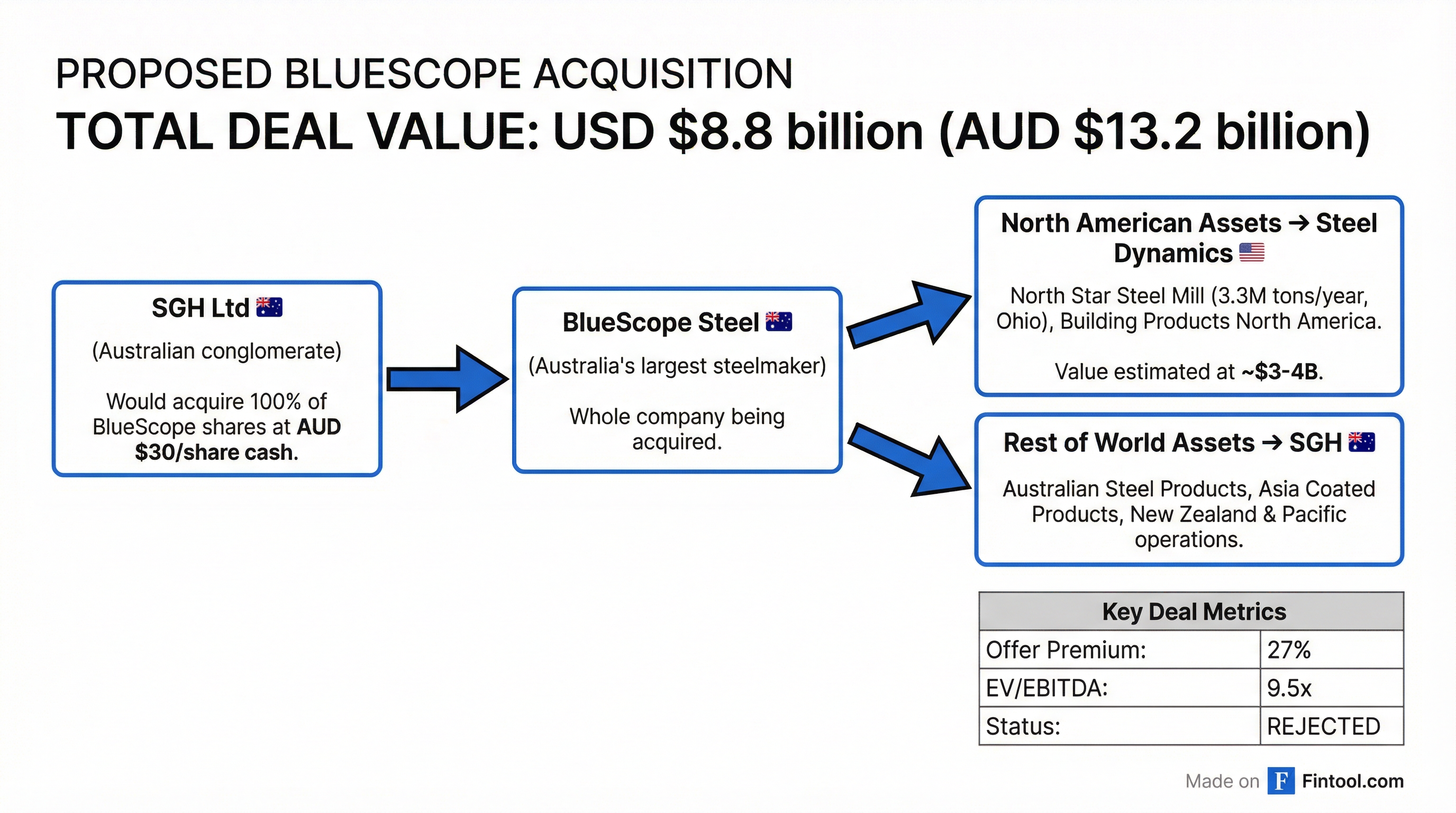
Australia's largest steelmaker rejected an $8.8 billion joint takeover bid from Steel Dynamics and Australian conglomerate SGH on Wednesday, accusing the bidders of trying to acquire the company "on the cheap" and declaring that BlueScope is "worth considerably more than what was on the table."
The rejection marks the fourth time Steel Dynamics has been rebuffed in its pursuit of BlueScope's prized North American steel assets—operations that have become increasingly valuable under Trump's 50% steel tariffs. BlueScope shares closed just 0.4% below the A$30 offer price, suggesting investors believe a higher bid could still materialize.
The Rejected Offer
Under the proposed deal structure, SGH would acquire 100% of BlueScope's shares for A$30 per share in cash (USD $20.04), valuing the company at A$13.2 billion ($8.8 billion). SGH would then immediately sell BlueScope's North American operations—including the North Star flat rolled steel mill in Ohio and Building Products North America—to Steel Dynamics, while retaining the Australian, Asian, and Pacific businesses.
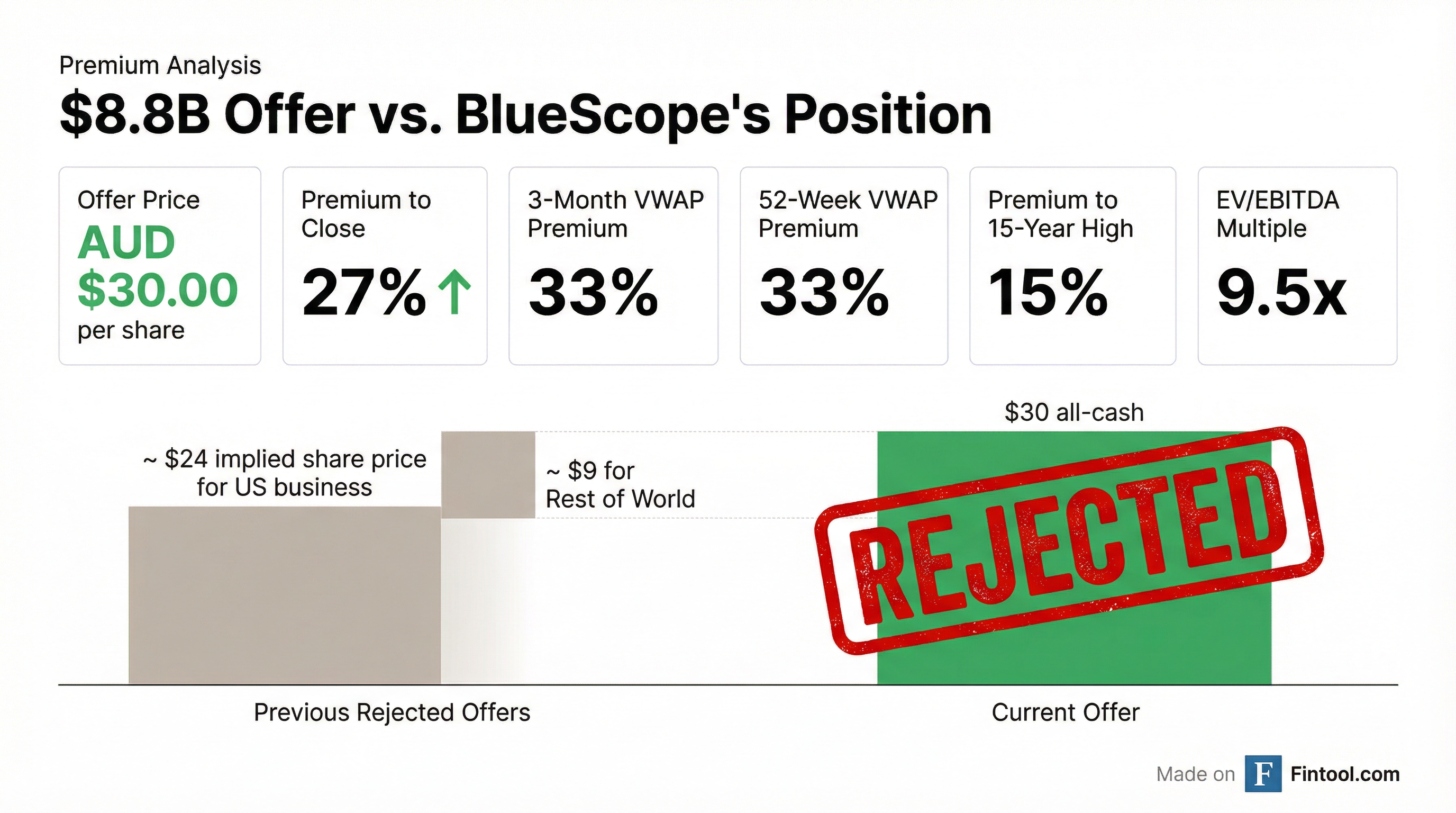
The offer represented substantial premiums to BlueScope's trading history:
| Metric | Value |
|---|---|
| Offer Price | A$30.00 per share |
| Premium to Pre-Announcement | 27% |
| Premium to 3-Month VWAP | 33% |
| Premium to 52-Week VWAP | 33% |
| Premium to 15-Year High | 15% |
| EV/EBITDA Multiple | 9.5x |
Despite the apparent generosity, BlueScope Chairwoman Jane McAloon was unequivocal in her rejection: "Let me be clear—this proposal was an attempt to take BlueScope from its shareholders on the cheap. It drastically undervalued our world-class assets, our growth momentum, and our future—and the Board will not let that happen."
 Ask Fintool AI Agent
Fourth Time Unlucky
This is the fourth approach Steel Dynamics has made for BlueScope's North American assets since late 2024. Previous bids were rejected for "significantly undervaluing BlueScope and its future prospects, and presenting significant execution risk in relation to regulatory outcomes."
BlueScope confirmed that last year's rejected bids implied values of approximately A$24 per share for the US business and just A$9 for the rest of the group—a split that management found deeply insulting given the Australian operations' strategic value.
The board noted several additional concerns with the current offer:
- The bid would be adjusted for future dividend payments, reducing the effective price
- The transaction would take a long time to finalize, introducing execution risk
- The bidders sought to use BlueScope's nearly debt-free balance sheet to help fund their "opportunistic takeover proposal"
The Tariff Angle
The timing is no coincidence. Steel Dynamics' persistence reflects the transformed economics of US steel production under Trump's tariff regime.
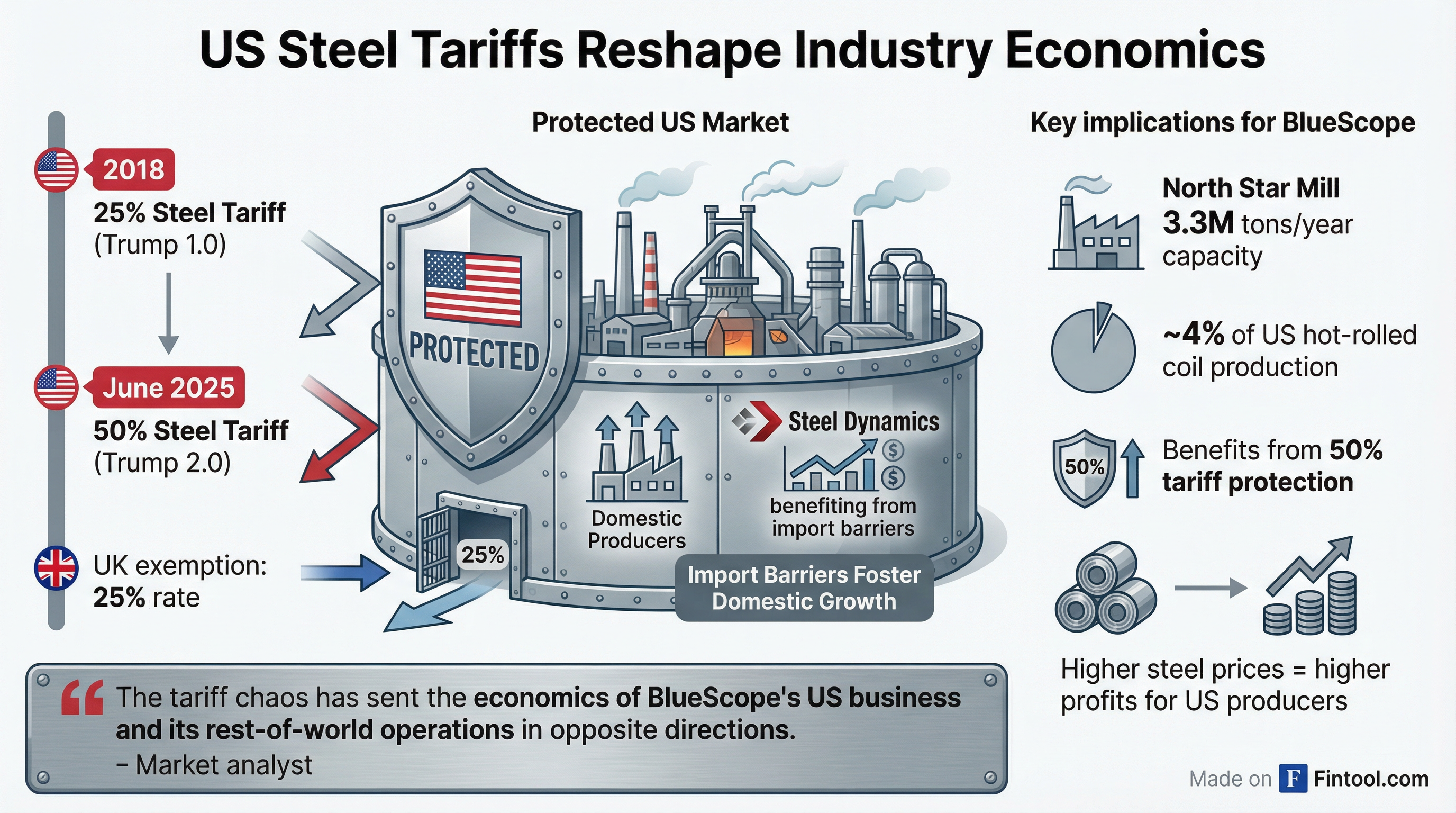
In June 2025, President Trump increased Section 232 steel tariffs from 25% to 50% for most countries, creating a formidable barrier against imports and boosting prices for domestic producers. BlueScope's North Star mill in Ohio—producing 3.3 million tons annually, representing roughly 4% of US hot-rolled coil production—has become a cash machine under this protection.
"The tariff chaos has sent the economics of BlueScope's US business, and its rest-of-world operations which are led by Australia, in opposite directions," noted one market analysis. BlueScope shares hit multi-year highs in early 2025 when the tariff increases ensured significant price and profit boosts for its US-produced steel.
Steel Dynamics, already the fourth-largest steel producer in North America, sees BlueScope's US assets as the missing piece to expand its domestic footprint and fully capitalize on trade protection.
Ask Fintool AI AgentSteel Dynamics: The Aspiring Acquirer
Steel Dynamics has built a compelling case for the combination. CEO Mark Millett stated: "We believe the acquisition of BlueScope's North American assets will be highly complementary to our existing operations and further expands our capabilities domestically. The combination of BSL's North American teams and assets with SDI would be an excellent fit in every sense and create value for all stakeholders."
The company's recent financial performance shows strong fundamentals:
| Metric | Q4 2024 | Q1 2025 | Q2 2025 | Q3 2025 |
|---|---|---|---|---|
| Revenue ($B) | $3.87 | $4.37 | $4.57 | $4.83 |
| Net Income ($M) | $207 | $217 | $299 | $404 |
| EBITDA Margin | 9.4%* | 9.4%* | 11.3%* | 13.4%* |
*Values retrieved from S&P Global
Steel Dynamics emphasized that "no equity will be required to be raised to fund the transaction," with both SGH and Steel Dynamics utilizing existing cash reserves and debt financing. The companies have assembled an advisory team including JP Morgan, Goldman Sachs, Barrenjoey, and law firms Skadden and Ashurst.
Shareholders May Hold the Key
Despite the board's emphatic rejection, the stock's trading behavior suggests some investors see potential for a higher bid. BlueScope shares closed at A$29.87 on Wednesday—just 0.4% below the offer price—after initially surging 21.5% when news of the bid leaked on Monday.
Key shareholders are watching closely:
AustralianSuper, BlueScope's largest investor with a 12.5% stake, declined to comment but could prove decisive. The pension giant has a track record of blocking perceived lowball offers—it scuttled Brookfield's A$10.6 billion bid for Origin Energy in 2023 after deeming it insufficient.
VanEck, another BlueScope investor, said the offer wasn't enough: "It's good that there's some interest in BlueScope, the underlying thought from us and looking at the valuations is it's not enough. I think they're going to have to increase the offer if they want to get any of the shareholders over the line."
Ask Fintool AI AgentWhat Comes Next
The bidders face a difficult path forward. They can increase their offer, walk away, or attempt to go hostile—though that latter option would be challenging given the complexity of the carve-out structure.
Neither SGH nor Steel Dynamics immediately responded to requests for comment on the rejection.
The saga highlights the strategic value of domestic steel production in an era of protectionism. As tariffs reshape global trade flows and boost the profitability of US-based manufacturing, assets like North Star will continue to attract attention from competitors seeking shelter behind America's trade barriers.
For BlueScope, the calculus is straightforward: with US operations delivering strong returns under tariff protection, why sell now when the good times could continue rolling?