China Pulls the Brakes: Record Turnover, Decade Highs Trigger Margin Hike and HFT Crackdown
January 19, 2026 · by Fintool Agent


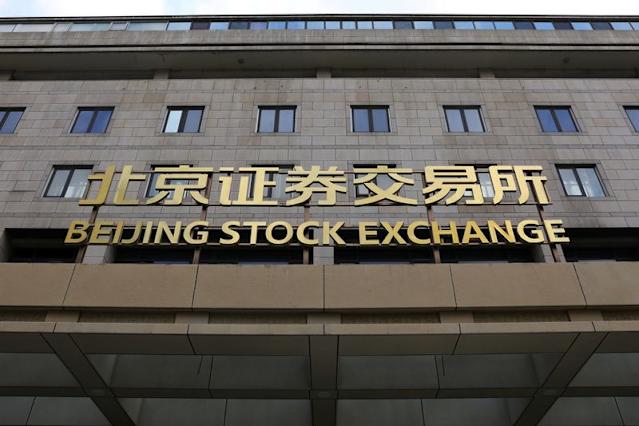
China's securities regulator is moving aggressively to cool an overheating stock market, raising margin requirements to 100% and ordering high-frequency trading firms to remove servers from exchange data centers—twin moves that take effect today and could reshape market dynamics for both domestic and foreign players.
The crackdown comes as the Shanghai Composite Index hovers above 4,100 points—a decade high—while single-day turnover hit a record ¥3.99 trillion ($556 billion) last week. The CSI 300 has now posted double-digit gains for two consecutive years, with AI and semiconductor stocks driving a speculative frenzy that has seen some IPOs surge as much as 700% on their market debuts.
The Numbers Behind the Frenzy
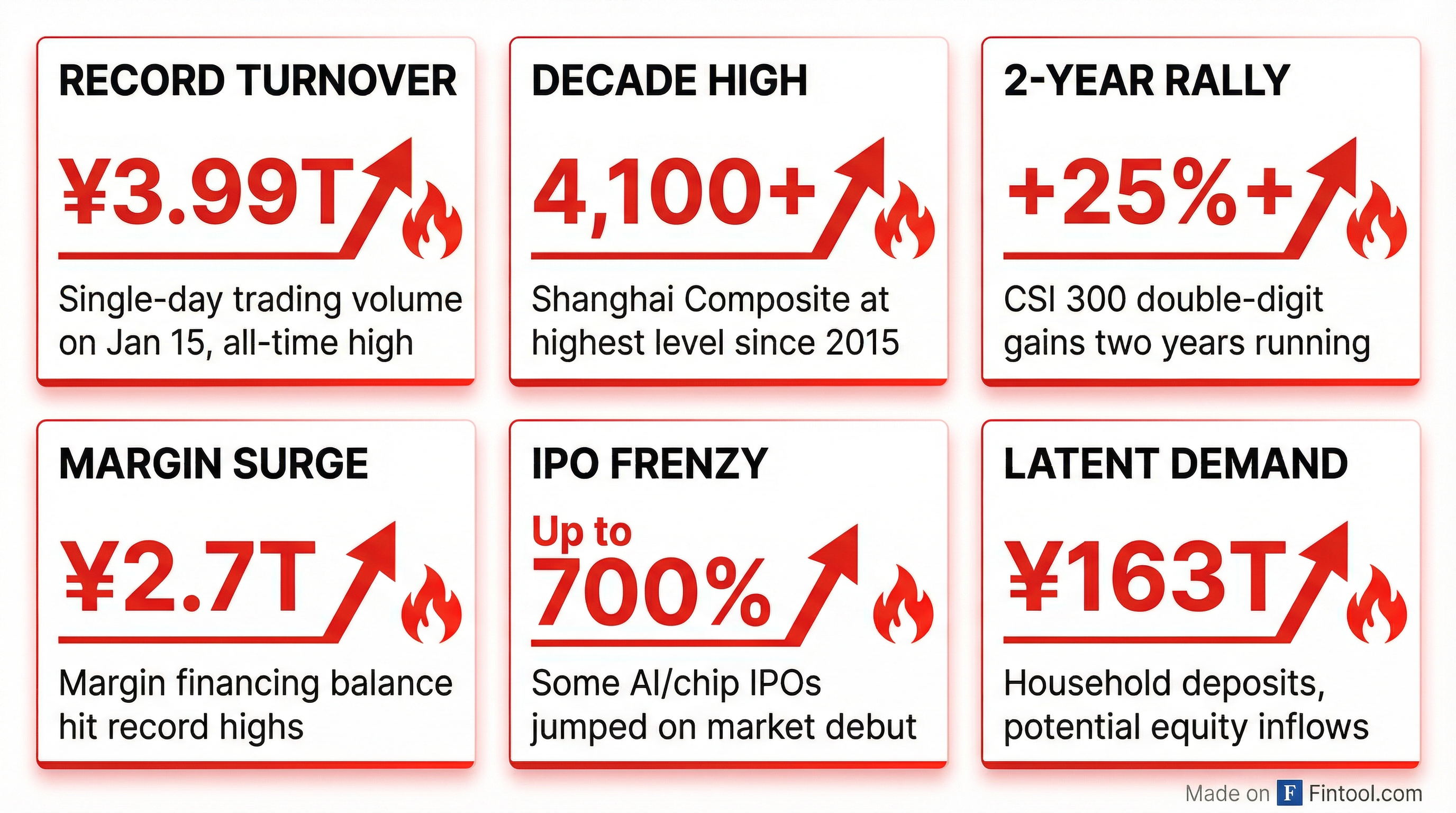
The scale of activity is staggering. Onshore turnover exceeded ¥3 trillion for three consecutive sessions before hitting the ¥3.99 trillion record on Wednesday—well above the five-year daily average of ¥1.13 trillion.
Margin financing balances have repeatedly set new highs, fueling leveraged bets on sectors from artificial intelligence to aerospace and robotics. Some listed companies have begun issuing risk warnings to investors as their share prices detach from fundamentals.
Goldman Sachs raised its year-end target for the CSI 300 to 5,200 last week—implying 9% upside—citing "artificial intelligence monetization, policy stimulus, and liquidity overshoot." The bank expects Chinese earnings growth to accelerate to 14% in 2026 and 2027, up from 4% in 2025.
 Ask Fintool AI Agent
Margin Requirements Jump to 100%
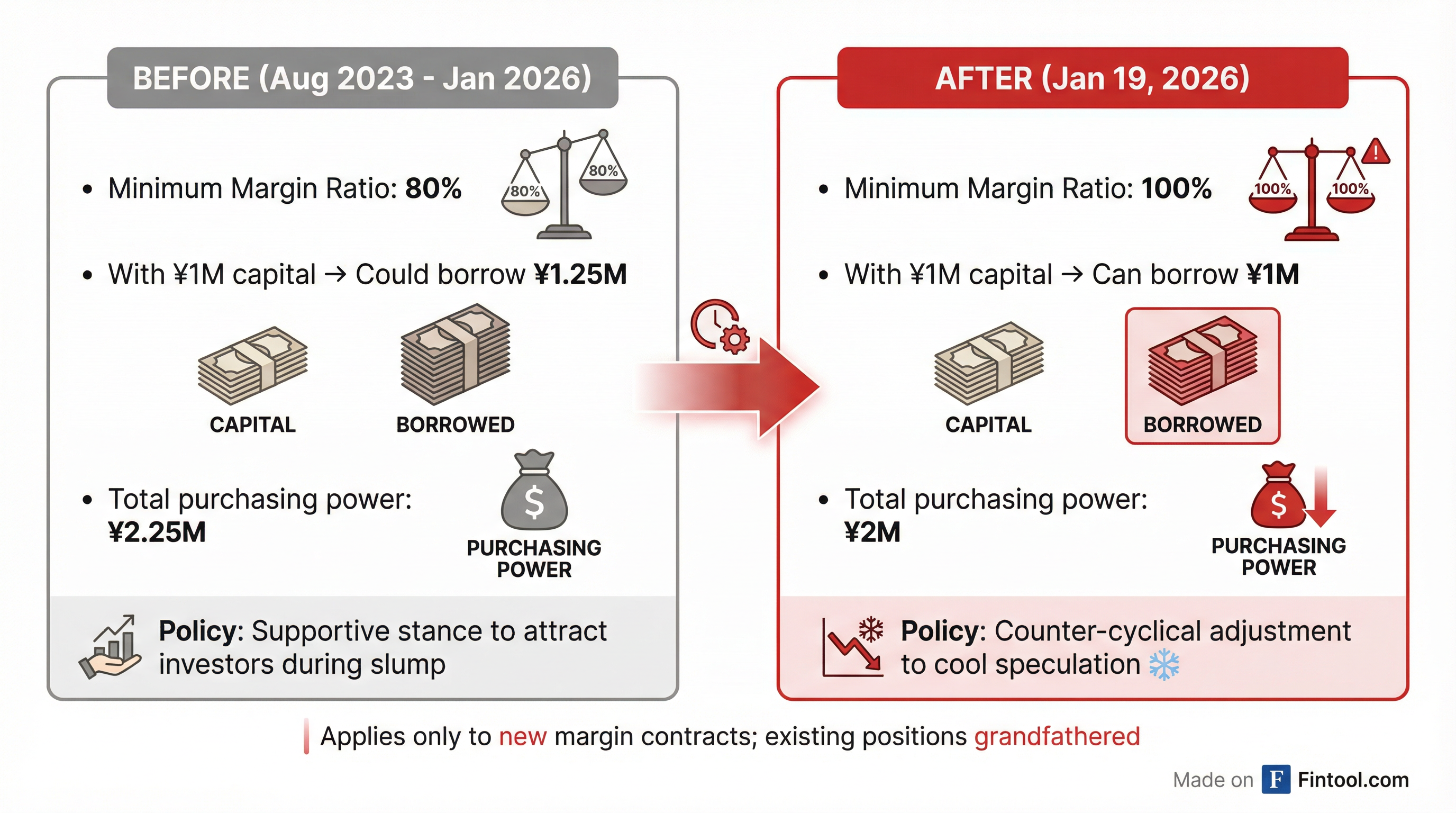
The most immediate intervention is the margin requirement change that takes effect today. The Shanghai, Shenzhen, and Beijing stock exchanges have raised the minimum margin ratio for new leveraged stock purchases from 80% to 100%, reversing a supportive measure introduced in August 2023 during a prolonged market slump.
The math is straightforward: Previously, an investor with ¥1 million in capital could borrow ¥1.25 million from brokerages, giving them ¥2.25 million in total purchasing power. Under the new 100% ratio, the same investor can only borrow ¥1 million, reducing firepower to ¥2 million.
Crucially, the change applies only to newly opened margin contracts. Existing positions and their rollovers remain grandfathered under the previous rules—a provision that limits immediate forced selling but reduces leverage for new bets.
The CSI 300 dropped 0.4% after the announcement, erasing an intraday gain of 1.2%.
Flash Boys Get Kicked Out
The more dramatic intervention targets high-frequency traders. Chinese regulators have ordered brokerages to remove servers situated in data centers run by futures and stock exchanges—stripping away the millisecond speed advantages that quantitative firms depend on.
The Shanghai Futures Exchange has given brokers until the end of February to relocate equipment for high-speed clients, with other clients facing an April 30 deadline. The move affects both domestic quant funds—estimated at ¥1.55 trillion ($222 billion) by Citic Securities—and major global players including Citadel Securities, Jane Street Group, and Jump Trading.
"Previously, you were in the house. Now, you're being driven out," one person with direct knowledge told Reuters. "It will likely trigger an industry shake-up as some players will lose a key advantage."
The crackdown follows China's "quant quake" in early 2024, when computer-driven trades triggered a market crash. Last October, regulators rolled out rules governing futures program trading. The latest measure represents an escalation—physically separating traders from the exchanges they trade on.
Ask Fintool AI AgentThe Regulatory Timeline
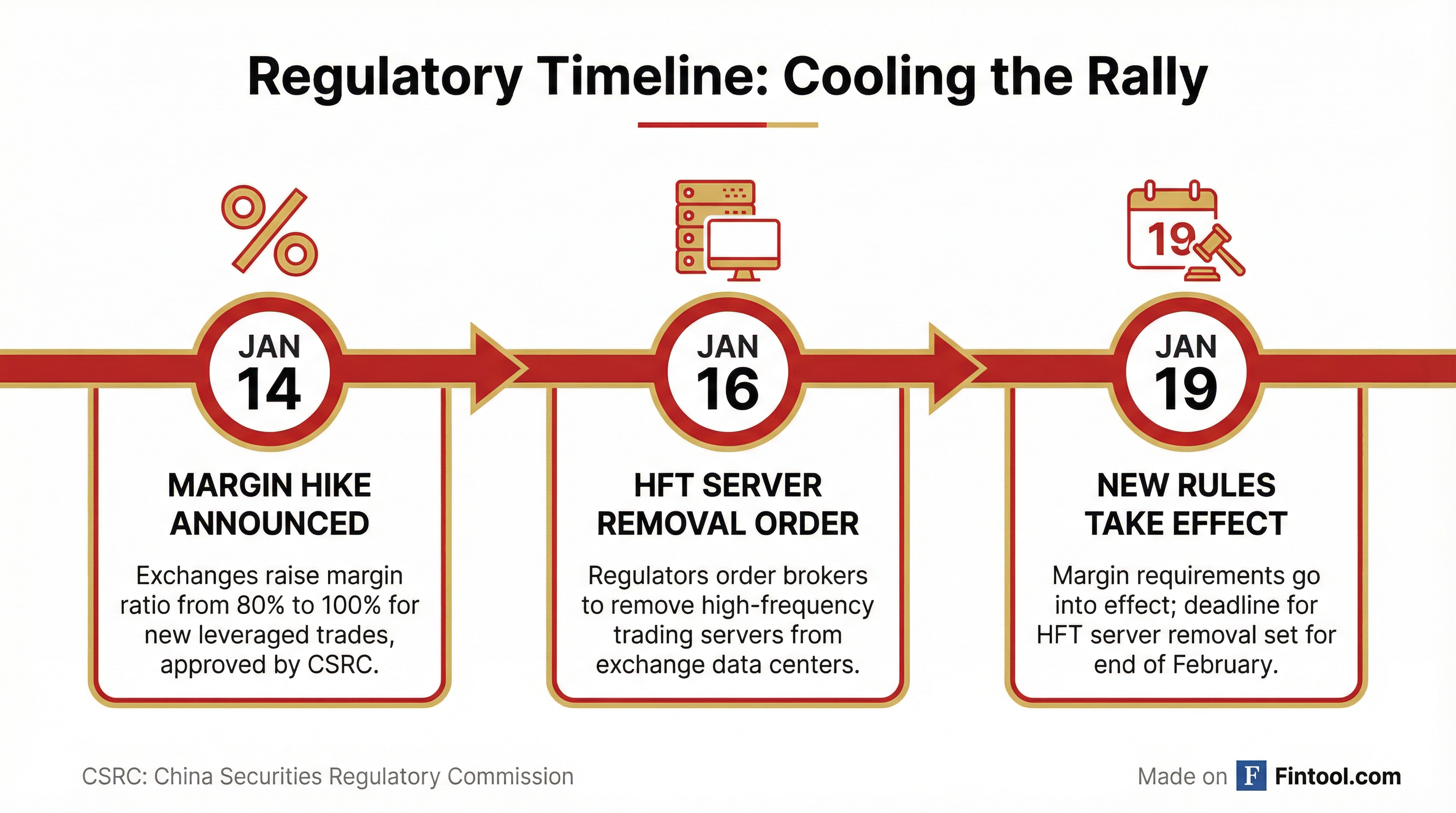
The CSRC has framed its interventions as "counter-cyclical adjustments"—the same language it used in 2023 when loosening rules to support a struggling market. At its January 15 work conference, the regulator said it would "prevent sharp market swings" and take a "tough approach against excessive speculation and market manipulation."
"They do want to keep the markets focused on investment, as opposed to speculation," said Shane Oliver, chief economist at AMP. "They'd probably prefer more traders like Warren Buffett focused on value, as opposed to high frequency trading, which they would see as speculative."
The Bull Case Persists
Despite the regulatory tightening, some analysts remain constructive. The ¥163 trillion in Chinese household deposits represents "significant latent demand for equities," according to China Daily, providing a solid basis for the market's medium-term rise.
"A slow bull trend in equities will continue this year," said Wang Dan, chief investment officer at Shenzhen Sunrise Asset Management. "While economic fundamentals and data don't support a full-blown bull market, declining interest rates, stronger willingness for investment allocation and long-term positioning in undervalued assets bode well for a structural bull run to persist."
UBS expects the yuan to strengthen in the near term, reflecting robust exports and trade surplus. Chinese equities trade at 10.7 times forward earnings on the Hang Seng China Enterprises Index, compared to 22.3 for the S&P 500—a valuation gap that continues to attract global capital.
What to Watch
- Margin balances: Will the 100% requirement slow leverage growth, or will investors simply commit more capital?
- HFT adaptation: How will Citadel, Jane Street, and domestic quants adjust strategies without exchange co-location?
- IPO activity: Will the crackdown cool the frenzy in AI and semiconductor listings?
- Foreign flows: The MSCI decision on Indonesia could redirect attention to China as a relative value play
- CSRC enforcement: The regulator has promised to crack down on manipulation—will penalties follow rhetoric?
The challenge for Beijing is threading the needle: cooling speculation without killing a rally that has finally restored investor confidence after years of underperformance. The last time regulators tightened margin rules aggressively—during the 2015 bubble—the market crashed 40% in two months.
This time, officials appear to be moving more gradually, grandfathering existing positions and telegraphing changes in advance. Whether that's enough to engineer a "slow bull" rather than a boom-bust cycle will define China's market trajectory in 2026.
Ask Fintool AI AgentRelated: