ESPN Closes Billion-Dollar NFL Network Deal, League Takes 10% Stake
February 1, 2026 · by Fintool Agent

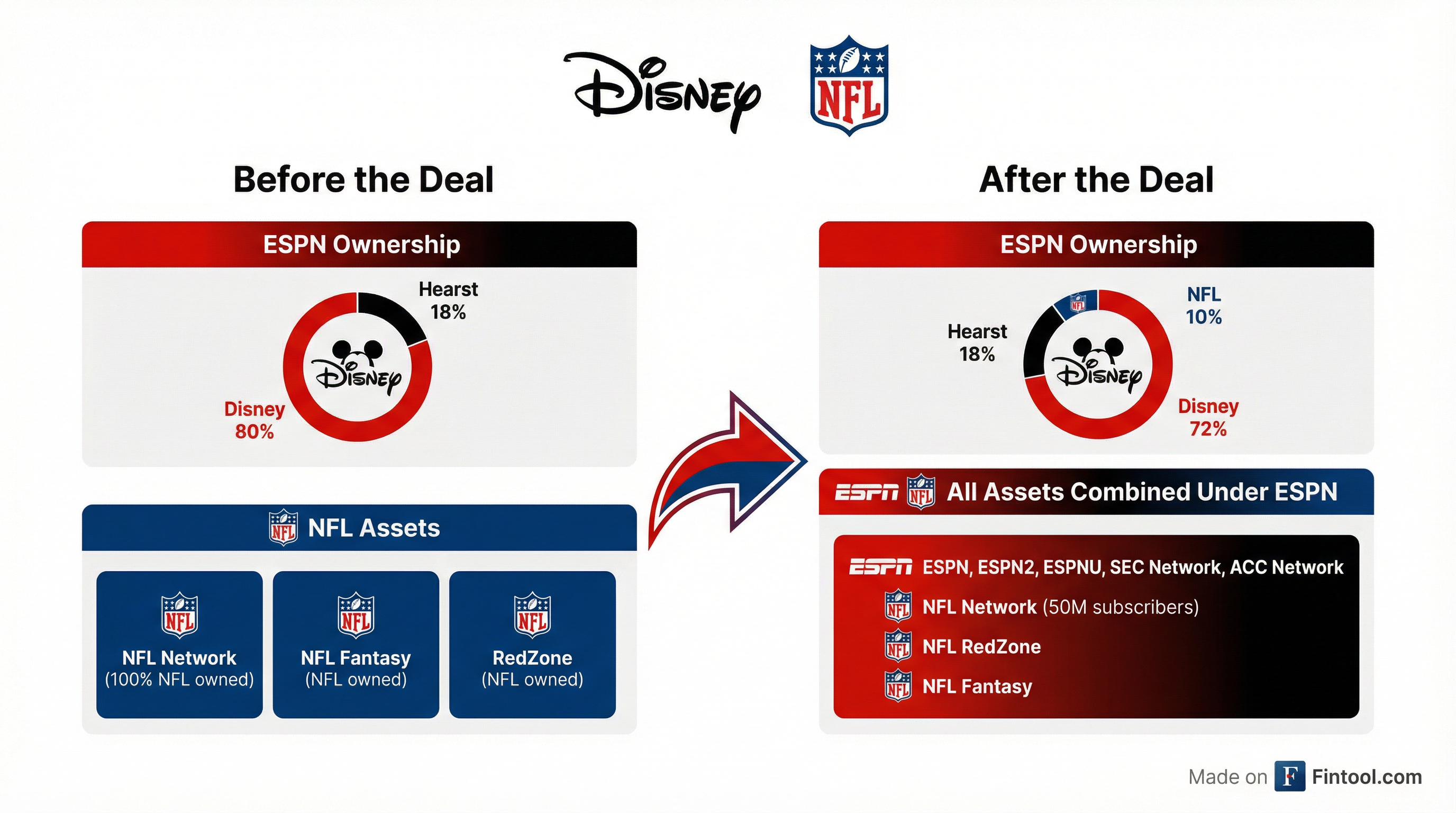
Government regulators approved ESPN's acquisition of NFL Network, NFL RedZone linear rights, and NFL Fantasy late Saturday, officially closing the most significant sports media deal in years just as Super Bowl LX preparations begin in San Francisco. In exchange, the NFL takes a 10% equity stake in ESPN—the first time America's most popular sports league has owned a direct piece of its primary broadcast partner.
"The NFL and ESPN are pleased to announce the official closing of the sale of NFL Network and other NFL Media assets to ESPN," the parties said in a joint statement. "As we look to the future, NFL fans can look forward to expanded NFL programming, greater access to NFL Network, innovative Fantasy experiences and unparalleled coverage of America's most popular sport."
The transaction reshapes the ownership structure of Disney's sports crown jewel: ESPN will now be 72% Disney, 18% Hearst, and 10% NFL—down from Disney's prior 80% stake.
What Changes for Viewers
The integration timeline is deliberate. NFL employees will officially become ESPN employees in April 2026, but viewers won't notice changes on NFL Network until then. The full integration of NFL Network into ESPN's streaming ecosystem will happen at the start of the next NFL season in fall 2026.
Key viewer-facing changes:
| Change | Details |
|---|---|
| Monday Night Football doubleheaders | Eliminated—four games shift to NFL Network |
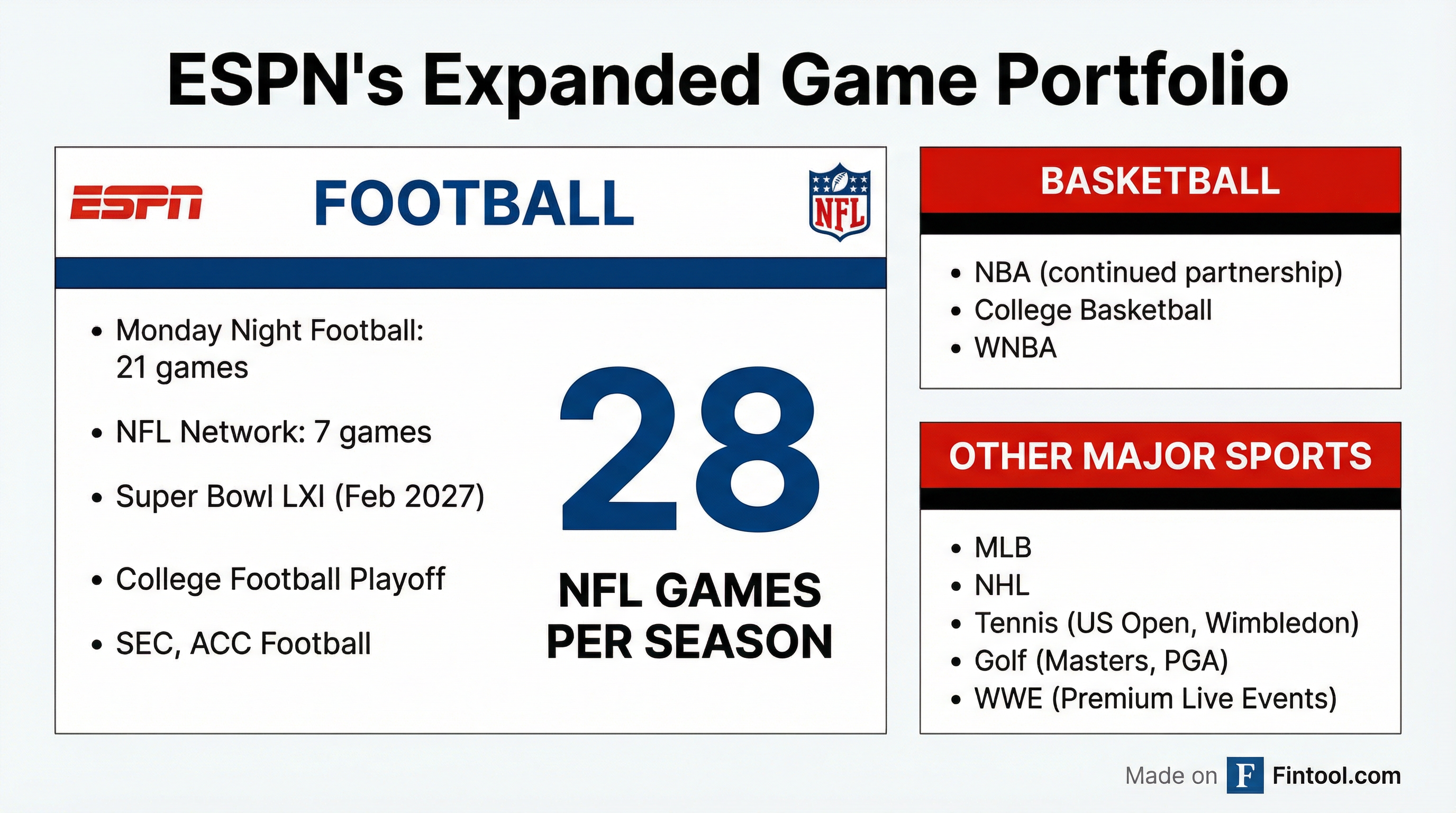
| Total ESPN games | 28 per season (21 on ESPN, 7 on NFL Network)—up from 25 |
| NFL Network access | Included in ESPN Unlimited ($29.99/month) |
| Fantasy Football | NFL Fantasy merges with ESPN Fantasy |
| RedZone | ESPN owns linear distribution rights |
ESPN has long aired Monday Night Football and already has a decades-long relationship with the league, but NFL Network—with nearly 50 million subscribers—brings significant distribution that bolsters ESPN's direct-to-consumer ambitions.
 Ask Fintool AI Agent
The Strategic Logic
For Disney, the deal advances ESPN's streaming-first strategy. ESPN launched ESPN Unlimited in August 2025 at $29.99/month, offering access to all ESPN-branded television channels. Adding NFL Network to that bundle—at no additional cost—provides immediate value to subscribers and could accelerate sign-ups.
The timing also positions ESPN for its first-ever Super Bowl broadcast in February 2027. Having NFL Network integrated before then creates programming synergies and cross-promotion opportunities during the league's biggest week.
The NFL's 10% stake in ESPN creates an unprecedented alignment of incentives. The league now benefits directly from ESPN's success—not just from rights fees, but from the network's overall performance. This could make ESPN a more likely partner when the NFL's current 11-year, $110+ billion broadcast deals come up for renegotiation later this decade.
Disney's Sports Segment Performance
The deal comes as Disney's Sports segment shows resilience despite broader cord-cutting pressures. ESPN's domestic advertising revenue grew 14% year-over-year to $4.3 billion in fiscal 2025, driven by higher rates and expanded college football programming.
| Metric | FY 2025 | FY 2024 | Change |
|---|---|---|---|
| Sports Segment Revenue | $17.7B | $17.6B | Flat |
| Sports Operating Income | $2.9B | $2.4B | +20% |
| ESPN Domestic Revenue | $16.1B | $15.3B | +5% |
| ESPN Subscribers | 61M | 62M | -2% |
The segment's operating income jumped 20% to $2.9 billion, partially due to the Star India transaction but also reflecting improved domestic ESPN performance. Disney's overall direct-to-consumer business—which includes Disney+, Hulu, and ESPN streaming—generated $1.3 billion in operating income in fiscal 2025, a dramatic turnaround from just $143 million the prior year.
Ask Fintool AI AgentWhat the NFL Retains
The league isn't giving up everything. The NFL will continue to own and operate:
- NFL+ (streaming service)
- NFL.com and team websites
- NFL Films
- NFL Podcast Network
- NFL FAST Channel (free ad-supported streaming)
The NFL also took back rights to four international games that were previously licensed, which it's expected to sell separately—potentially to streaming platforms like Amazon Prime Video or Netflix. As the league explores expanding to 18 regular-season games, each of its 32 teams could eventually play at least one international game per season.
RedZone's Broader Potential
One intriguing possibility: ESPN could extend the RedZone brand to other sports. The channel, which has achieved cult-like status for its format of rapidly switching between concurrent games, could theoretically work for college football, basketball, or other multi-game scenarios.
However, practical limitations exist. Unlike NFL Sunday afternoons—where ESPN now controls NFL Network rights—college football and other sports have rights fragmented across multiple networks. ESPN couldn't create a "College Football RedZone" without rights to all the games it would need to include.
What to Watch
Near-term catalysts:
- Super Bowl LX (next weekend) will be the last major NFL event before integration begins
- April 2026: NFL employees officially join ESPN
- Fall 2026: NFL Network integrated into ESPN streaming
Longer-term questions:
- Will the NFL seek equity stakes in other broadcast partners (NBC, CBS, Fox, Amazon)?
- How aggressively will ESPN price its streaming bundle as it adds more NFL content?
- Does this deal accelerate other sports leagues exploring equity-for-rights structures?
The deal's approval came faster than many expected, with the Justice Department and foreign antitrust authorities completing their reviews within months of the October 2025 announcement. For Disney shareholders, the closing provides clarity on ESPN's strategic direction as the company continues pivoting toward streaming while defending its sports franchise.
Ask Fintool AI AgentRelated: Disney (dis)