Scott Sheffield, Shale's Controversial Legend, Returns as Kimmeridge's Secret Weapon Against Coterra
January 22, 2026 · by Fintool Agent


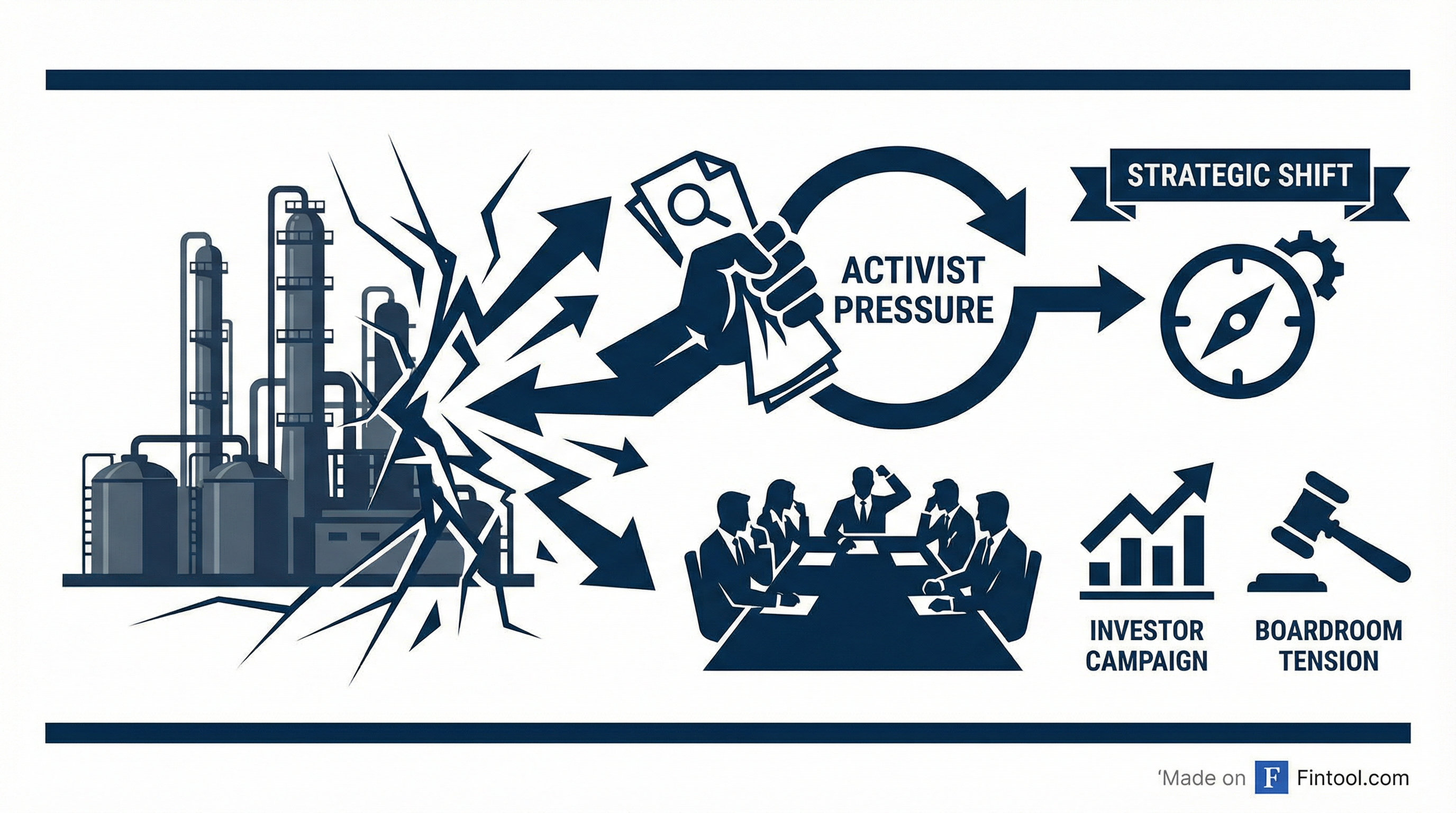
Scott Sheffield—the legendary shale executive who built Pioneer Natural Resources into an oil empire, was publicly accused by the FTC of colluding with OPEC, and then exonerated—is back. And he's bringing a gun to what was already a knife fight.
Investment firm Kimmeridge is preparing to nominate Sheffield to Coterra Energy's board as part of an escalating activist campaign, according to the Wall Street Journal. The move transforms what was a routine governance dispute into one of the most dramatic proxy battles in the energy sector—pitting Coterra's management against one of the industry's most polarizing figures.
Coterra shares rose 0.8% to $26.97 in midday trading, valuing the Houston-based oil and gas producer at roughly $20.5 billion.
The Sheffield Factor
Sheffield isn't just any board nominee. He's a living legend of American shale—and a lightning rod.
The 72-year-old co-founded Pioneer Natural Resources in 1997 and transformed it from a modest Permian Basin operator into the region's largest independent oil producer. When Exxon Mobil agreed to acquire Pioneer for $60 billion in October 2023, Sheffield was set to join Exxon's board and cement his legacy.
Then came the bombshell.
In May 2024, the FTC alleged Sheffield had "campaigned to organize anticompetitive coordinated output reductions" with OPEC, citing hundreds of text messages with cartel representatives. The agency allowed the merger to proceed but barred Sheffield from any role at Exxon—a stunning rebuke that painted one of America's most celebrated oilmen as a potential price-fixer.
Sheffield fought back ferociously. He called the allegations "false" and accused the FTC of using him as a "scapegoat." In January 2025, he sued the agency, arguing it violated his constitutional rights.
Then the tide turned. In July 2025, under new leadership, the FTC reversed its own order, concluding that the original complaint "failed to plead any antitrust law violation" and that maintaining the restrictions would "damage the FTC's credibility."
Sheffield was vindicated—but he told the FTC he had no interest in joining Exxon's board after all. Now, it appears he's found a new target.
 Ask Fintool AI Agent
Kimmeridge's Case Against Coterra
Kimmeridge, an energy-focused private investment firm managing billions of dollars, launched its public campaign against Coterra in November 2025. The firm's managing partner, Mark Viviano, didn't mince words:
"Coterra's history has been tainted by a boardroom unwilling to acknowledge its own missteps. Coterra now trades at a significant discount to both Permian and gas-focused peers, underscoring the market's rejection of a merger that prioritized self-preservation over strategic merit."
The "merger" Kimmeridge is attacking is the 2021 combination of Cabot Oil & Gas and Cimarex Energy that created Coterra. The activist argues the deal has been a disaster on multiple fronts:
The Reserve Write-Down: Within 13 months of the merger, Coterra wrote down Cabot's Marcellus proved reserves by a stunning 32%—a red flag that Kimmeridge says reflects "fundamental flaws in capital allocation, technical oversight, and board-level risk management."
The Valuation Gap: Despite owning some of the lowest-cost wells in the Delaware Basin, Coterra trades at a discount to both Permian pure-plays and gas-focused operators. The promised "diversification" premium became a complexity discount.
The Governance Concentration: Coterra combines the roles of CEO, President, and Chairman into one person—a structure that Kimmeridge says "concentrates power and diminishes accountability." Nearly 65% of S&P 500 Energy companies separate the CEO and Chair roles.
Kimmeridge's prescription is radical: sell the Marcellus and Anadarko assets, refocus entirely on the Delaware Basin, and transform Coterra into a Permian pure-play. The firm also wants an independent, non-executive chairman.
Management's Defense
Coterra's leadership, led by Chairman, CEO, and President Thomas Jorden, has a different view.
In earnings calls, Jorden has emphasized the company's flexibility across commodity cycles. When oil prices weakened in early 2025, Coterra shifted capital from Permian drilling to Marcellus gas—exactly the kind of optionality the diversified portfolio was designed to provide.
"We were built for this," Jorden said on the Q1 2025 call. "Coterra is an ark, not a party boat. Our diversified revenue, low cost oil and natural gas supply... make us tailor made to ride out this storm and thrive in it."
The company has pointed to its financial performance as evidence the strategy is working:
| Metric | Q1 2024 | Q1 2025 | Q3 2025 |
|---|---|---|---|
| Revenue | $1.36B | $1.91B | $1.64B |
| Net Income | $352M | $516M | $322M |
| Cash from Ops | $856M | $1.14B | $971M |
| EBITDA Margin | 63.3% | 63.0% | 65.0% |
Coterra has also maintained a robust shareholder return program, including one of the highest base dividend yields in the industry at over 3.4%.
Ask Fintool AI AgentWhat Sheffield Brings to the Fight
Sheffield's nomination isn't just symbolic. He brings several things Kimmeridge desperately needs:
Credibility: No one in the industry knows shale better. Sheffield's track record at Pioneer—building it into a $250+ billion enterprise before the Exxon sale—speaks for itself. If he says Coterra should focus on the Permian, shareholders will listen.
Operational Expertise: Sheffield pioneered many of the drilling and completion techniques that made the Permian Basin the most productive oilfield in history. If Coterra does refocus on the Delaware Basin, there's no better guide.
A Grudge?: Sheffield was publicly humiliated by federal regulators and forced to watch from the sidelines as Exxon absorbed his life's work. Now 72 years old and cleared of wrongdoing, he may see Coterra as a chance to prove he's still relevant—and to take on a board that, like Exxon's, didn't particularly want him.
Kimmeridge has indicated it plans to nominate four additional directors beyond Sheffield, according to the WSJ report. The firm owns slightly more than 1% of Coterra—a modest stake for a proxy fight, but large enough to command attention when wielded aggressively.
What to Watch
The proxy battle is likely to heat up as Coterra approaches its annual meeting, typically held in May. Key questions:
-
Will other shareholders join Kimmeridge? The firm's 1%+ stake gives it standing, but it will need to convince larger institutional holders that change is necessary.
-
Will Coterra engage? The company could negotiate a settlement—adding independent directors, perhaps even Sheffield himself—or dig in for a fight.
-
What's the price tag? If Kimmeridge's vision prevails and Coterra sells its Marcellus assets, what valuation can it achieve? Natural gas properties have been deeply out of favor.
-
Can Sheffield separate the roles? His nomination to the board doesn't guarantee the operational overhaul Kimmeridge wants. Even if elected, Sheffield would be one voice among many.
For now, Coterra shareholders face a choice: trust management's "ark" through the commodity storm, or bet that shale's most controversial comeback story can unlock the value Kimmeridge sees.
Ask Fintool AI AgentRelated Companies: Coterra Energy · Exxon Mobil