NASA Puts Boeing Starliner in Same Disaster Class as Challenger and Columbia
February 19, 2026 · by Fintool Agent


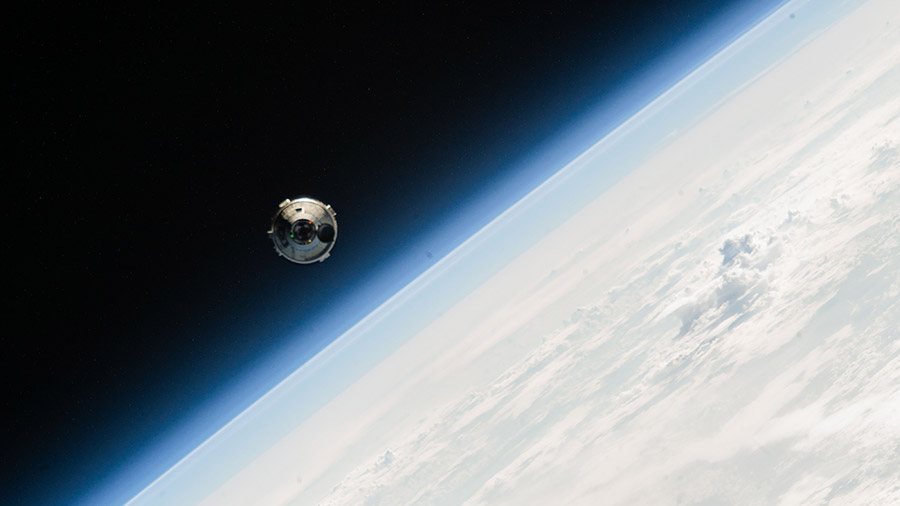
NASA formally classified Boeing's botched Starliner crewed test flight as a "Type A" mishap Thursday—the agency's most severe designation, placing it alongside the Challenger and Columbia space shuttle disasters that killed 14 astronauts.
The scathing 300-page investigation report laid bare what Administrator Jared Isaacman called "decision-making and leadership that, if left unchecked, could create a culture incompatible with human spaceflight."
Boeing shares fell 2.2% on Thursday to $233.71, extending losses from the previous session as the aerospace giant's space program troubles compounded its broader turnaround challenges.
What Happened
The Starliner spacecraft launched June 5, 2024, carrying NASA astronauts Butch Wilmore and Suni Williams for what was planned as an 8-to-14-day test mission to the International Space Station.
Five thrusters failed during the spacecraft's approach to the ISS, causing what NASA Associate Administrator Amit Kshatriya described as a loss of control: "We almost did have a really terrible day."
After propulsion system anomalies were identified in orbit, NASA decided to return the spacecraft uncrewed in September 2024, leaving the astronauts stranded on the ISS. Wilmore and Williams finally returned to Earth in March 2025—nine months after launch—aboard a SpaceX Crew-9 spacecraft.
The Report's Findings
The investigation concluded that Starliner's problems extended far beyond hardware. The report cited "critical vulnerabilities in the Starliner's propulsion system, NASA's oversight model, and the broader culture of commercial human spaceflight."
Isaacman's critique was withering:
"Starliner has design and engineering deficiencies that must be corrected, but the most troubling failure revealed by this investigation is not hardware. It is decision-making and leadership that, if left unchecked, could create a culture incompatible with human spaceflight."
The report revealed that NASA's initial decision not to classify the mission as a mishap was influenced by "concern for the Starliner program's reputation." Isaacman said this was "inconsistent with NASA safety culture" and that "programmatic advocacy exceeded reasonable balance and placed the mission, the crew and America's space program at risk."
Perhaps most damaging: investigators found that previous Starliner investigations "often stopped short of the proximate or the direct cause, treated it with a fix, or accepted the issue as an unexplained anomaly." The root causes of the thruster failures still have not been determined.
 Ask Fintool AI Agent
Boeing's Financial Exposure
The Starliner program has been a persistent drain on Boeing's Defense & Space segment. Boeing's 10-K filing disclosed that the company increased reach-forward losses on Commercial Crew by $523 million in 2024, "primarily to reflect schedule delays and higher testing and certification costs as well as higher costs for post certification missions."
The company continues to carry $544 million in capitalized precontract costs related to the program, with "risk that we may record additional losses in future periods."
| Metric | Q1 2024 | Q2 2024 | Q3 2024 | Q4 2024 | Q1 2025 | Q2 2025 | Q3 2025 | Q4 2025 |
|---|---|---|---|---|---|---|---|---|
| Revenues ($B) | $16.6 | $16.9 | $17.8 | $15.2* | $19.5 | $22.7 | $23.3 | $23.9 |
| Net Income ($B) | $(0.3) | $(1.4) | $(6.2)* | $(3.9)* | $(0.04) | $(0.6) | $(5.3) | $8.2 |
| Cash from Ops ($B) | $(3.4) | $(3.9)* | $(1.3)* | $(3.5)* | $(1.6) | $0.2 | $1.1 | $1.3 |
| Total Debt ($B) | $47.9 | $57.9 | $57.7* | $56.0 | $55.9* | $55.6* | $55.7* | $56.4* |
*Values retrieved from S&P Global
Starliner is one of five major fixed-price development programs that drove Boeing's Defense & Space segment to a $5.4 billion operating loss in 2024. The others—KC-46A Tanker, T-7A Red Hawk, VC-25B Presidential Aircraft, and MQ-25—have collectively cost the company over $5 billion in reach-forward losses.
Boeing Stock Performance Since Starliner Launch
Boeing shares have been volatile since the Starliner mission launched. The stock traded at $189.85 on launch day (June 5, 2024), tumbled to a 52-week low of $136.59 in November 2024 amid broader company turmoil, and has since recovered to around $234—though today's Type A designation sent shares down 2.2%.
Ask Fintool AI AgentBoeing's Response and Path Forward
Boeing stated that it has made "substantial progress on corrective actions for technical challenges we encountered and driven significant cultural changes across the team that directly align with the findings in the report."
On the Q1 2025 earnings call, CEO Kelly Ortberg said Boeing has Starliner "well contained in terms of what our ETC"—though he cautioned "I'm not claiming victory here yet. We've got a lot of work to do on the ETCs on a lot of these programs."
NASA and Boeing are currently targeting:
- April 2026: Uncrewed cargo mission to ISS
- Late 2026: Potential crewed mission (if uncrewed flight succeeds)
However, Isaacman emphasized that the root cause of the thruster failures has still not been determined—and Starliner won't carry astronauts again until it is.
The Competitive Gap Widens
The Starliner debacle has widened the gap between NASA's two Commercial Crew providers. SpaceX, which won its contract at approximately $2.6 billion versus Boeing's $4.2 billion, has been successfully flying astronauts to the ISS since May 2020 and has completed more than 10 operational crew rotation missions.
Isaacman said he still believes Starliner can become operational and meet what he described as "near endless demand" for cargo and crew access to low Earth orbit—but the path there is uncertain. "We are committed to helping Boeing work through this problem," he said, adding that he had no indication Boeing would cancel the program.
The Aerospace Safety Advisory Panel will brief Congress on the report's findings in the coming weeks.
What to Watch
Near-term catalysts:
- April 2026 uncrewed test flight outcome
- Congressional briefings and potential oversight hearings
- Boeing Q1 2026 earnings (late April) for Starliner cost updates
Structural questions:
- Can Boeing identify root cause of thruster failures?
- Will NASA certify Starliner for operational missions?
- Does Boeing continue investing in the program given cumulative losses?
For investors, today's Type A designation is more reputational than financial—Boeing has already absorbed significant losses on the program. But it underscores the cultural and management challenges that continue to plague the aerospace giant across its commercial aviation, defense, and space businesses.
Ask Fintool AI Agent