Nutrien CEO Signals Conclusions on Brazil, Trinidad, Phosphate Reviews in 2026 at BMO Conference
February 24, 2026 · by Fintool Agent


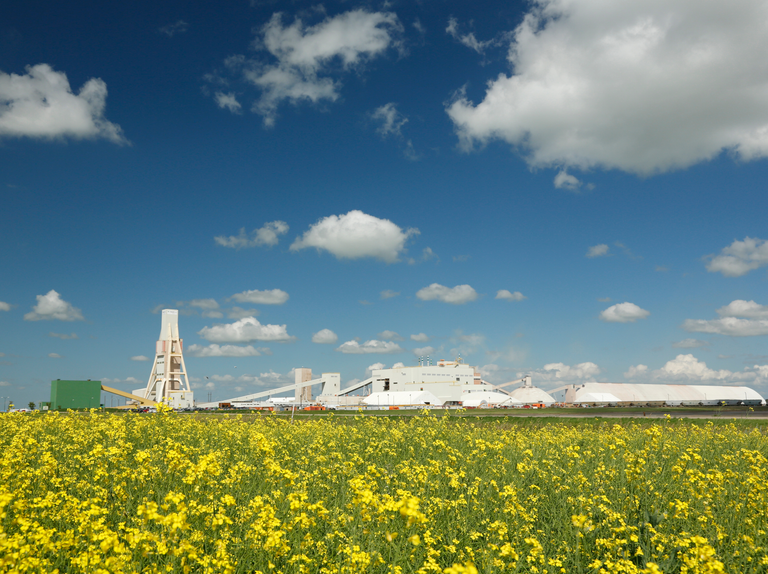
Nutrien CEO Ken Seitz told investors at the BMO 35th Global Metals, Mining & Critical Minerals Conference that the world's largest fertilizer producer expects to reach conclusions on strategic reviews of its Brazil retail, Trinidad nitrogen, and phosphate businesses this year—a signal that 2026 could bring significant portfolio changes for the $35 billion company.
The stock has surged nearly 57% from its 52-week low of $45.78, trading at $71.91 on Monday as investors bet on management's transformation strategy.
The Triple Strategic Review
Speaking in a fireside chat with BMO's Joel Jackson just days after reporting strong Q4 results, Seitz provided the most detailed update yet on three underperforming business segments under review:
Brazil Retail: Nutrien is "soul searching" on whether a retail presence is necessary to achieve its objectives in Brazil, the world's fastest-growing agricultural market. The company remains committed to being the largest potash supplier to the region but is questioning the value of its challenged retail operations.
Trinidad Nitrogen: Operations remain shut down as Nutrien negotiates with the Trinidad government on gas costs and port fees. "I don't know the answer to that," Seitz admitted about whether a workable deal can be reached. Meanwhile, the company's nitrogen cost structure has improved—now tied entirely to AECO and Henry Hub gas pricing, providing structural margin advantages without Trinidad.
Phosphate Business: Nutrien is pursuing a full strategic review spanning everything from restructured operations to a possible sale, with a data room being assembled for potential buyers. The company is also evaluating product mix, mine life extensions, and decommissioning scenarios.
"We expect to have some conclusions on all of these files this year, 2026," Seitz said.
 Ask Fintool AI Agent
Not Flinching at Jansen
When pressed on Bhp's Jansen potash megaproject—now expected to produce first tons in mid-2027 after cost overruns pushed the price tag to $8.4 billion —Seitz was dismissive of competitive threats.
"We're not changing our plans," Seitz said. Nutrien can expand brownfield capacity at approximately $200 per ton versus greenfield economics that are "an order of magnitude" higher.
The CEO projected confidence in long-term potash fundamentals:
- Global demand expected at 74-77 million tons in 2026—the fourth consecutive year of growth
- An early China contract at $349/ton set the global price floor
- A "balanced market" through end of decade, with potential for tighter conditions if supply disruptions occur
"If you look at every 10 years, announced plans, what people expect to do, there's usually about 6 or 7 million tons of supply destruction of some form... mine floods or collapses or infrastructure" challenges, Seitz noted.
2025: A Defining Year
Seitz characterized 2025 as "a defining year" for Nutrien, highlighting:
| Metric | 2025 | 2024 | Change |
|---|---|---|---|
| Adjusted EBITDA | $6.05B | $5.35B* | +13% |
| Fertilizer Sales | 27.5M tons | — | Record |
| Cost Savings | >$200M | — | Target exceeded |
| Divestitures | $900M | — | Completed |
| CapEx | $2.0B | $2.0B | Flat |
*Values retrieved from S&P Global
The company generated $900 million in divestiture proceeds last year and used the capital to reduce short-term debt by over $600 million while increasing cash returns to shareholders by 30%.
Retail Headwinds Persist
Despite the broader transformation success, Nutrien's retail segment continues to underperform earlier projections. The company guided 2026 retail EBITDA at approximately $1.85 billion—below the $1.9-$2.1 billion target established a few years ago.
Seitz attributed the shortfall primarily to the challenging agricultural environment:
"Some assumptions about just a bit better ag environment, compared to the one that we've... maybe just coming through and the challenges facing... the North American farmer, whether it's corn in the US, or whether it's canola in Canada."
However, he noted the company has still grown retail earnings by $400 million over the period and is planning an investor day in fall 2026 to outline the forward growth algorithm.
Ask Fintool AI AgentReading the Spring
On near-term fundamentals, Seitz offered cautious optimism. Despite headlines about stressed U.S. farm balance sheets, Nutrien's winter fill program for potash was "oversubscribed," and bad debt levels remain within historical norms at 1.4%.
"Farmers are planning to plant the way that they always do," Seitz said, adding that 94-96 million acres of corn are expected again this season. Government support—including the $11 billion announced by the Trump administration prior to the holidays—provides an additional cushion.
Capital Allocation: Discipline Intact
The company raised its quarterly dividend to $0.55 per share (eighth consecutive year of increases) and authorized buybacks of up to 5% of outstanding shares.
CapEx guidance remains at $2.0-$2.1 billion—down $600 million from earlier targets—as management prioritizes free cash flow generation over capacity expansion.
What to Watch
Near-term: Spring planting season dynamics in North America, India potash contract settlement, and Trinidad government negotiations.
Mid-term: Conclusions on Brazil retail, phosphate, and Trinidad strategic reviews—likely to be addressed at the fall 2026 investor day.
Long-term: BHP Jansen ramp-up trajectory (mid-2027 first production, 2031 Stage 2) and global potash supply-demand balance.
Ask Fintool AI AgentRelated: