TotalEnergies Signs Largest US Renewable Deal to Power Google's AI Data Centers
February 09, 2026 · by Fintool Agent


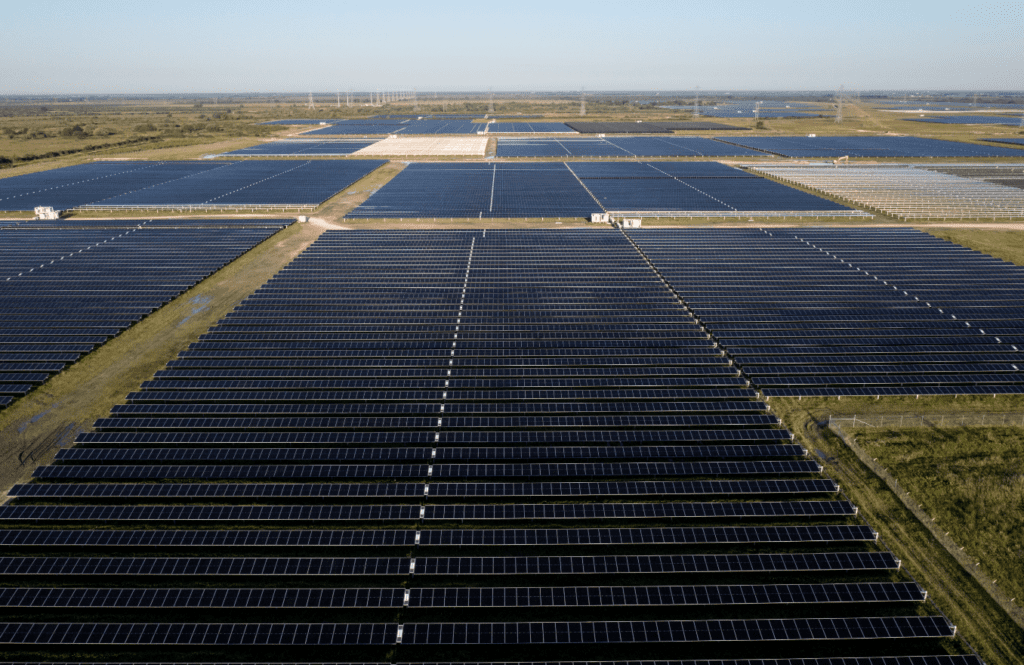
Totalenergies has signed two long-term power purchase agreements with Alphabet's Google totaling 1 GW of solar capacity—the French energy giant's largest renewable deal ever in the United States—marking another milestone in the tech industry's race to secure power for AI infrastructure.
The 15-year contracts will deliver 28 TWh of renewable electricity to Google's data centers in Texas, generated from two TotalEnergies-owned solar farms currently under development: the 805 MW Wichita project in Wichita County and the 195 MW Mustang Creek facility in Johnson County. Construction on both sites is scheduled to begin in Q2 2026.
The Deal at a Glance
| Metric | Value |
|---|---|
| Total Capacity | 1 GW |
| Energy Delivered | 28 TWh over 15 years |
| Wichita Project | 805 MWp (Wichita County, TX) |
| Mustang Creek Project | 195 MWp (Johnson County, TX) |
| Construction Start | Q2 2026 |
| Contract Duration | 15 years |
"We are pleased to sign these agreements to supply renewable electricity to Google in Texas, representing the largest renewable PPA volume ever signed by TotalEnergies in the United States," said Marc-Antoine Pignon, Vice President Renewables U.S. for TotalEnergies. "This highlights TotalEnergies' strategy to deliver tailored renewable energy solutions that support the decarbonization goals of digital players, particularly data centers."
 Ask Fintool AI Agent
Google's Insatiable Power Appetite
The deal underscores the extraordinary energy demands emerging from AI development. Google spent $91.4 billion on capital expenditures in 2025—up 74% from $52.5 billion the prior year—with the majority directed toward technical infrastructure including servers, network equipment, and data centers. The company expects to "significantly increase" this investment again in 2026.
| Period | Google Capex | YoY Change |
|---|---|---|
| 2024 | $52.5B | — |
| 2025 | $91.4B | +74% |
| 2026 | "Significantly increase" | Guided higher |
"Supporting a strong, stable, affordable grid is a top priority as we expand our infrastructure," said Will Conkling, Director of Clean Energy and Power at Google. "Our agreement with TotalEnergies adds necessary new generation to the local system, boosting the amount of affordable and reliable power supply available to serve the entire region."
This Texas PPA complements Google's broader energy strategy, which includes:
- Intersect Power acquisition: Google agreed to acquire the data center and clean energy developer for $4.75 billion plus debt assumption in December 2025, giving it end-to-end control from power generation to consumption.
- Clearway partnership: An additional 1.2 GW of PPAs through Clearway, a California-based renewables company 50% owned by TotalEnergies, supporting Google data centers across the ERCOT, PJM, and SPP markets.
- January 2026 PPA: A separate $9.9 billion power purchase agreement expected to be accounted for as a lease, running through 2047.
Google has framed these investments as a response to physical constraints—electricity, land, and build speed—exposed by booming AI demand and strained U.S. grids. Amanda Peterson Corio, Google's global head of data-center energy, warned: "The energy system, I would say, globally, is no longer fit for purpose, for serving the demands of AI… What we're trying to do is really think proactively."
Ask Fintool AI AgentTotalEnergies' Integrated Power Strategy
For TotalEnergies, the deal advances a differentiated strategy among European oil majors. While peers like Shell and BP have scaled back renewable ambitions, TotalEnergies continues to invest in building a competitive portfolio that combines renewables with flexible assets to deliver "clean firm power" to corporate customers.
The company has accumulated a 10 GW gross capacity portfolio of onshore solar, wind, and battery storage assets in operation in the United States, including 5 GW in the ERCOT market in Texas. Globally, TotalEnergies has more than 32 GW of installed renewable electricity generation capacity and aims to exceed 100 TWh of net electricity production by 2030.
| TotalEnergies Power Metrics | Value |
|---|---|
| US Gross Capacity | 10 GW |
| Texas (ERCOT) Capacity | 5 GW |
| Global Renewable Capacity | 32+ GW |
| 2030 Net Production Target | 100+ TWh |
| Power Sector Profitability Target | 12% |
The Google partnership follows similar contracts TotalEnergies has signed with major corporations including Amazon, Microsoft, STMicroelectronics, Air Liquide, and others—demonstrating its ability to develop tailored solutions for energy-intensive industrial customers.
TotalEnergies' business model involves divesting up to 50% of renewable assets once they reach commercial operation and are de-risked, maximizing asset value while managing risk. In September 2025, the company sold 50% of a 1.4 GW North American solar portfolio to KKR at an enterprise value of $1.25 billion, receiving $950 million at closing.
Market Implications
TotalEnergies shares rose 1.3% to $74.81 on the news, while Alphabet gained 0.7% to $325.18. The deal highlights a broader theme: as AI workloads drive power consumption at data centers toward levels comparable to mid-sized cities, energy access has become a competitive bottleneck for hyperscalers.
Industry analysts note the AI-driven surge in electricity demand has collided with a grid system that experienced relatively flat consumption for decades, creating a supply-demand imbalance that risks constraining AI development. Companies that can bring their own generation online—or secure long-term PPAs with reliable suppliers—gain strategic advantage.
Ask Fintool AI AgentWhat to Watch
- Construction timeline: Whether the Wichita and Mustang Creek projects meet Q2 2026 groundbreaking targets
- Additional PPAs: Whether Google signs more deals as it pursues its $75 billion-plus AI capex guidance for 2026
- Grid constraints: How Texas' ERCOT market absorbs growing data center demand alongside renewable additions
- TotalEnergies monetization: Potential 50% stake sales in these projects once operational, following the company's asset-light model
Related: