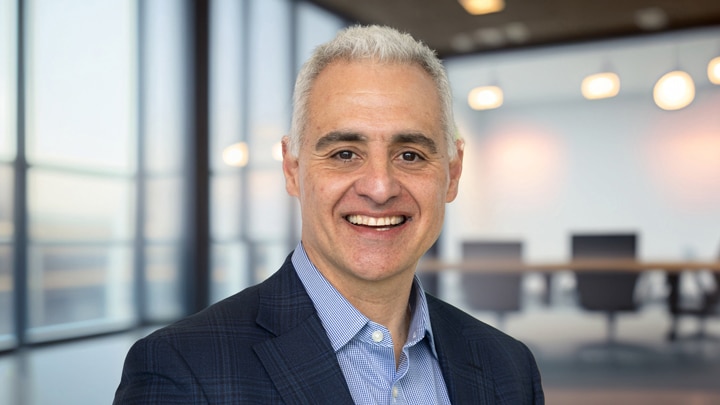
Rafael Sotomayor
 NXP Semiconductors
About Rafael Sotomayor
Rafael Sotomayor (born 1969) is President of NXP effective April 28, 2025 and designated to become CEO and temporary executive director on October 28, 2025, after which the Board intends to nominate him for appointment as executive director at the 2026 AGM . He joined NXP in 2014, has 30 years of semiconductor experience across NXP, Broadcom, Motorola, and Intel, and holds an MBA (Harvard), MSEE (Georgia Tech), and BSEE (Purdue) . Company performance context: revenue $12.61B in 2024 (down 5% YoY), non‑GAAP gross margin 58.1%, and CAP/TSR and revenue/net income disclosed under Pay vs Performance (see table) .
Company performance context (select metrics)
| Metric | 2022 | 2023 | 2024 |
|---|---|---|---|
| Revenue ($USD Millions) | 13,205 | 13,276 | 12,614 |
| Net Income ($USD Millions) | 2,787 | 2,797 | 2,510 |
| Non‑GAAP Gross Margin (%) | 57.9% | 58.5% | 58.1% |
| Company TSR – value of $100 investment | 129.76 | 192.49 | 177.19 |
Past Roles
| Organization | Role | Years | Strategic Impact |
|---|---|---|---|
| NXP | EVP & GM, Secure Connected Edge; Exec Mgmt Team | 2020–2025 | Led key edge businesses across Industrial/IoT; part of executive team shaping growth strategy . |
| NXP | Business Line GM roles (Mobile, Industrial, IoT) | 2014–2020 | Drove product and go‑to‑market execution in multiple segments . |
| Broadcom | VP Marketing, Wireless Connectivity | Pre‑2014 | Led marketing in core connectivity franchise . |
| Motorola; Intel | Various roles | Pre‑Broadcom | Early technical/commercial foundations in semis . |
External Roles
| Organization | Role | Years | Notes |
|---|---|---|---|
| — | — | — | No external directorships disclosed; any outside roles require prior written approval under his Employment Agreement . |
Fixed Compensation
| Component | Amount/Detail | Source |
|---|---|---|
| Base Salary | $800,000, effective Apr 28, 2025 | |
| Annual Incentive Plan (AIP) Target | 110% of base salary; max 200% of target | |
| Executive Director Fee | Annual gross fixed cash fee for service as (temporary) executive director, amount set by HRCC under shareholder‑approved policy |
Performance Compensation
AIP design (company‑wide program for NEOs; Sotomayor participates going forward)
| Element | Weighting | Metric Definition | 2024 Results/Payout Mechanics |
|---|---|---|---|
| 1H Revenue | 20% | 1H revenue vs targets | Result $6,253M; 33.0% realization for this component . |
| 1H Adj. Gross Margin | 20% | Non‑GAAP GM vs targets | Result 58.4%; 116.4% realization . |
| 2H Revenue | 20% | 2H revenue vs targets | Result $6,361M; realization not achieved (—) . |
| 2H Adj. Gross Margin | 20% | Non‑GAAP GM vs targets | Result 57.9%; 57.4% realization . |
| Sustainability Scorecard (annual) | 20% | Multi‑goal ESG scorecard; payout only if non‑GAAP Op Margin ≥ 32% | 12 pts achieved (100% for this component); 2024 non‑GAAP Op Margin 34.2% threshold met . |
| Overall 2024 AIP Payout | — | Weighted average of above; cap 200% | 61.4% of target for NEOs . |
LTI design and initial grant
| Component | Structure | Vesting/Performance | Notes |
|---|---|---|---|
| PSUs | 70% of target LTI; performance shares | 3‑year cliff; vesting 0–200% based on Relative TSR vs peer group; if absolute TSR negative, capped at 100% | |
| RSUs | 30% of target LTI; time‑based | 1/3 per year on each anniversary | |
| Initial LTI (upon appointment as President) | $2,000,000 total; 70% PSUs, 30% RSUs | Granted using closing price on first trading day after Q1’25 earnings release; standard terms as other executives |
PSU payout schedule (RTSR vs Peer Group)
| Relative TSR Percentile (vs Peer Group) | PSUs Earned (% of Target) |
|---|---|
| ≥75th | 200% |
| 50th | 100% |
| 25th | 25% |
| <25th | 0% |
Compensation benchmarking peer group: AMD, Analog Devices, Applied Materials, ASML, Corning, Infineon, Lam Research, Marvell, Microchip, Micron, ON Semi, Qualcomm, Qorvo, Seagate, Skyworks, STMicro, TE Connectivity, Texas Instruments, Western Digital; NVIDIA and Broadcom removed in 2024 due to size .
Program guardrails and policies
- Double‑trigger change‑in‑control; no excise tax gross‑ups; clawback policy compliant with NASDAQ; no pledging/hedging/derivatives; no option repricing/buyouts without shareholder approval .
Equity Ownership & Alignment
| Item | Detail | Source |
|---|---|---|
| Beneficial Ownership (as of Apr 15, 2025) | 6,958 common shares; <1% of outstanding | |
| Executive Ownership Policy (EOP) | CEO must hold ≥6x base salary in NXP shares; 5‑year compliance window; retain 100% of net vested shares until met; counts directly/beneficially owned shares and unvested time‑based RSUs | |
| Hedging/Pledging | Prohibited for directors/executives; no derivatives; pre‑clearance and blackout windows for Section 16 insiders |
Implications for insider selling pressure: the 6x‑salary holding requirement with 5‑year window and retention of net shares, combined with pre‑clearance/blackouts and hedging/pledging bans, constrains discretionary selling and aligns incentives .
Employment Terms
| Topic | Key Terms | Source |
|---|---|---|
| Role & Start | President effective Apr 28, 2025; CEO and temporary executive director effective Oct 28, 2025; Board intends nomination as executive director at 2026 AGM | |
| Agreements | Dutch‑law Management Agreement (services as CEO/executive director); U.S. (Texas‑law) Employment Agreement with NXP USA for employment terms | |
| Term/Notice | Management Agreement: fixed to next AGM then renews with reappointment; either party can give 3 months’ notice; no termination compensation under the management agreement | |
| At‑Will Employment | Employment is at‑will; termination provisions govern severance | |
| Severance (non‑CoC) | If terminated by company other than for cause/death/disability: lump sum severance equal to 2x base salary; pro‑rata AIP if conditions met | |
| Change‑in‑Control (double trigger) | If terminated without cause or resigns for Good Reason within 12 months post‑CoC: 24 months base + 24 months target bonus; 12 months benefits (US); equity per award terms | |
| Non‑Compete/Non‑Solicit | 12 months post‑termination non‑compete in U.S.; 12 months non‑solicit of customers and employees | |
| Insider Trading/Compliance | Section 16 insider: trading windows, pre‑clearance, Form 4 filings handled by Compliance | |
| Outside roles | Any external positions require Chair of Board approval; must avoid conflicts and not interfere with duties |
Performance & Track Record
- Experience/credentials: 30 years in semiconductors across operating and marketing roles (NXP, Broadcom, Motorola, Intel) with advanced engineering and business degrees .
- Company execution context (2024): revenue $12.61B, non‑GAAP GM 58.1%, non‑GAAP operating margin 34.6%, FCFO $2.09B (non‑GAAP), AIP payout 61.4% reflecting mixed topline versus strong margin discipline .
- Recent quarter (Q1’25): revenue $2.835B, non‑GAAP GM 56.1%, non‑GAAP operating margin 31.9%; cautious outlook amid tariffs/uncertainty .
Board Governance (Director Service, Roles, Independence)
| Item | Detail | Source |
|---|---|---|
| Board Service | Designated temporary executive director effective Oct 28, 2025; intended nomination for executive director at 2026 AGM | |
| Independence | Executive director (CEO) is not independent under Nasdaq/DCGC; all non‑executive directors are independent | |
| Chair/CEO Structure | Independent Chair (Julie Southern); CEO separate; robust governance with executive sessions and independent committees | |
| Committees | Audit, HR & Compensation, and Nominating/Governance/Sustainability composed entirely of independent directors | |
| Meetings | Board met 8 times in 2024; independent executive sessions held; all directors ≥75% attendance in 2024 |
Note: As an executive director/CEO, Sotomayor would not receive non‑executive director fees/RSUs; his compensation is governed by the executive remuneration policy and employment/management agreements .
Compensation Structure Analysis
- High at‑risk mix anchored to performance: AIP tied to semiannual revenue and non‑GAAP GM plus annual sustainability (20% weight), with a cap at 200%; PSUs (70% of LTI) are earned solely on 3‑year RTSR vs a carefully curated peer group; RSUs (30%) for retention .
- Shareholder‑friendly features: double‑trigger CoC, no excise tax gross‑ups, NASDAQ‑compliant clawback, strict anti‑pledging/hedging, no option repricing without shareholder approval .
- Ownership alignment: stringent 6x salary stock holding requirement for CEO with retention of net shares until met; blackout periods and pre‑clearance further align and reduce selling pressure .
Related Party Transactions and Red Flags
- Related party transactions: none in 2024 beyond disclosed compensation arrangements .
- Governance red flags mitigated: independent Chair, independent committees, no single‑trigger CoC, no excise tax gross‑ups, robust clawback and anti‑pledging/hedging policies .
Compensation Committee & Peer Group
- HRCC composition: independent directors; uses independent consultant (Mercer) for benchmarking; annual review of peer group and pay design .
- Peer group used both for benchmarking and PSU RTSR comparator; Broadcom and NVIDIA removed in 2024 due to size divergence .
Investment Implications
- Alignment: The CEO package is highly performance‑linked (AIP on revenue/margins and PSUs on 3‑yr RTSR) with stringent stock ownership, suggesting high alignment with TSR and profitability outcomes .
- Retention vs liquidity: 6x‑salary ownership and RSU/PSU vesting cadence limit near‑term selling pressure, reducing overhang risk while incentivizing multi‑year performance .
- Change‑in‑control economics: Double‑trigger CoC at 2x base + 2x target bonus plus equity per award terms is market‑standard for large‑cap semis; no gross‑ups lowers investor downside from parachute optics .
- Governance: Separation of Chair/CEO and independent committees mitigate dual‑role risks as he joins the Board as executive director; oversight appears robust under Dutch and Nasdaq regimes .
