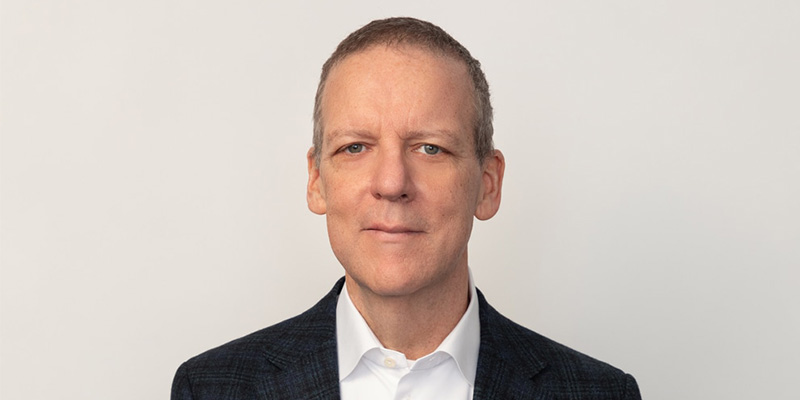
Steven Bandrowczak
 Xerox Holdings
About Steven Bandrowczak
Steven J. Bandrowczak, 64, is Chief Executive Officer of Xerox (director since 2022). He holds a B.S. in Computer Science from Long Island University and an M.S. in Technology Management from Columbia University, and previously served as Xerox President and COO after joining in 2018 . Under his leadership, Xerox is in year two of a three‑year “Reinvention” (cost savings >$200M in 2024; agreement to acquire Lexmark; ITsavvy acquisition; >100% conversion of adjusted operating income to free cash flow with $467M FCF), while 2024 MIP paid at 70% of target after negative discretion despite ESG max performance, reflecting pay-for-performance discipline . Governance-wise, he is not independent; the Board maintains an independent Chair (Scott Letier) and a separated Chair/CEO structure, with 78% independent directors in 2025 .
Board service note and dual-role implications: Bandrowczak is CEO and a director (not Chair). The Board separates Chairman and CEO roles, conducts independent director executive sessions each meeting, and has an independent Chairman—mitigating dual-role influence and preserving independent oversight . He served on the Finance Committee in 2024; 2025 committee rosters do not list him, consistent with a trend to keep committees fully independent .
Past Roles
| Organization | Role | Years | Strategic impact |
|---|---|---|---|
| Xerox | President & Chief Operations Officer (joined 2018) | — | Senior operating leadership prior to CEO appointment in Aug 2022 . |
| Alight Solutions | Chief Operating Officer & Chief Information Officer | — | Responsible for application portfolio and technical infrastructure . |
| Avaya; Nortel; Lenovo; DHL; Avnet | Senior leadership positions | — | Multi‑billion‑dollar global companies; broad operations/tech leadership exposure . |
External Roles
| Organization | Role | Years |
|---|---|---|
| Fuji Xerox | Director | 2019 |
| Northeastern University | Teaches “Leading Disruptive Change in Digital Economy”; Executive‑in‑Residence, Center for Technology Management and Digital Leadership | Current as of 2025 |
Fixed Compensation
| Year | Base salary (earned, $) | Target bonus % | Target bonus ($) | LTIP target grant value ($) | Actual annual incentive (MIP, $) |
|---|---|---|---|---|---|
| 2024 | 1,066,667 | 170% | 1,870,000 | 11,400,000 | 1,269,333 |
| 2023 | 1,000,000 | 150% | 1,500,000 | 7,500,000 | 3,278,700 |
| 2022 | 763,315 | — | — | 7,100,017 (stock awards as reported) | 679,929 |
Notes:
- Director compensation: Employee directors receive no additional director pay; Bandrowczak received none for Board service .
- Perquisites (2024): $291 personal aircraft; $90,489 home security; $3,721 financial planning; $10,350 401(k) contribution (total “All Other” $104,851) .
Performance Compensation
Annual Incentive (MIP) – 2024 design and results
| Metric | Weight | Threshold | Target | Maximum | Actual 2024 | Payout factor | Weighted payout |
|---|---|---|---|---|---|---|---|
| Adjusted EBITDA ($mm) | 90% | 350 | 700 | 800 | 503 | 71.9% | 64.7% |
| ESG (Env. GHG reduction 5%, Employee engagement training 5%) | 10% | — | — | — | 250.0% | 250.0% | 25.0% |
| Formulaic payout | 89.7% | 89.7% | |||||
| Committee discretion | Reduced | 70.0% total payout for NEOs |
CEO 2024 MIP payout: $1,269,333 on $1,870,000 target (70% of target) .
2023 MIP (CEO): Metrics 80% Adjusted EBITDA, 20% ESG; payout factor 218.6%; payout $3,278,700 .
Long-Term Incentive (LTIP/E-LTIP)
Design and metrics:
- 2024: 50% PSUs (three-year cliff vest) tied to Adjusted Operating Income Improvement across four weighted periods (2024, 2025, 2026, and 2024–2026 cumulative), with rTSR modifier vs S&P 600 Info Tech Index (+/‑25%); 50% RSUs vesting 33.33%/33.33%/33.34% annually .
- 2023: 60% PSUs on rTSR (three overlapping periods 2023; 2023–2024; 2023–2025; weighted across S&P Tech Hardware Select 90% and S&P 400 IT 10%), 40% RSUs (33%/33%/34% vesting) .
2024 CEO grants (grant date 3/11/2024):
- PSUs: target 337,878 shares (Monte Carlo FV used for reporting) .
- RSUs: 337,878 shares (vest 1/3 annually) .
PSU outcomes (historical):
- 2022 PSU cycle: 0% earned (thresholds not met; cumulative adjusted EPS and absolute share price below thresholds) .
- 2021 PSU cycle: 0% earned (absolute share price, revenue, and free cash flow below thresholds) .
Retention equity:
- One‑time 2023 retention RSUs were broadly granted to reduce Reinvention execution risk; CEO received $1,056,253, vesting 40%/60% over 2 years (non‑recurring) .
Equity Ownership & Alignment
| Item | Detail |
|---|---|
| Beneficial ownership (3/15/2025) | 360,142 shares beneficially owned; total stock interest 706,227 (incl. equity awards) . |
| Beneficial ownership (3/15/2024) | 188,399 shares beneficially owned; total stock interest 826,290 . |
| Unvested RSUs (12/31/2024) | 579,587 units outstanding ($4,885,918 at $8.43) . |
| Unearned PSUs at target (12/31/2024) | 626,848 units ($5,284,329 at $8.43) . |
| Stock options outstanding | 41,990 options, $24.00 strike, expiring 7/1/2028 (all exercisable; no unexercisable options) . |
| CEO stock ownership guideline | 5x base salary; NEOs must retain 50% of after‑tax vested shares until compliant; all 2024 NEOs in compliance as of 3/31/2025 . |
| Hedging/pledging | Executives prohibited from hedging, short sales, options trading; pledging prohibited; trades limited to window periods or 10b5‑1 plans . |
| Director hedging/pledging | Directors prohibited from hedging and pledging; can sell only via 10b5‑1; director ownership guideline equal to 3x annual Board cash retainer (effective 2025) . |
Vesting profile implications: Large scheduled RSU/PSU vesting over the next 1–3 years (notably 2024 RSUs at 1/3 per year; 2024 PSUs cliff in 2027 subject to performance) could influence periodic Form 4 activity; company policies requiring 10b5‑1 plans, holding requirements, and anti‑hedging/pledging reduce short‑term trading signal noise and alignment risks .
Employment Terms
| Topic | Key provisions |
|---|---|
| Officer Severance Program (amended Mar 2024) | CEO: 2 years severance paid over 24 months, benefits continuation; prorated annual incentive for year of termination; Committee discretion for continued equity vesting during severance period; “termination for good reason” added for CEO/President-COO; payments conditioned on release and non‑competition/non‑solicitation; program extended through 12/31/2026 . |
| Change‑in‑Control (CIC) agreements | Double trigger: if involuntary termination without cause or resignation for Good Reason within 2 years post‑CIC, 2x (base salary + target annual bonus), benefits continuation (18–24 months, as applicable), and equity treatment per plan; no excise tax gross‑ups . |
| Clawbacks | Exchange Act 10D‑compliant recoupment policy effective 12/1/2023 (restatement‑based recovery of excess incentive comp over prior 36 months); additional “detrimental activity” recoupment provisions under plans and severance arrangements (e.g., non‑compete violations) . |
| Equity grant timing | Awards not timed around MNPI; annual grant cadence (no new options in 2022–2024 for NEOs) . |
Board Governance
- Director since 2022; served on Finance Committee in 2024; 2025 committee rosters are fully independent (Audit, Compensation & Human Capital, Corporate Governance, Finance) .
- Not independent (as CEO); Board has independent Chair; separate CEO/Chair roles; independent director executive sessions at each meeting; 78% independent nominees in 2025 .
- Board/committee meeting attendance (aggregate): 2024 Board held 14 meetings; committees 25 meetings; directors attended ~87%; in 2023, attendance ~97% across 7 Board and 43 committee meetings .
- Director compensation framework (context for dual role): employee directors receive no additional pay; non‑employee directors receive $85,000 cash retainer plus $225,000 equity and committee/Chair retainers; equity vests annually; director CIC accelerates vesting; 2025 policy allows directors to elect cash in RSUs/DSUs and sets 3x retainer ownership guideline; hedging/pledging prohibited .
Performance & Track Record
- Reinvention execution: business unit operating model; partner‑led distribution in select markets; Global Business Services; >$200M gross cost savings; route-to-market simplification; focus on higher‑return production submarkets .
- Portfolio/Capital actions: Acquired ITsavvy (earnings accretive); signed agreement to acquire Lexmark (APAC exposure, synergy plan); balanced capital allocation including $141M dividends and debt refinancing to extend maturities; >100% conversion of adjusted operating income to FCF; 2024 FCF $467M aided by financing programs .
- Shareholder support: Say‑on‑pay approval ~96.24% in 2024 after proactive engagement and re‑design of incentives to emphasize Adjusted EBITDA and operating income improvement .
Compensation Structure Analysis
- Increased at‑risk orientation in 2024 vs 2023: CEO target MIP raised to 170% (from 150%) and LTIP target to $11.4M (from $7.5M), shifting mix further to performance/equity and differentiating COO role .
- Metric tightening: 2024 MIP concentrated 90% on Adjusted EBITDA (from 60% in 2023), with ESG reduced to 10%, reinforcing cash/margin focus aligned to Reinvention .
- Outcome discipline: Despite ESG maxing, 2024 MIP was cut to 70% of target via negative discretion amid under‑target Adjusted EBITDA and TSR context; 2022 and 2021 PSU cycles paid 0% (no threshold met), underscoring alignment with shareholder outcomes .
- Retention equity (2023) was one‑time, time‑vested RSUs to mitigate execution risk; not indicative of ongoing practice per Committee disclosure .
Equity Detail and Vesting Schedules (Selected)
| Grant | Grant date | Type | Shares/Target | Vesting | Notes |
|---|---|---|---|---|---|
| 2024 LTIP | 3/11/2024 | PSUs | 337,878 target | Cliff vest at 3 years, subject to Adjusted Op Inc Improvement and rTSR modifier | PSU payout capped at 200%; rTSR modifier +/‑25% vs S&P 600 IT . |
| 2024 LTIP | 3/11/2024 | RSUs | 337,878 | 33.33%/33.33%/33.34% annually | Standard annual vesting. |
| Options (legacy) | 7/1/2018 | Options | 41,990 | Fully exercisable; expire 7/1/2028; $24.00 strike | No new option grants 2022–2024 . |
Director Compensation (context for dual role)
- Non‑employee directors: $85,000 cash retainer; $225,000 equity; committee/Chair retainers; annual vest; DSU/RSU elections; hedging/pledging prohibited; 2025 policy permits electing cash as RSUs/DSUs and sets 3x retainer ownership guideline .
- Employee directors (CEO): No additional director compensation .
Investment Implications
- Alignment and downside sharing: 0% payouts on multiple PSU cycles and 2024 MIP reduction to 70% confirm willingness to align realized pay with shareholder outcomes; large 2024 PSU grant remains performance‑contingent to 2027, a lever on long‑term execution .
- Near‑term selling pressure: Significant unvested RSUs/PSUs (and scheduled 1/3 RSU vests) imply periodic settlement events; however, 10b5‑1, holding requirements, and anti‑hedging/pledging policies temper trading signal concerns and support alignment .
- Retention risk: One‑time 2023 retention RSUs addressed leadership continuity amid Reinvention; updated severance (CEO: two‑year severance and continued vesting on certain separations) further mitigates transition risk but concentrates on performance delivery to realize PSU value .
- Governance comfort: Separated Chair/CEO, independent Chair, high board independence, and clawback/CIC double‑trigger provisions reduce governance and windfall risks while maintaining pay-for-performance rigor; strong 2024 say‑on‑pay (96.24%) supports design credibility with investors .
