Allegiant to Acquire Sun Country for $1.5 Billion in First Trump-Era Airline Merger Test
January 11, 2026 · by Fintool Agent


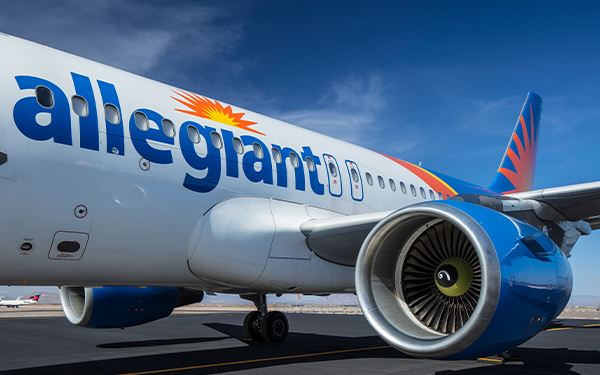
Allegiant Travel is acquiring fellow budget carrier Sun Country Airlines for $1.5 billion in a cash-and-stock deal that will create the largest U.S. leisure-focused airline and test whether the Trump administration takes a more permissive stance on airline consolidation than its predecessor.
The deal, announced Sunday, values Sun Country at $18.89 per share—a 19.8% premium to Friday's close—with shareholders receiving 0.1557 Allegiant shares plus $4.10 in cash for each share they own. Upon closing, Allegiant shareholders will own 67% of the combined company and Sun Country shareholders 33%.
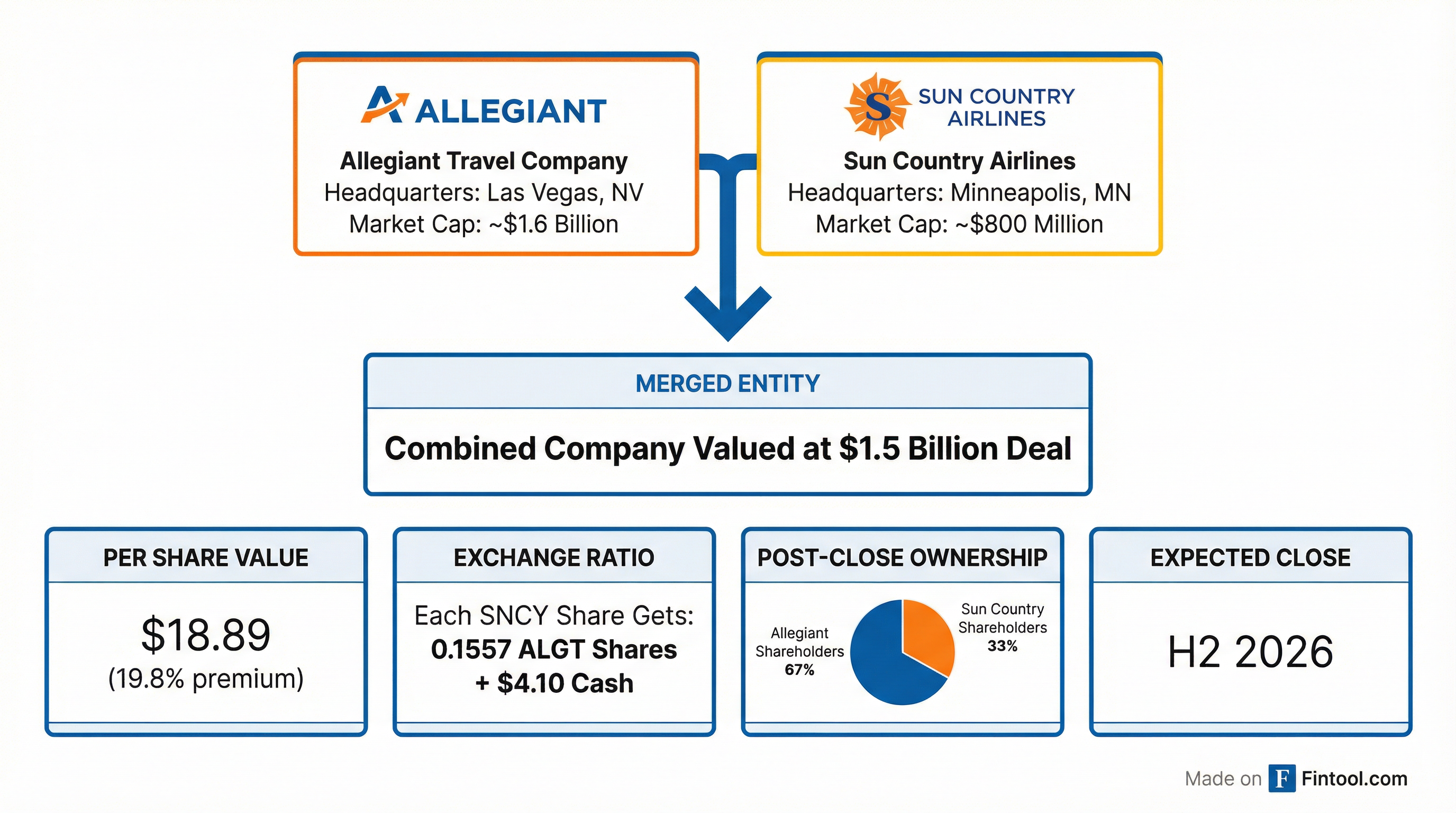
The combination brings together two profitable carriers with similar business models focused on connecting underserved markets to vacation destinations. Allegiant, based in Las Vegas, operates 551 routes primarily from small and mid-sized cities, while Minneapolis-based Sun Country runs 105 routes with stronger international presence across Mexico, Central America, and the Caribbean.
"This combination is an exciting next chapter in Allegiant and Sun Country's shared mission in providing affordable, reliable, and convenient service from underserved communities to premier leisure destinations," said Allegiant CEO Gregory Anderson, who will lead the combined company.
 Ask Fintool AI Agent
Strategic Rationale: Building Scale in Leisure Travel
The merger creates a combined carrier with significant scale in the budget leisure segment:
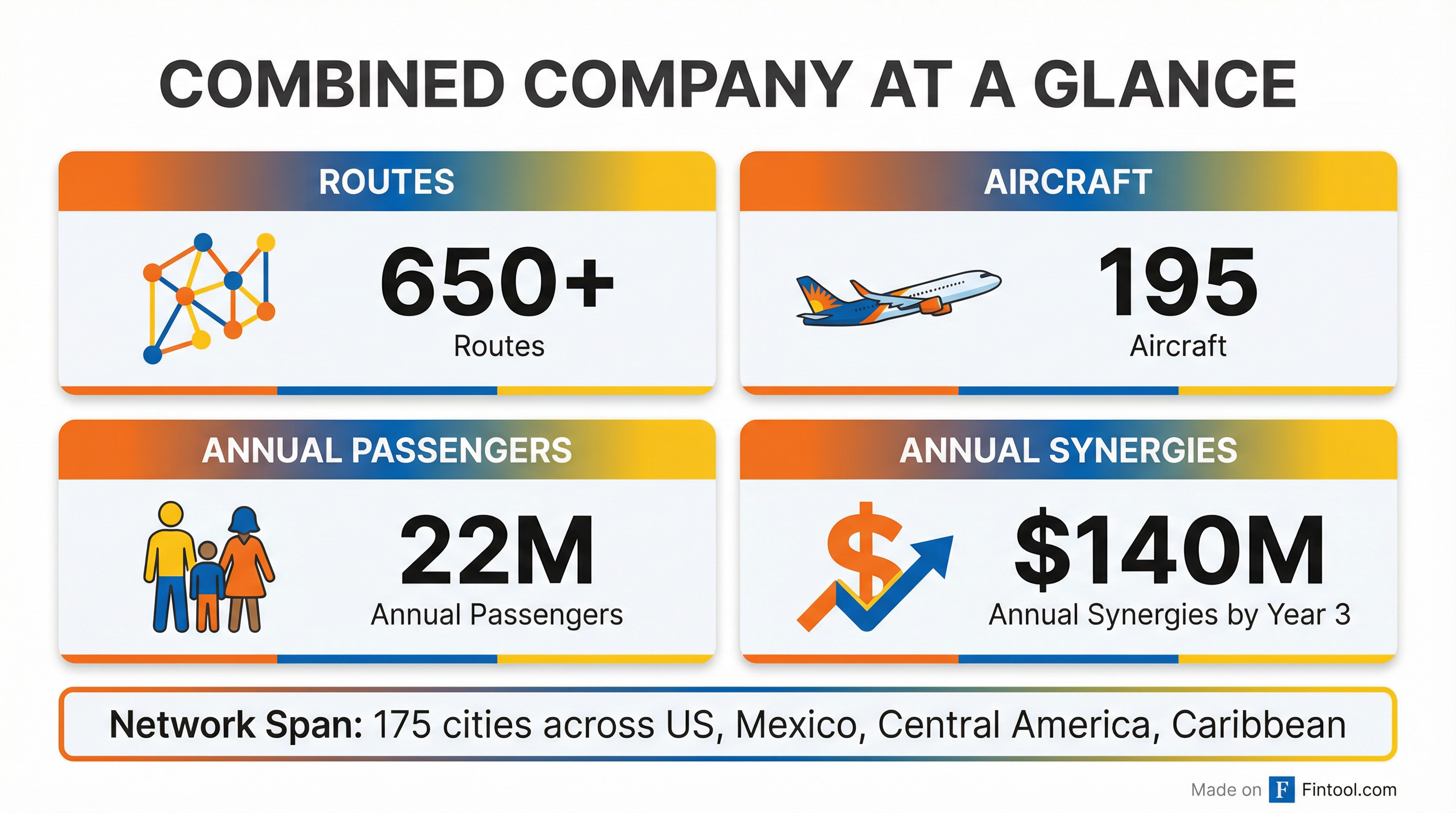
Management expects $140 million in annual synergies by year three post-close, primarily from network optimization, fleet efficiency, and procurement savings. The deal is projected to be accretive to Allegiant's earnings per share in the first year after closing.
Sun Country's diversified business model—including cargo operations for Amazon Prime Air and charter contracts with casinos, sports teams, and the Department of Defense—provides year-round revenue stability that complements Allegiant's seasonal leisure focus.
Financial Snapshot
Both airlines have maintained profitability despite industry headwinds, though recent quarters show diverging trajectories:
| Metric | ALGT Q3 2025 | ALGT Q2 2025 | SNCY Q3 2025 | SNCY Q2 2025 |
|---|---|---|---|---|
| Revenue | $562M | $689M | $245M | $249M |
| Net Income | -$44M | -$65M | $1.6M | $6.6M |
| EBITDA Margin | 6.3% | 17.3% | 13.5% | 15.7% |
| Cash | $316M | $210M | $112M | $37M |
| Total Debt | $2.1B | $2.0B | $576M | $562M |
Allegiant's recent losses reflect a challenging operating environment, but the company maintains a strong cash position. Sun Country has remained profitable with consistent margins, though on a smaller revenue base.
SNCY shares closed at $15.77 on Friday before the announcement, meaning the $18.89 deal price delivers substantial value to shareholders. ALGT closed at $94.97, giving the stock portion of the consideration meaningful upside potential if Allegiant shares appreciate before closing.
Ask Fintool AI AgentThe Antitrust Question: What Will Trump's DOJ Do?
The deal's fate hinges on regulatory approval from the Department of Justice and Department of Transportation—and the outcome is far from certain.
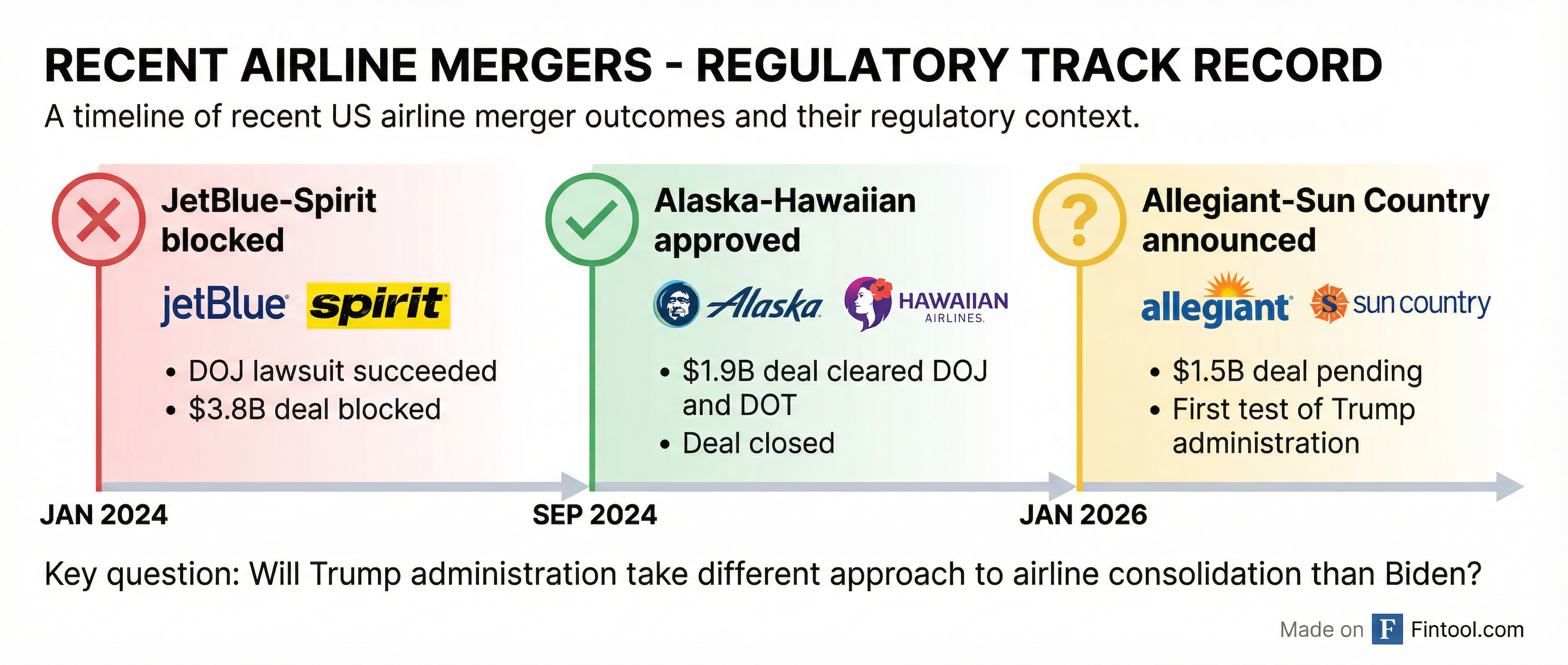
The Biden administration took a hard line on airline consolidation, with the DOJ successfully blocking JetBlue's $3.8 billion acquisition of Spirit Airlines in January 2024 on antitrust grounds. That ruling found the merger "would substantially lessen competition" and harm budget travelers who rely on Spirit's ultra-low fares.
Spirit subsequently filed for bankruptcy and is now fighting for survival—a cautionary tale for the industry.
Yet the same DOJ approved Alaska Airlines' $1.9 billion acquisition of Hawaiian Airlines in September 2024, finding limited route overlap and accepting the carriers' argument that the combination would strengthen competition against the four dominant U.S. carriers (American, Delta, United, Southwest).
The Allegiant-Sun Country deal more closely resembles Alaska-Hawaiian than JetBlue-Spirit:
- Limited route overlap: Allegiant focuses on small/mid-sized markets while Sun Country operates primarily from larger hubs like Minneapolis
- Complementary networks: The combination expands geographic reach rather than eliminating a competitor
- Leisure focus: Both carriers serve vacation travelers, not business routes dominated by legacy carriers
However, the Trump administration's antitrust posture remains untested on airline mergers. Industry observers will watch closely to see whether the new DOJ takes a more permissive approach to consolidation.
"The deal will test the Trump administration's appetite for an airline merger," noted CNBC in its coverage.
Ask Fintool AI AgentLeadership and Integration
Allegiant CEO Gregory Anderson will lead the combined company, with Robert Neal serving as President and CFO. Sun Country CEO Jude Bricker—who previously worked at Allegiant before joining Sun Country in 2017—will join the board of directors alongside two other Sun Country board members, expanding the board to 11.
"Over Sun Country's 43-year history, we have grown to become one of the nation's most respected low-cost, leisure airlines," said Bricker. "Today marks an exciting next step in our history as we join Allegiant to create one of the leading leisure travel companies in the U.S."
The combined company will be headquartered in Las Vegas but will maintain a "significant presence" in Minneapolis-St. Paul. Each airline will continue operating separately until the FAA issues a single operating certificate, with no immediate changes to ticketing, schedules, or the Sun Country brand.
What to Watch
Near-term catalysts:
- Investor conference call Monday, January 12 at 8:30 AM ET
- S-4 registration statement and joint proxy filing with the SEC
- HSR Act antitrust review timeline (typically 30 days, extendable)
Key risks:
- DOJ or DOT regulatory challenge
- Shareholder rejection at either company
- Integration execution and synergy realization
- Labor union negotiations under Railway Labor Act
The expected close date of second half 2026 suggests management anticipates a lengthy regulatory review—but given the deal structure and limited competitive overlap, the path to approval may be clearer than it was for JetBlue-Spirit.
Advisors:
- Allegiant: Barclays (financial), Skadden Arps (legal)
- Sun Country: Goldman Sachs (financial), Milbank (legal)
Related:
Ask Fintool AI Agent