Blue Origin Grounds Space Tourism to Focus on Moon Race
January 31, 2026 · by Fintool Agent


Jeff Bezos's space company is abandoning its celebrity-ferrying suborbital rocket to chase a much larger prize: NASA's multibillion-dollar lunar program. Blue Origin announced Friday it will halt New Shepard flights for at least two years, redirecting all resources toward the Blue Moon lunar lander as the Trump administration pushes to beat China to the lunar surface.
The decision, announced by CEO Dave Limp in an internal email that began "I have some significant news to share with you," signals a fundamental strategic shift for the company Bezos founded in 2000. While Blue Origin framed it as a "pause," employees told Reuters they widely view it as a permanent cancellation.
"The decision reflects Blue Origin's commitment to the nation's goal of returning to the Moon and establishing a permanent, sustained lunar presence," the company said.
 Ask Fintool AI Agent
End of an Era
New Shepard, the 60-foot reusable rocket that Blue Origin developed starting in 2015, has become synonymous with billionaire space tourism. The vehicle completed 38 flights and carried 98 passengers above the Kármán line—the widely accepted boundary of space at 62 miles altitude—since its first crewed mission in July 2021.
That inaugural crewed flight garnered global attention because Bezos himself was aboard, just weeks after Richard Branson beat him to space on Virgin Galactic's spaceplane. Since then, New Shepard has launched an eclectic mix of paying customers and celebrities including William Shatner, Katy Perry, Gayle King, and Michael Strahan.
The program achieved what few thought possible: making the 10-minute up-and-down joyride to space feel routine. But that very success may have contributed to its demise.
"The flights of Bezos and other prominent people, notably Katy Perry, opened up Blue Origin and the broader commercial space industry to the criticism that spaceflight was just a plaything for billionaires, celebrities, and their toys," noted Ars Technica.
Pivoting to Lunar Billions
The timing of Blue Origin's pivot is no coincidence. The company holds a $3.4–3.6 billion NASA Human Landing System (HLS) contract to develop the Blue Moon lander, which will eventually ferry astronauts to the lunar surface.
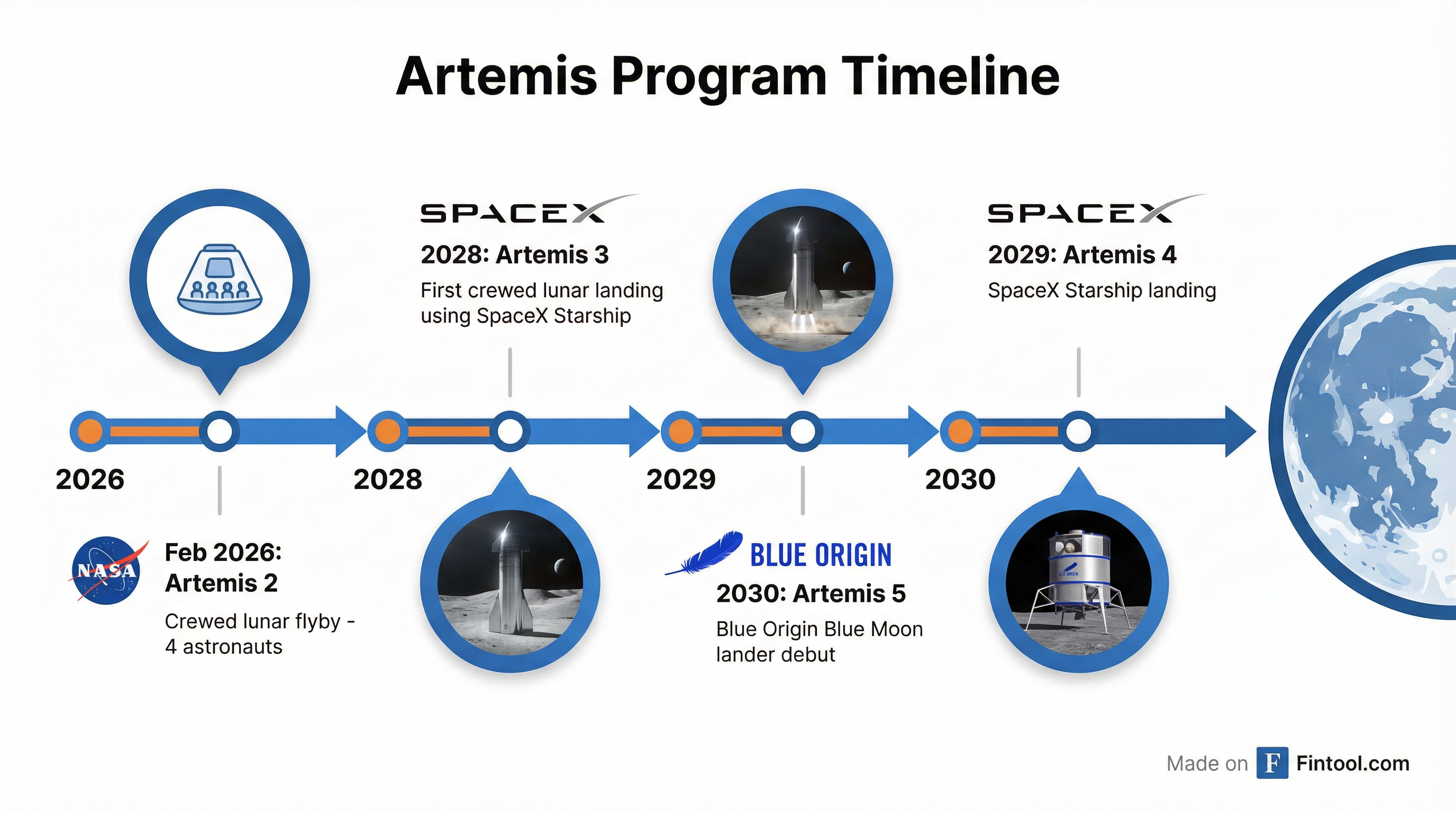
A December executive order from President Trump set a hard 2028 deadline for Artemis 3, NASA's first crewed lunar landing since Apollo 17 in 1972. NASA has urged both Blue Origin and SpaceX—the two companies selected for HLS awards—to accelerate development.
"We are looking at a renewed urgency to return to the moon sooner," said Thomas Percy, manager of systems engineering and integration in NASA's HLS program office. "We are working with both of our providers to identify ways that we can move faster."
The pressure is mounting. Blue Origin's first Blue Moon Mark 1 lander departed its Florida assembly facility on January 22 and is now at NASA's Johnson Space Center for thermal vacuum testing—the same facility that tested Apollo hardware. The lander will spend at least two weeks in testing before returning to Florida for launch preparations.
"We will redirect our people and resources toward further acceleration of our human lunar capabilities inclusive of New Glenn," Limp wrote in his internal email.
Ask Fintool AI AgentThe Space Race Intensifies
Blue Origin's decision comes amid a new space race—this time against China, which aims to land its taikonauts on the lunar surface by 2030. Hawkish lawmakers have increasingly emphasized that NASA must put Americans back on the moon first.
NASA Administrator Jared Isaacman—himself a billionaire who twice flew to space on SpaceX capsules before taking the top NASA job in December—praised both companies' acceleration plans without providing specifics.
"We are willing to rethink a lot of our requirements in order to achieve the objective on time," Isaacman said. "We are willing to make available any resources and expertise that we have in order to better set those missions up for success."
The first crewed Artemis mission, Artemis 2, could launch as early as February 8 on a trajectory around the moon and back—though unusually cold temperatures at Kennedy Space Center have complicated pre-launch testing.
Industry Implications
Blue Origin's retreat from suborbital tourism leaves Virgin Galactic as the only publicly traded company operating in the space tourism segment—though Virgin has faced its own challenges, including significant cash burn and the need to develop its next-generation Delta spaceplane.
The lunar lander market, meanwhile, is heating up. Intuitive Machines, which successfully landed its Odysseus spacecraft on the moon in February 2024, is also developing lunar landers under NASA's Commercial Lunar Payload Services (CLPS) program. The company's stock has gained significantly as investors bet on the growing lunar economy.
| Company | Ticker | Focus | NASA Relationship |
|---|---|---|---|
| Virgin Galactic | SPCE | Suborbital tourism | None |
| Intuitive Machines | LUNR | Robotic lunar landers | CLPS contracts |
| Rocket Lab | RKLB | Small launch, lunar missions | CLPS partner |
| Lockheed Martin | LMT | Orion spacecraft | Artemis prime contractor |
| Northrop Grumman | NOC | Gateway habitat | Artemis contractor |
| Boeing | BA | Space Launch System | Artemis prime contractor |
What to Watch
- Late February 2026: New Glenn-3 launch, Blue Origin's next orbital rocket mission
- February 8, 2026 (target): Artemis 2 crewed lunar flyby
- 2028: Artemis 3 lunar landing deadline (SpaceX Starship lander)
- ~2030: Blue Moon Mark 2 crewed lander debut for Artemis missions
The decision to shutter New Shepard marks the end of Blue Origin's most visible program but potentially the beginning of its most important work. Industry observers note that Bezos's company has long been criticized for trying to do too many things at once.
"Focusing on New Glenn and the lunar lander program in the near term will be a great boon for space access and the nation's competition with China to secure the Moon," wrote Ars Technica's Eric Berger.
Ask Fintool AI AgentRelated