Eddie Bauer Files Third Bankruptcy in 20 Years as 175 Stores Begin Liquidation
February 9, 2026 · by Fintool Agent


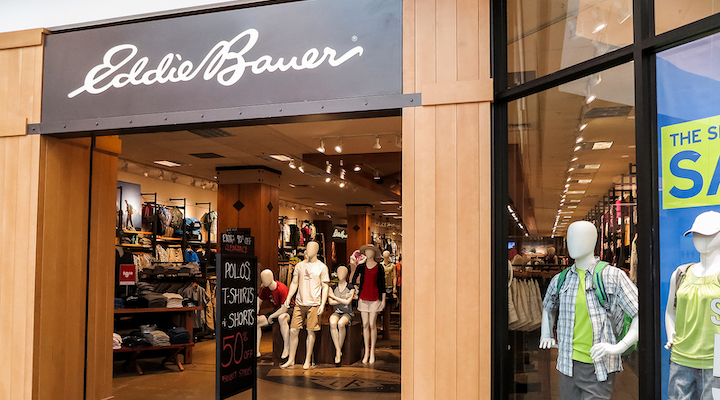
The 106-year-old outdoor apparel brand that once outfitted the first American to climb Mount Everest is headed for the exit—again.
Eddie Bauer LLC, the operator of roughly 175 retail stores in the United States and Canada, filed for Chapter 11 bankruptcy protection in New Jersey on Monday, marking the brand's third trip through bankruptcy court in a little over two decades. Going-out-of-business sales have begun, and unless a buyer emerges, all locations will close by April 30.
The filing underscores broader pressures facing brick-and-mortar outdoor apparel retail as consumers shift toward direct-to-consumer brands and e-commerce. For investors tracking the sector, Eddie Bauer's demise offers a cautionary tale about legacy brands that failed to evolve.
The Filing
Eddie Bauer LLC entered into a Restructuring Support Agreement with its secured lenders and commenced Chapter 11 proceedings, according to court filings. The financials paint a grim picture:
- Cash on hand: ~$20 million
- Weekly disbursements: ~$1.6 million
- Estimated liquidation proceeds: ~$21.3 million
- Stores to close: 175 locations (down from ~220 at year-start after some leases lapsed in January)
"This is not an easy decision," said Marc Rosen, CEO of Catalyst Brands, which maintains the license to operate Eddie Bauer stores. "However, this restructuring is the best way to optimize value for the retail company's stakeholders and also ensure Catalyst Brands remains profitable and with strong liquidity and cash flow."
 Ask Fintool AI Agent
Corporate Structure: Who Owns What
The Eddie Bauer bankruptcy involves a complex web of ownership and licensing arrangements that has become increasingly common in distressed retail:
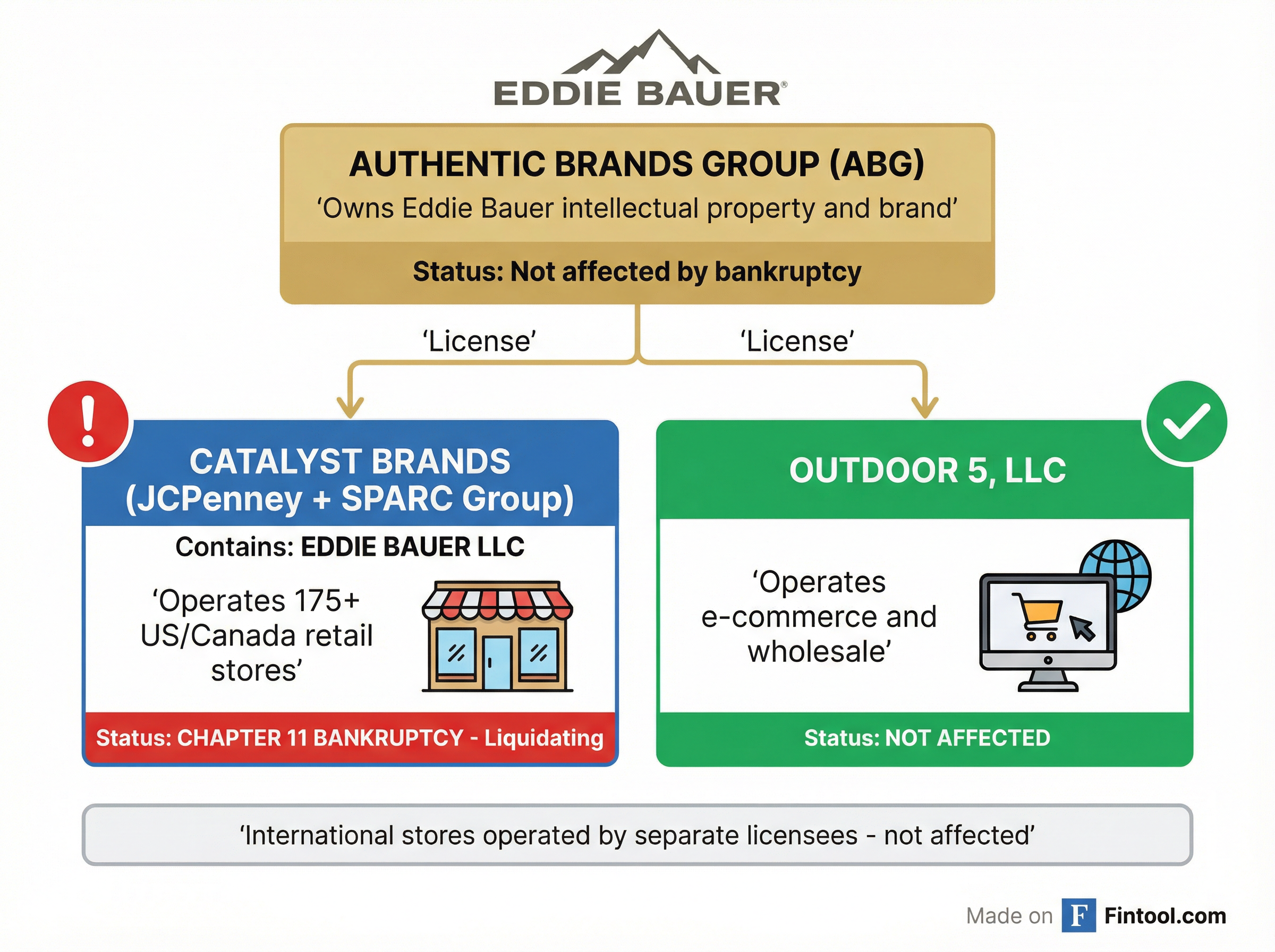
Authentic Brands Group owns the Eddie Bauer intellectual property and brand globally. ABG acquired the brand in 2021 and continues to hold these assets, which are not affected by the bankruptcy. ABG may license the brand to other operators going forward.
Catalyst Brands—the joint venture formed in January 2025 through a merger between JCPenney and SPARC Group—operates the Eddie Bauer retail stores through a licensing agreement. Catalyst manages a portfolio of retail brands including JCPenney, Aéropostale, Brooks Brothers, Lucky Brand, and Nautica. Other Catalyst brands are not affected by this filing.
Outdoor 5, LLC separately operates Eddie Bauer's e-commerce and wholesale business. This operation transitioned to Outdoor 5 in January 2026 and became effective February 2—just days before the bankruptcy filing. E-commerce and wholesale continue as normal.
International stores are operated by different licensees and are not part of this filing.
A Brand That Lost Its Way
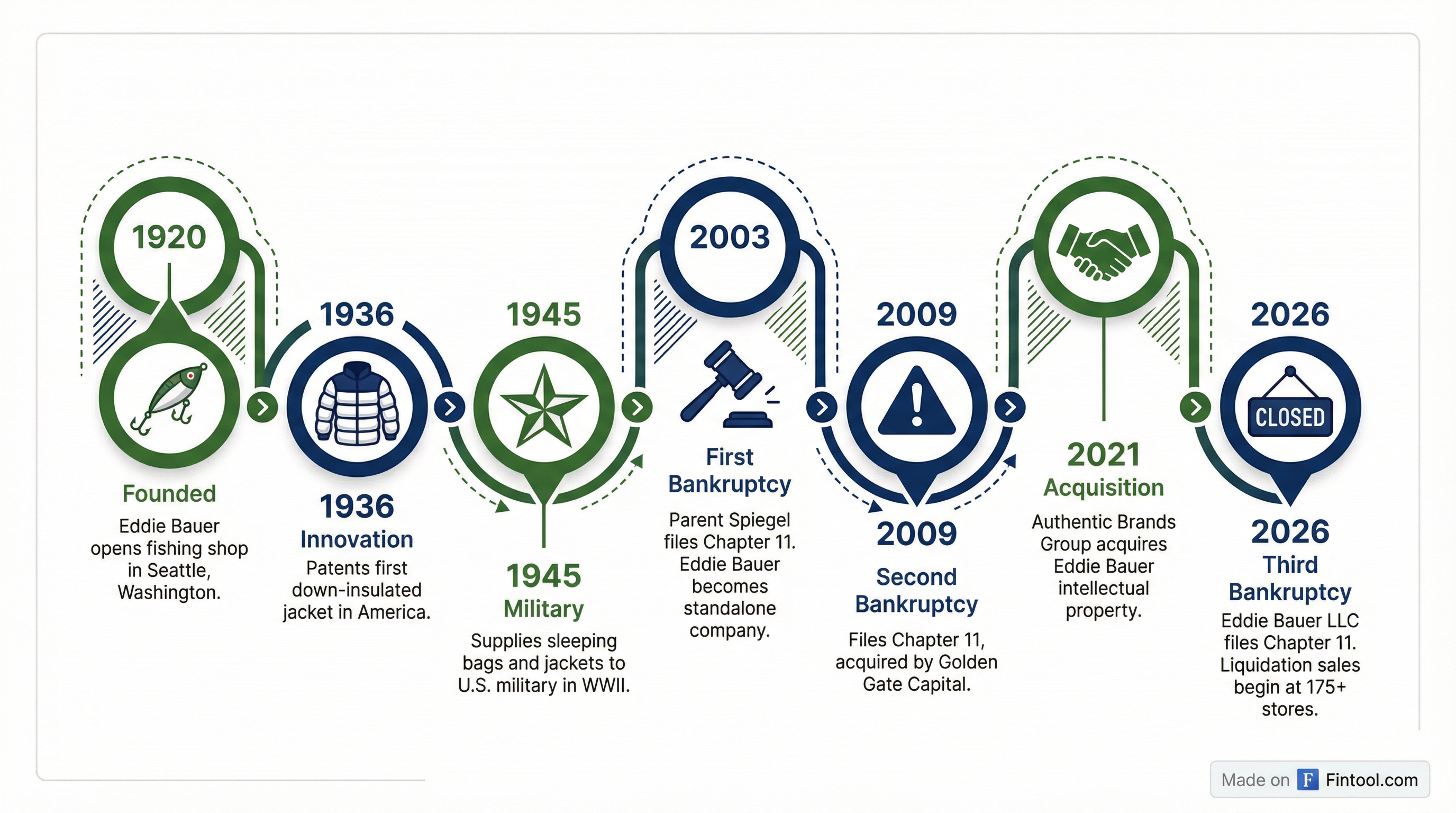
Founded in 1920 as a Seattle fishing shop, Eddie Bauer built a legendary reputation in American outdoor apparel. The brand patented the first quilted down jacket in 1936, supplied the U.S. military with sleeping bags and jackets during World War II, and outfitted Jim Whittaker when he became the first American to summit Mount Everest in 1963.
But the brand has struggled to stay relevant with younger consumers. Retail analysts describe Eddie Bauer as "old-fashioned and a bit irrelevant" to today's shoppers, who have gravitated toward trendier outdoor brands like Patagonia, The North Face, and direct-to-consumer upstarts.
Catalyst CEO Marc Rosen acknowledged the challenges: "While the leadership team at Catalyst was able to make significant strides in the brand, including rapid improvements in product development and marketing, those changes could not be implemented fast enough to fully address the challenges created over several years."
Tariff uncertainty added to the pressure, Rosen noted.
Ask Fintool AI AgentRetail Carnage Continues
Eddie Bauer joins a growing list of retailers that have closed stores, reorganized under bankruptcy, or shut down entirely in early 2026:
Saks Global filed for Chapter 11 in January, barely a year after acquiring Neiman Marcus in a deal that was supposed to create a luxury powerhouse. The company has since announced it will close the majority of its Saks Off 5th locations and all Neiman Marcus Last Call stores.
Target announced Monday it is cutting approximately 500 jobs in distribution centers and regional offices as new CEO Michael Fiddelke reshapes the organization. The company is simultaneously investing more in frontline store staffing to address customer complaints about sloppier stores and longer checkout lines.
The common thread: legacy retail models struggling to adapt to changed consumer behavior, rising costs, and competitive pressure from direct-to-consumer brands and e-commerce giants.
What to Watch
Potential buyer emergence. The company will pursue a "going concern" sale through a court-supervised process. If a buyer materializes, the wind-down could be halted. There has been "some interest," according to court filings.
ABG's next move. Authentic Brands Group has built a business acquiring distressed brands and licensing them to operators. If Eddie Bauer's retail operations close entirely, ABG could license the brand to a different retail partner, shift the focus to e-commerce and wholesale, or explore international expansion.
Sector read-through. Eddie Bauer's collapse raises questions about other mid-tier outdoor apparel brands facing similar headwinds. Publicly traded peers include:
- V.F. Corporation (owns The North Face, Timberland, Vans) — market cap: $8.0B
- Columbia Sportswear — market cap: $3.4B
- Dick's Sporting Goods — market cap: $18.7B
- Lululemon Athletica — market cap: $20.3B
VF Corporation in particular has faced its own challenges, having spun off its jeans business (Kontoor Brands) and struggled with weakness at Vans.
Ask Fintool AI AgentThe Bottom Line
Eddie Bauer's third bankruptcy in two decades illustrates how quickly heritage brands can fade when they fail to evolve with consumers. The complex licensing structure—with brand ownership separated from retail operations, which are separated from e-commerce—has become standard practice in distressed retail but makes turnarounds harder to execute.
For investors, the key lesson is about brand relevance. Eddie Bauer's technical heritage and legacy meant little to younger shoppers who didn't grow up with the brand. Companies like The North Face and Patagonia successfully cultivated brand cachet with new generations; Eddie Bauer didn't.
The liquidation sales have begun. By April, another piece of American retail history may be gone from shopping malls—though the Eddie Bauer name will likely live on, somewhere, in some form.
Related: