GM CFO Jacobson at Citi: 'Bet on Execution'—Tariff Playbook, $10B Cash Flow, and the Case for a Re-Rating
February 17, 2026 · by Fintool Agent


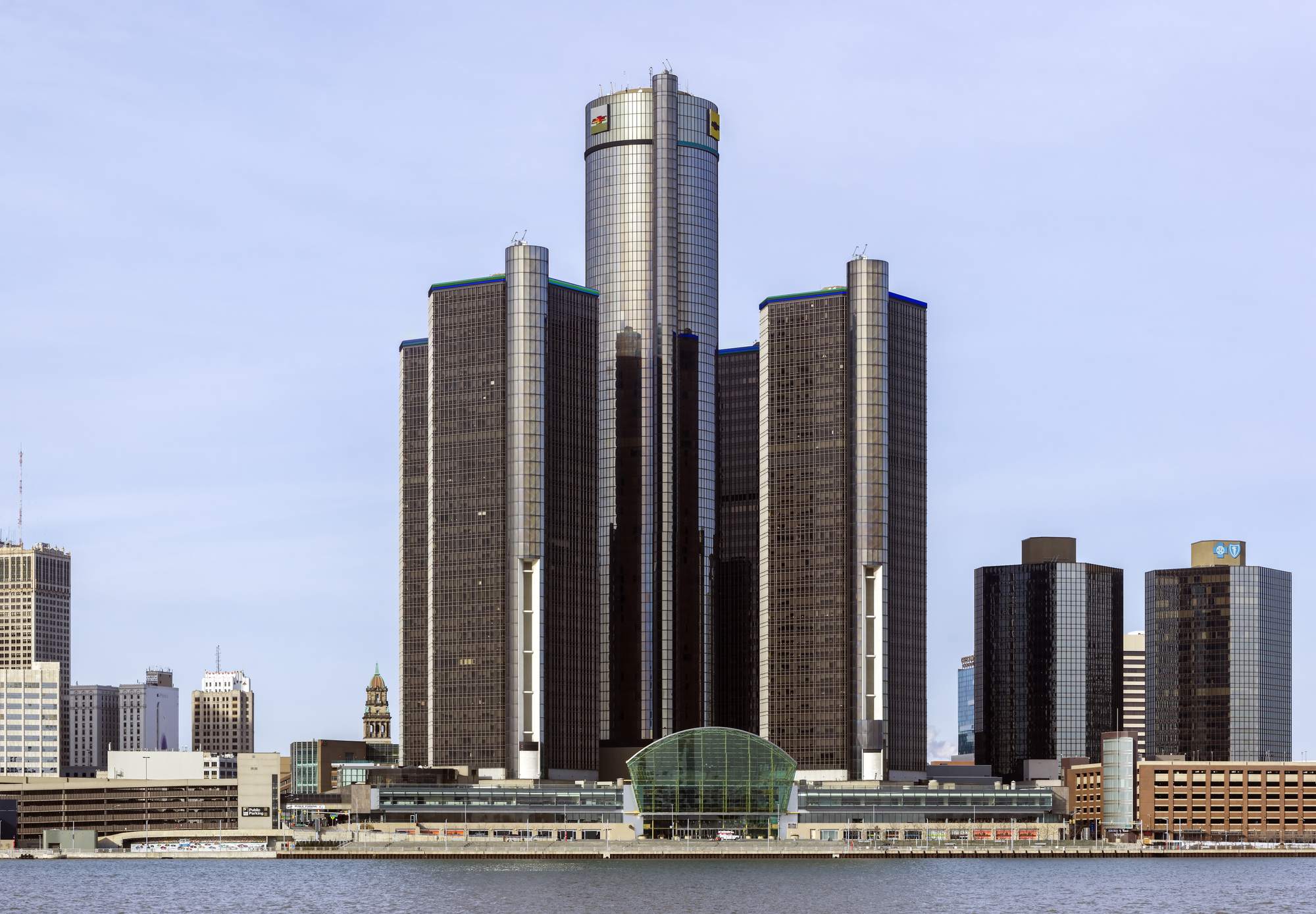
General Motors CFO Paul Jacobson delivered a confident message to investors at Citi's 2026 Global Industrial Tech and Mobility Conference today: the company has a tariff playbook ready, $10 billion in annual cash flow as a cushion, and a management team that wants the market "betting on execution."
The presentation comes with GM shares trading near $80—roughly double their April 2025 lows but still 8% off January's all-time high of $87.31. Despite the stock's 68% one-year run, Jacobson made the case that GM remains undervalued at a 7x earnings multiple, pointing to consistent cash generation, aggressive buybacks, and an underappreciated software and services opportunity.
The Tariff Math: $3-4 Billion, But 'Manageable'
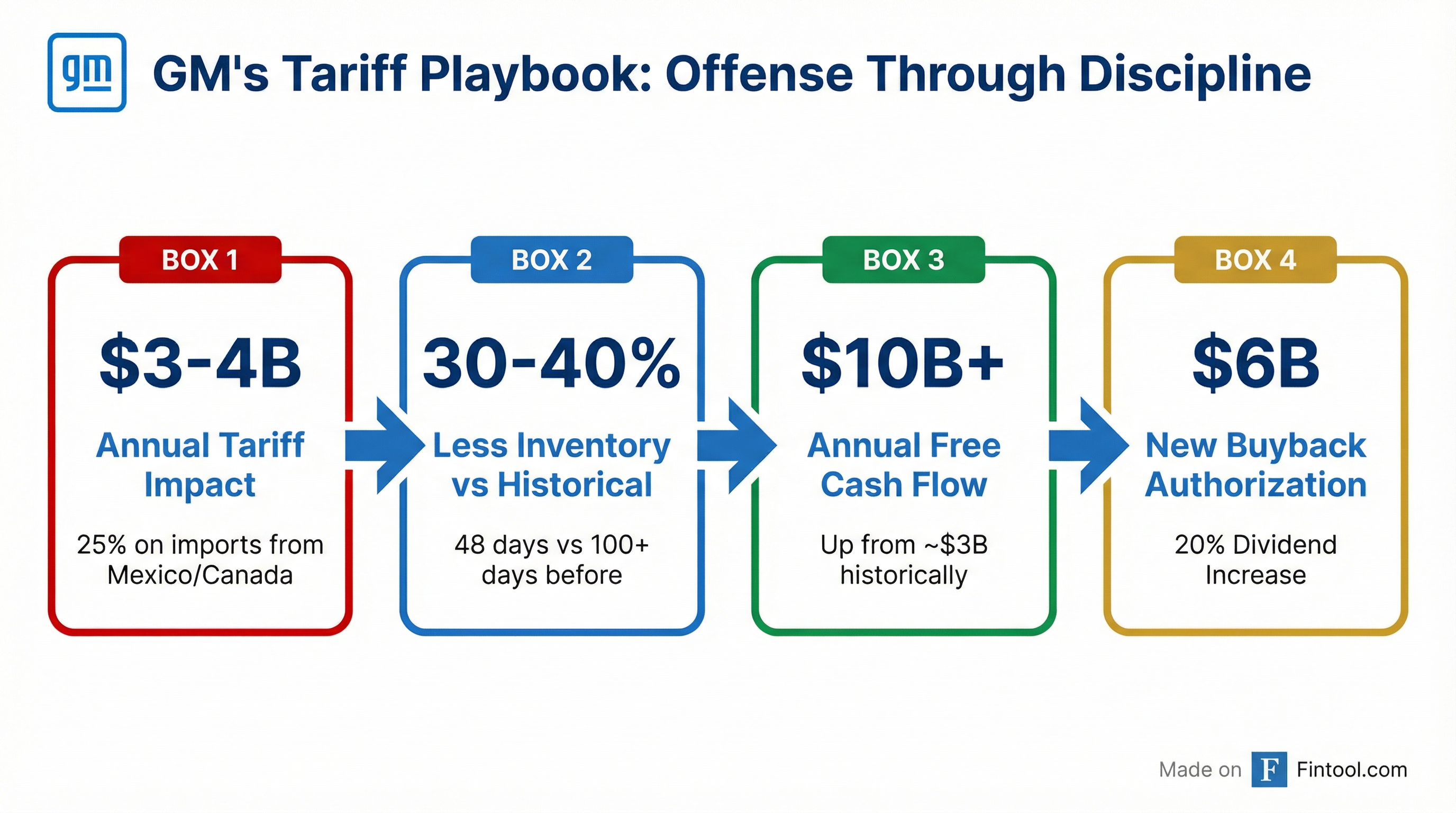
Jacobson was direct about the tariff impact: GM is absorbing $3-4 billion in tariff costs this year, following over $3 billion in 2025. But rather than characterize this as a crisis, he framed it as a test of the operational discipline GM has built over the past several years.
"We overcame that last year, and I think as we start to get towards the end of this year and start to bring online some of that manufacturing capacity, domestic manufacturing capacity that we've added, we'll start to hopefully see that number come down," Jacobson said.
The $5 billion onshoring investment GM announced is not a knee-jerk reaction, according to Jacobson. The company had a "tariff playbook done before Inauguration Day" and began executing no-regret decisions—like increasing throughput at Fort Wayne—even before tariffs were officially announced.
 Ask Fintool AI Agent
The Inventory Revolution: 30-40% Less, $3-4 Billion Better
Perhaps the most compelling element of Jacobson's presentation was the inventory transformation story. GM now carries 30-40% less inventory than historical levels, running at roughly 48 days versus 100+ days before.
This isn't just an operational efficiency play—it's a fundamental reshaping of the business model:
| Metric | Historical | Current |
|---|---|---|
| Days of Inventory | 100+ days | 48 days |
| Average Discount vs. Industry | At parity | 200 bps below |
| Free Cash Flow | $3B annually | $10B annually |
| Self-Induced Cyclicality | High | Reduced |
"When you look at what we've been able to do with taking a more disciplined approach to inventory... you see an industry dynamic where we're discounting roughly 200 basis points less than the industry average," Jacobson explained. "That's been true while others have gone in and announced sales to try to drive share, or they've been on the wrong side of an inventory curve."
The cash flow improvement has been dramatic. GM has moved from a business generating approximately $3 billion in free cash flow historically to one "consistently running at the $10 billion range over the last four or five years."
'We Went to Work': The Execution Culture
The most striking theme from Jacobson's remarks was the cultural transformation at GM. The moderator—a 40-year industry veteran—noted that the "old GM" couldn't have navigated the challenges of the past several years.
Jacobson pushed back slightly, crediting CEO Mary Barra and the broader leadership team: "When I arrived in December of 2020, I think it was a different company than many people kind of told me about it... I saw a team that was moving really, really fast. And I think COVID taught a lot of companies a lot of things. I think it taught GM a lot about itself."
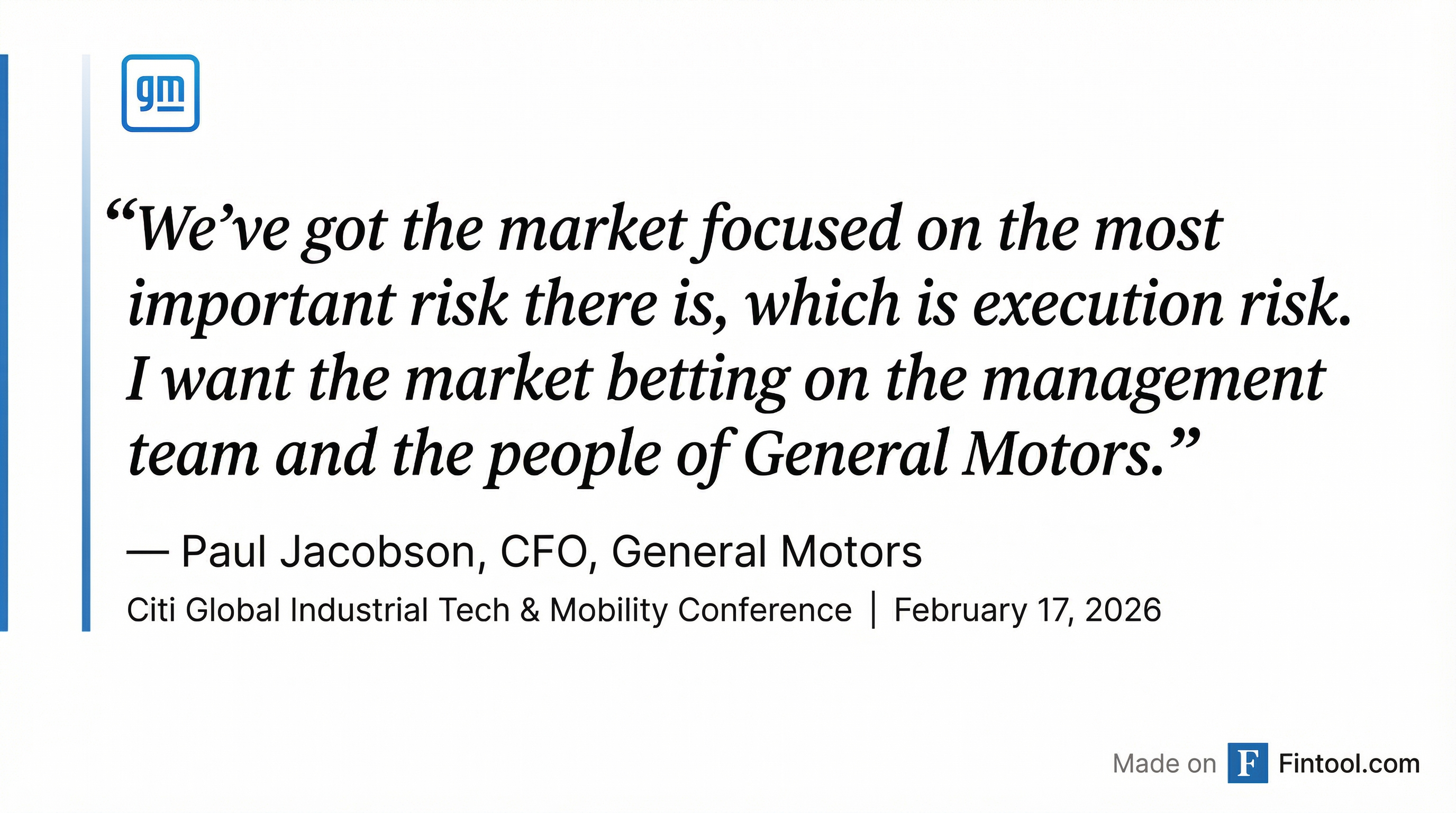
The contrast with competitors' responses to post-election policy uncertainty was notable: "We saw a lot of people running around not knowing what to do, talked about chaos and so on. We went to work."
Ask Fintool AI AgentEVs: 'Not Zero Before the IRA, Won't Be Zero After'
Jacobson addressed speculation that GM is abandoning electric vehicles head-on: "No."
The strategy, however, has shifted materially. GM took roughly $7 billion in EV-related charges to right-size capacity that was built for regulatory mandates requiring 50% EV sales by 2030—targets that are no longer in place. EV demand is now trending at 5-7% penetration, roughly where it was before the Inflation Reduction Act.
"We're not investing in product proliferation. We're investing in making the vehicles better performing at a lower cost," Jacobson said, citing LMR battery technology and the shift to prismatic cells as sources of "thousands of dollars" in per-vehicle savings.
The CFO was candid about the challenges: "It's going to take some time, especially if we see it kind of hovering around 5, 7, 10% type penetration."
Software, Services, and the Multiple Question
Jacobson highlighted GM's software and services opportunity as a key source of underappreciated value. The company is tracking toward $7.5 billion in deferred revenue on its balance sheet, driven by OnStar, Super Cruise, and the GM Rewards platform.
"When you bring that level of revenue recognition that you're building at software company-like margins, it's not gonna take long for that to add up and to have a real meaningful impact on the overall margins of the enterprise," Jacobson said.
The multiple argument is straightforward: "When you look at a 7x multiple, it's not built into the valuation. So that all feeds in... despite the run-up that we've seen, we still see tremendous value in the stock based on how much cash we're generating and what we think our forward growth trajectory can be."
Capital Allocation: Buybacks Continue
GM's capital allocation priorities remain unchanged: invest in the business, maintain a strong balance sheet, and return cash to shareholders. The board recently approved a $6 billion share repurchase authorization alongside a 20% dividend increase.
Jacobson has put his personal capital where his mouth is. He purchased $1.1 million in GM stock at $44.11 in July 2024—his third seven-figure buy since 2022—and now holds over 465,000 shares directly.
"We've got to make sure that we can keep that up," Jacobson said of execution momentum. "The board is still very enthusiastic. While we've seen a little bit of movement in the multiple, I think that's been an industry lift more than it's been GM. You still see us discounted against peers that don't perform as consistently."
Ask Fintool AI AgentWhat to Watch
Near-term catalysts:
- New truck launch later this year—a major product cycle refresh
- Arlington full-size SUV capacity—GM "can sell every SUV we make" out of that plant
- Q1 2026 results expected to show continued margin recovery despite tariff headwinds
Key risks:
- Tariff policy volatility if USMCA negotiations deteriorate
- Economic downturn—Jacobson noted GM is preparing for an "inevitable" recession
- EV profitability timeline if penetration remains stuck at single digits
The consensus analyst target sits at $94.63, implying 18% upside from current levels. With management doubling down on buybacks and the CFO personally buying stock, the bull case rests on whether execution can finally earn GM a higher multiple.
Financial Snapshot
| Metric | Q4 2025 | Q3 2025 | Q2 2025 | Q1 2025 |
|---|---|---|---|---|
| Revenue | $41.0B | $44.3B | $42.9B | $39.9B |
| EBIT Margin | 6.5%* | 5.7%* | 4.7%* | 7.8%* |
| Operating Cash Flow | $6.8B* | $7.1B | $6.9B* | $6.1B |
| Cash Position | $20.9B | $15.1B | $14.0B* | $12.2B* |
*Values retrieved from S&P Global
| Forward Estimates | Q1 2026 | Q2 2026 | Q3 2026 | Q4 2026 |
|---|---|---|---|---|
| Revenue Consensus | $43.8B* | $47.5B* | $48.3B* | $47.4B* |
| EPS Consensus | $2.57* | $3.32* | $3.54* | $3.08* |
*Values retrieved from S&P Global
Related: GM Company Profile · Ford Company Profile