Instacart Abandons AI Pricing Experiment After FTC Investigation and Consumer Backlash
December 23, 2025 · by Fintool Agent


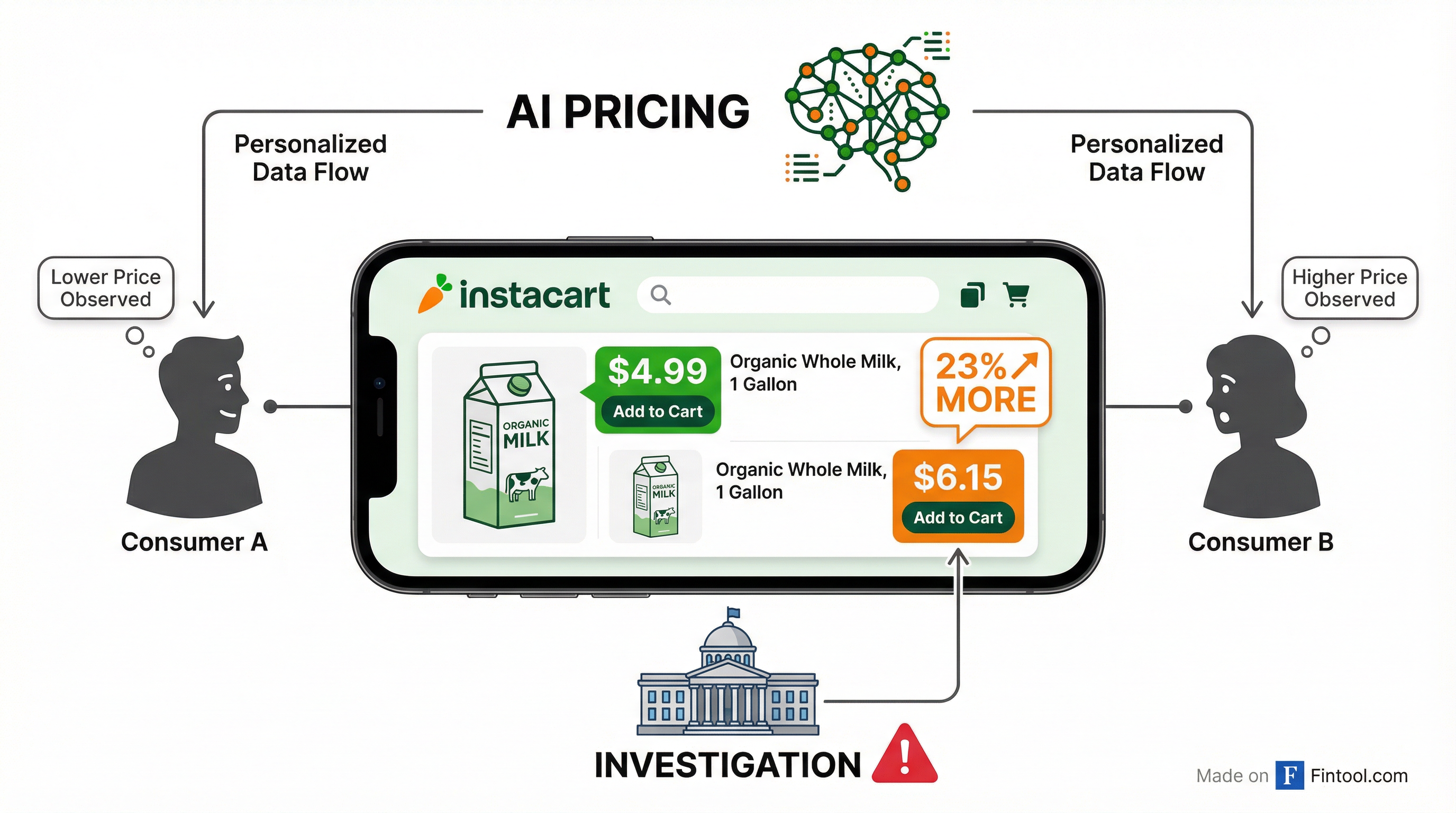
Instacart (CART) abruptly ended all AI-driven pricing experiments on its grocery delivery platform Monday, bowing to regulatory pressure and consumer outrage after an investigation revealed shoppers were unknowingly charged wildly different prices for identical items at the same store.
The reversal marks a significant setback for the company's technology ambitions and sends a warning signal across the retail industry about the limits of algorithmic pricing in consumer-facing applications.
"We understand that the tests we ran with a small number of retail partners that resulted in different prices for the same item at the same store missed the mark for some customers," the company wrote in a blog post . "At a time when families are working exceptionally hard to stretch every grocery dollar, those tests raised concerns, leaving some people questioning the prices they see on Instacart. That's not okay."
What the Investigation Uncovered
The firestorm began December 9 when Consumer Reports, Groundwork Collaborative, and More Perfect Union published a damning study exposing Instacart's "Eversight" AI pricing system .
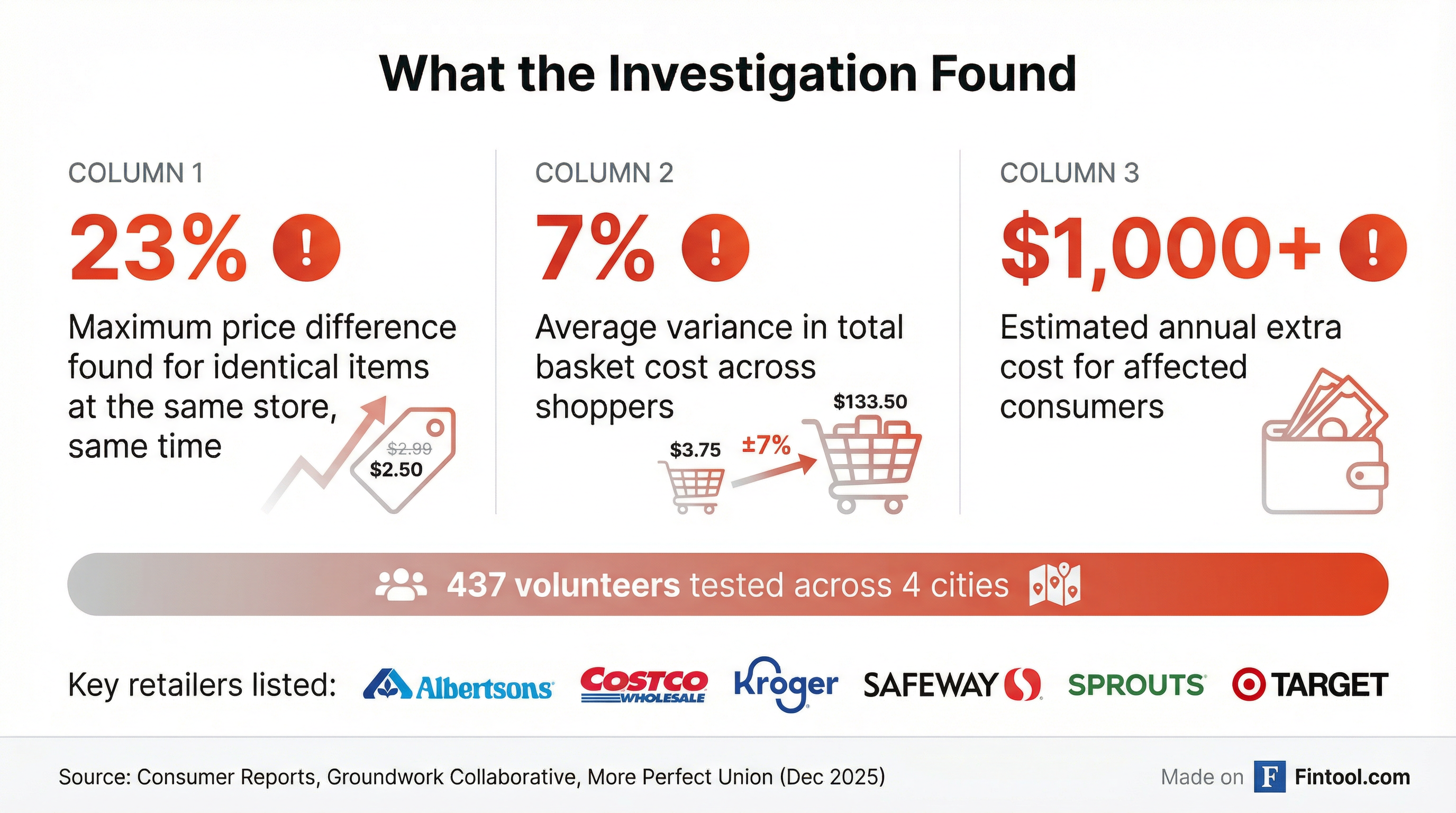
The investigation, based on data from 437 volunteers across four cities, found:
- 75% of products were offered at different prices to different customers shopping simultaneously
- Some items showed up to five different prices at the same store, same time
- Price variations ranged from 7 cents to $2.56 per item
- Total basket costs varied by an average of 7%, potentially costing affected consumers over $1,000 annually
- In one Seattle Safeway test, a box of Wheat Thins showed a 23% price difference between shoppers
The pricing experiments extended across major retailers including Albertsons, Costco, Kroger, Safeway, Sprouts Farmers Market, and Target.
 Ask Fintool AI Agent
The Eversight Acquisition Comes Back to Haunt
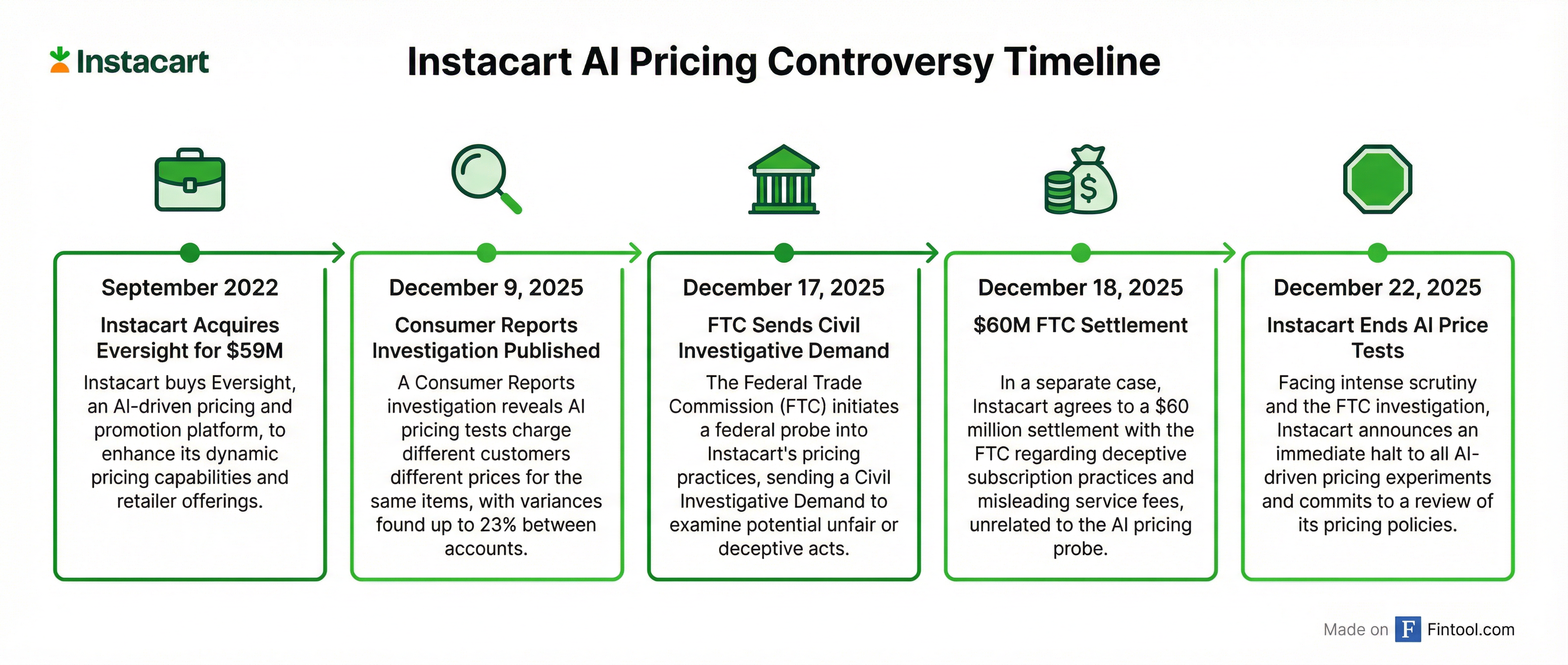
Instacart acquired Eversight, an AI pricing optimization platform, for $59 million in September 2022. At the time, the company touted the technology as a way to help retailers "improve sales and growth, while also surfacing the best deals for customers" .
Instead, Eversight became a liability. The platform allowed retailers to run randomized price tests—without shoppers' knowledge—to gauge willingness to pay higher prices on certain items.
Instacart's own SEC filings acknowledged the regulatory risk. In its Q3 2025 10-Q, the company warned that "government authorities and regulators have recently been increasingly focused on grocery prices and related pricing methodologies and practices, which may impact our ability to offer such tools and products" .
The company's risk disclosure also noted that "our brand reputation and our ability to attract and retain customers could also be harmed if these solutions negatively impact consumer price perception" —a prescient warning that materialized just weeks later.
FTC Investigation Intensifies Pressure
The Federal Trade Commission sent Instacart a civil investigative demand on December 17, seeking information about its AI pricing practices . While the FTC declined to confirm the probe, the agency issued a pointed statement: "Like so many Americans, we are disturbed by what we have read in the press about Instacart's alleged pricing practices."
The investigation came days after Instacart agreed to a separate $60 million settlement with the FTC over deceptive subscription practices and misleading "satisfaction guarantee" advertising—a one-two regulatory punch that left the company with little choice but to capitulate on the pricing experiments.
Ask Fintool AI AgentFinancial Context: A Profitable Company Risking Its Reputation
The controversy threatens to undermine what has been a steady turnaround story for Instacart since its September 2023 IPO.
| Metric | Q4 2024 | Q1 2025 | Q2 2025 | Q3 2025 |
|---|---|---|---|---|
| Revenue | $883M* | $897M* | $914M* | $939M* |
| Net Income | $148M* | $106M* | $116M* | $144M* |
| Gross Margin | 75.2%* | 74.8%* | 74.2%* | 73.7%* |
*Values retrieved from S&P Global
The company is profitable and growing, with revenue up 6% quarter-over-quarter. But the pricing scandal threatens the trust that grocery delivery platforms depend on—particularly as inflation-weary consumers scrutinize every dollar spent on food.
Ask Fintool AI AgentBroader Implications: The AI Pricing Backlash Spreads
Instacart's retreat signals growing resistance to algorithmic pricing in consumer goods. While dynamic pricing is accepted in airline tickets, hotel rooms, and ride-sharing, consumers draw a sharper line when it comes to essential goods like food.
A Consumer Reports survey found 72% of Instacart users who had shopped on the platform in the past year did not want the company to charge different prices to different customers for any reason .
State legislatures are taking notice. A first-of-its-kind New York law, effective November 2025, now requires companies to display a prominent disclaimer on algorithmically-set prices: "THIS PRICE WAS SET BY AN ALGORITHM USING YOUR PERSONAL DATA." Bills in California, Colorado, and Pennsylvania would go further by banning surveillance pricing by grocery retailers entirely.
What to Watch
Near-term:
- Whether the FTC investigation expands to retailers who used Eversight's pricing tools
- Impact on Instacart's Q4 2025 results as consumers assess whether to return
- Potential class action litigation from affected consumers
Structural questions:
- How other grocery platforms will respond to heightened regulatory scrutiny
- Whether Eversight's $59 million acquisition value gets written down
- The future of electronic shelf labels—digital price tags that enable rapid, remote price changes—a technology Instacart has been piloting with retailers
Groundwork Collaborative's executive director Lindsay Owens captured the moment: "Once we pulled back the curtain on Instacart's hidden pricing experiments, the company had no choice but to close the lab" .
For a company that built its brand on convenience and transparency, the AI pricing debacle is a costly reminder that trust, once broken, is expensive to rebuild.
Ask Fintool AI Agent