Japan's Takaichi Calls Snap Election as Bond Yields Hit 27-Year Highs
January 19, 2026 · by Fintool Agent


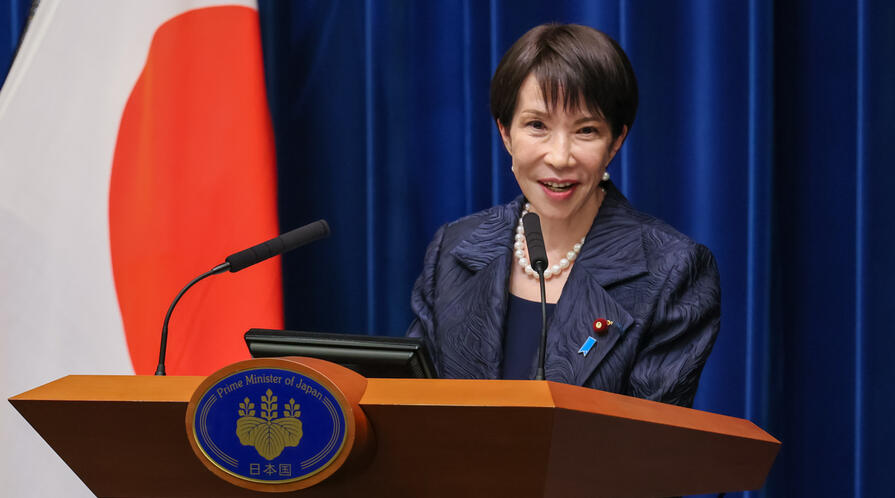
Japan's 10-year government bond yield surged to 2.27% on Monday—its highest level since 1999—after Prime Minister Sanae Takaichi officially announced a snap general election for February 8, doubling down on promises of aggressive fiscal stimulus that have rattled global bond markets.
"I am staking my own political future as prime minister on this election," Takaichi declared at a press conference. "I want the public to judge directly whether they will entrust me with the management of the nation."
The "Takaichi trade" is now in full force: Japanese stocks at record highs, bonds selling off, and the yen tumbling toward intervention territory.
The Policy Gambit: Tax Cuts Meet Defense Buildup
Takaichi's platform centers on two pillars that spell more borrowing for a nation already carrying the developed world's heaviest debt load:
Consumption Tax Relief: A two-year suspension of the 8% food sales tax, estimated to cost ¥5 trillion ($32 billion) annually. "We will overhaul past economic and fiscal policy," Takaichi said. "My administration will put an end to an excessively tight fiscal policy and a lack of investment for the future."
Record Defense Spending: Japan's $58 billion FY2026 defense budget—a 9.4% increase—marks the fourth year of a five-year program to double military spending to 2% of GDP, two years ahead of schedule. The buildup responds to escalating tensions with China, North Korea's nuclear program, and US pressure to shoulder more alliance costs.
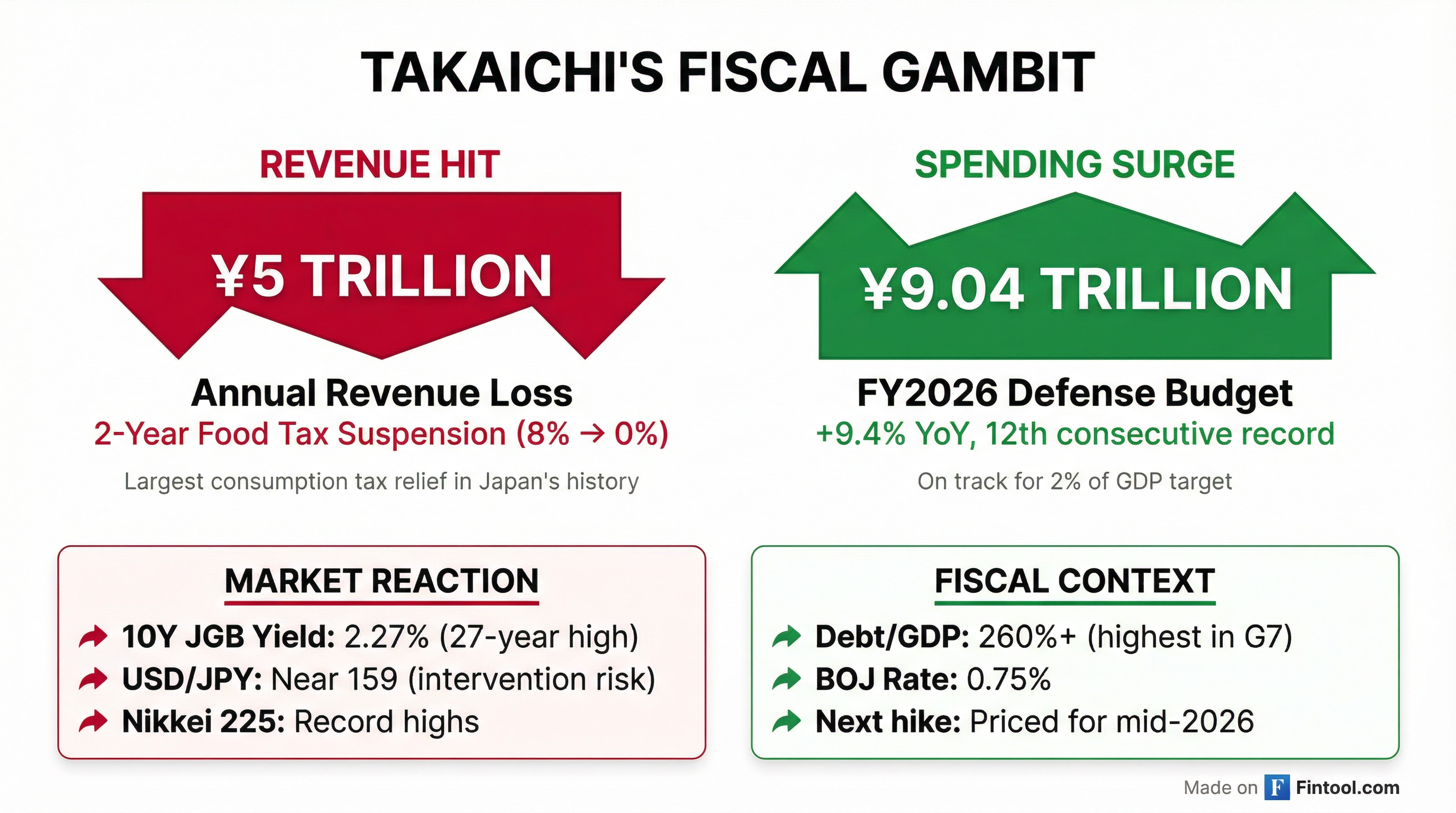
The combination has bond vigilantes on alert. "I can't see why Japan needs a consumption tax cut after compiling a significant stimulus package to counter rising inflation," said Keiji Kanda, senior economist at Daiwa Institute of Research.
 Ask Fintool AI Agent
Bond Market Reaction: Multi-Decade Highs Across the Curve
The sell-off cascaded across Japan's yield curve:
| Maturity | Yield | Change | Context |
|---|---|---|---|
| 10-year JGB | 2.27% | +9 bps | 27-year high (highest since 1999) |
| 20-year JGB | 2.8% | +10 bps | Record high |
| 30-year JGB | 3.58% | +10 bps | All-time high since debut |
"If concerns about fiscal expansion grow during the campaign, long-term yields could tend to come under upward pressure, at least temporarily," warned Barclays economists Naohiko Baba and Takashi Onoda. "That said, a weaker JPY and rising long-term yields could end up restraining the Takaichi administration's proactive fiscal policy."
The Bank of Japan meets this week and is widely expected to hold rates at 0.75%, though markets are pricing in additional hikes by mid-2026. Governor Kazuo Ueda has maintained that the BOJ "stands ready to raise rates if economic and price developments align with projections."
The Yen's Freefall
The yen has become collateral damage in the fiscal expansion narrative:
- USD/JPY: Broke through 159, approaching the 161 level that triggered $100 billion in intervention across four operations in 2024
- EUR/JPY: All-time lows
- CHF/JPY: All-time lows
Finance Minister Satsuki Katayama issued a stark warning to speculators, noting she had spoken with US Treasury Secretary Scott Bessent about "one-sided moves" in the currency. Japan's foreign exchange reserves stand at $1.16 trillion—but traders are testing whether authorities will back up their words with action.
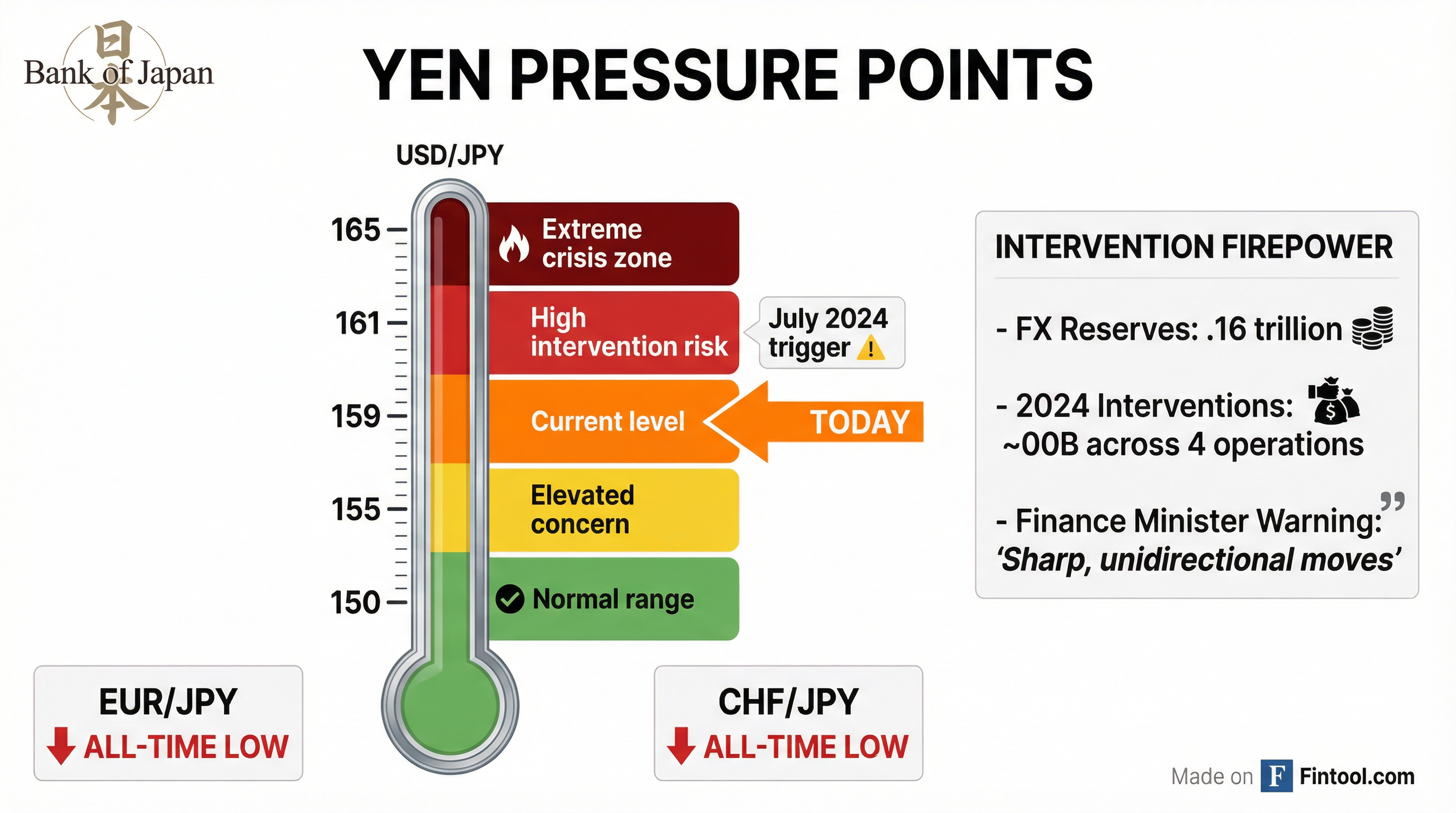
"The path of least resistance for now is higher Nikkei, weaker yen and JGBs (steeper yield), on a classic backdrop of the 'Takaichi trade,'" said Vasu Menon, managing director of investment strategy at OCBC.
Ask Fintool AI AgentStock Market Celebrates—For Now
The Nikkei 225 has been the clear winner, surging to record highs:
- Nikkei 225: Up 3.1% to 53,549 on January 13—first close above 53,000 in history
- Topix: All-time closing high
- Japanese defense stocks: Mitsubishi Heavy Industries, Kawasaki Heavy Industries, and ShinMaywa Industries have soared on the defense spending tailwind
The logic: a weaker yen supercharges earnings for export titans like Toyota and Sony, while fiscal stimulus supports domestic demand. But the trade carries risk—if yields continue to rise, the higher cost of capital could eventually pressure valuations.
Defense Industry Beneficiaries
Japan's $58 billion defense budget creates significant opportunities for domestic contractors:
Mitsubishi Heavy Industries (7011.T): Japan's largest defense contractor with 21.2% market share. The company expects defense sales to double to ¥1 trillion by FY2027-2029. Key contracts include the upgraded Mogami-class frigates, Type-12 long-range missiles, and the joint next-generation fighter program with the UK and Italy.
Kawasaki Heavy Industries (7012.T): Major supplier of submarines, helicopters, and transport aircraft. Stock has risen 27% in 2025.
IHI Corporation (7013.T): Jet engine manufacturer benefiting from defense and commercial aerospace recovery.
US defense primes Lockheed Martin, RTX, and Northrop Grumman also stand to benefit from Japan's defense modernization, though the policy shift prioritizes domestic industry development.
Ask Fintool AI AgentPolitical Calculus and Risks
Takaichi is betting she can capitalize on strong approval ratings—above 70%—to consolidate the Liberal Democratic Party's grip on power. Her coalition currently holds a razor-thin 233-seat majority in the 465-seat lower house.
But snap elections carry risk. Her predecessor, Shigeru Ishiba, called a snap election in autumn 2024 and suffered a humiliating loss of the ruling coalition's lower house majority. Takaichi is also fighting without Komeito, the Buddhist-backed party that served as the LDP's coalition partner for a quarter century and provided crucial voter mobilization infrastructure.
The opposition has coalesced into a new centrist alliance, and nearly all parties—ruling and opposition—are campaigning on some form of consumption tax relief. The fiscal implications, regardless of who wins, point in one direction: more spending.
What to Watch
This Week:
- BOJ Decision (Jan 23): Expected hold at 0.75%, but watch for any signals on normalization timeline
- Japan Core CPI (Jan 23): November print was 3.0%—any acceleration could pressure BOJ
- USD/JPY 160 level: Intervention risk zone
February:
- Feb 8 Election: Will Takaichi secure her mandate?
- Budget deliberations: Delayed by election—fiscal 2026 budget requires parliamentary approval by March
Longer-term:
- Japan's debt-to-GDP ratio exceeds 260%—the highest in the developed world
- If yields normalize toward global levels, debt servicing costs could explode
- The BOJ's path to policy normalization just got more complicated