Merck Walks Away From $30 Billion Revolution Medicines Deal; Stock Plunges 22%
January 26, 2026 · by Fintool Agent


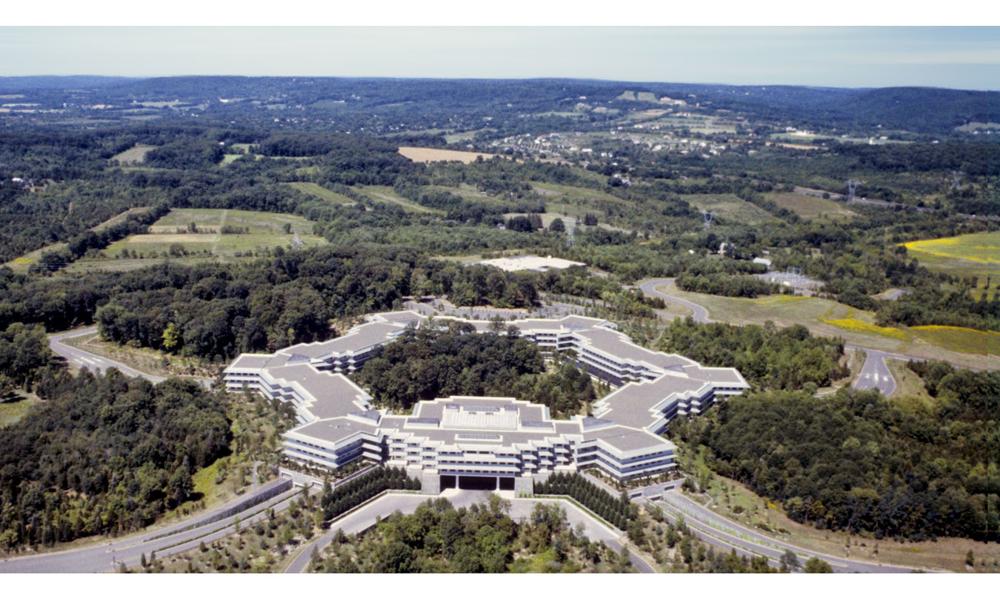
Merck has walked away from acquisition talks with Revolution Medicines after the companies failed to agree on price for what would have been the largest pharma deal since Pfizer's $43 billion Seagen acquisition, the Wall Street Journal reported Sunday .
Revolution Medicines shares cratered 22% in premarket trading Monday, falling to approximately $91 from Friday's close of $117.63 . The collapse erases much of the 47% rally the stock enjoyed since reports of Merck's interest first surfaced on January 8th.
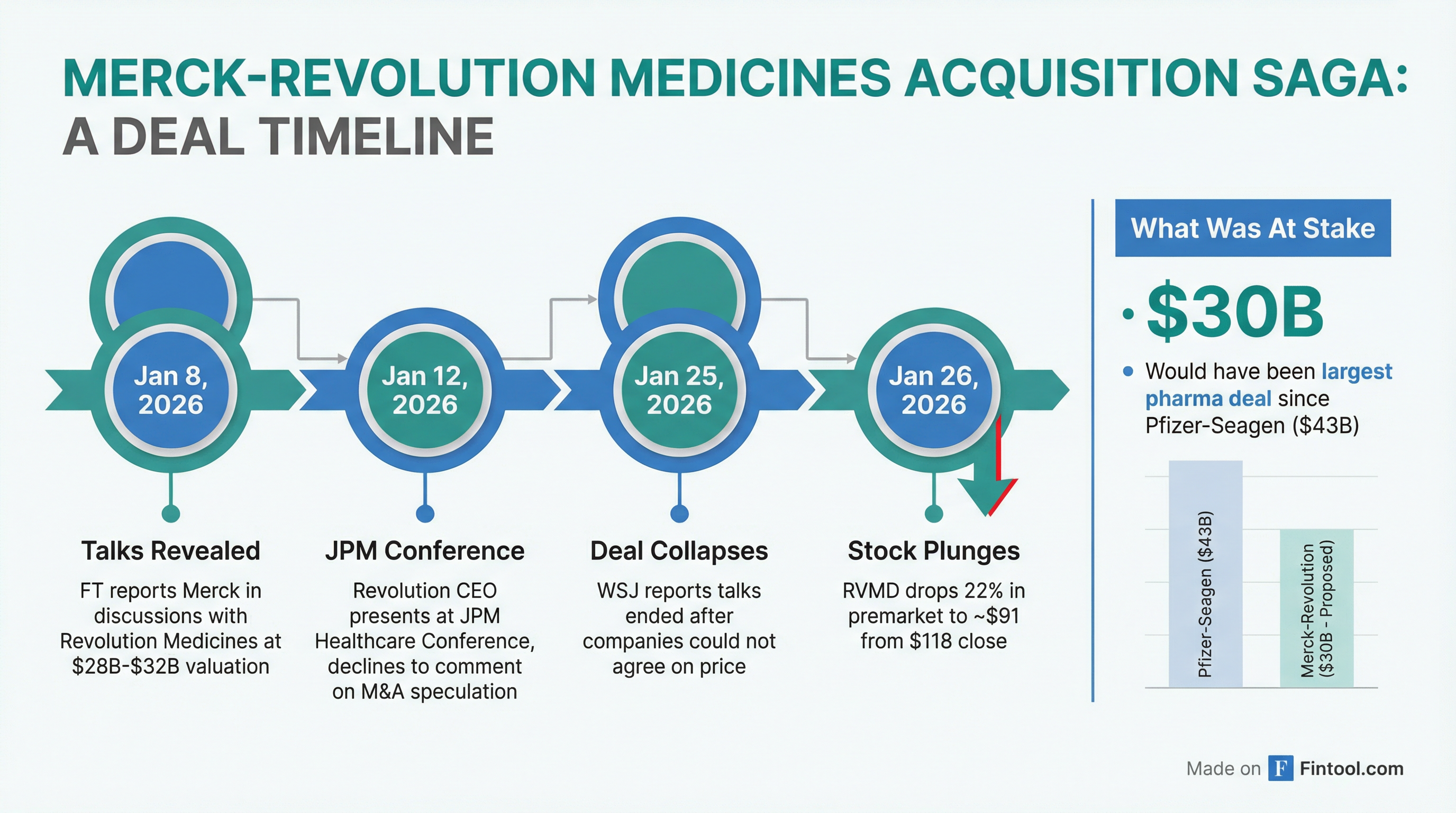
The Price Gap That Killed the Deal
Merck had reportedly offered between $28 billion and $32 billion for Revolution Medicines—a range that implied a per-share price of roughly $145 to $165 . Before deal rumors emerged, Revolution's market cap sat around $16 billion with shares trading near $80 .
The two sides couldn't bridge the valuation gap, though the WSJ noted that talks could restart or another suitor could emerge . Abbvie had previously been linked to acquisition interest, though the company denied active discussions .
 Ask Fintool AI Agent
What Merck Was Buying: The RAS Revolution
Revolution Medicines represents the most advanced effort to drug "undruggable" RAS—oncogenic mutations present in approximately 30% of all human cancers and particularly prevalent in pancreatic, lung, and colorectal cancers .
The company's lead asset, daraxonrasib (RMC-6236), is a first-in-class RAS(ON) multi-selective inhibitor targeting G12X, G13X, and Q61X mutations . It has accumulated an unprecedented array of FDA designations:
- Breakthrough Therapy Designation for previously treated metastatic pancreatic cancer (June 2025)
- Orphan Drug Designation for pancreatic cancer (October 2025)
- Commissioner's National Priority Voucher under the pilot program (October 2025)
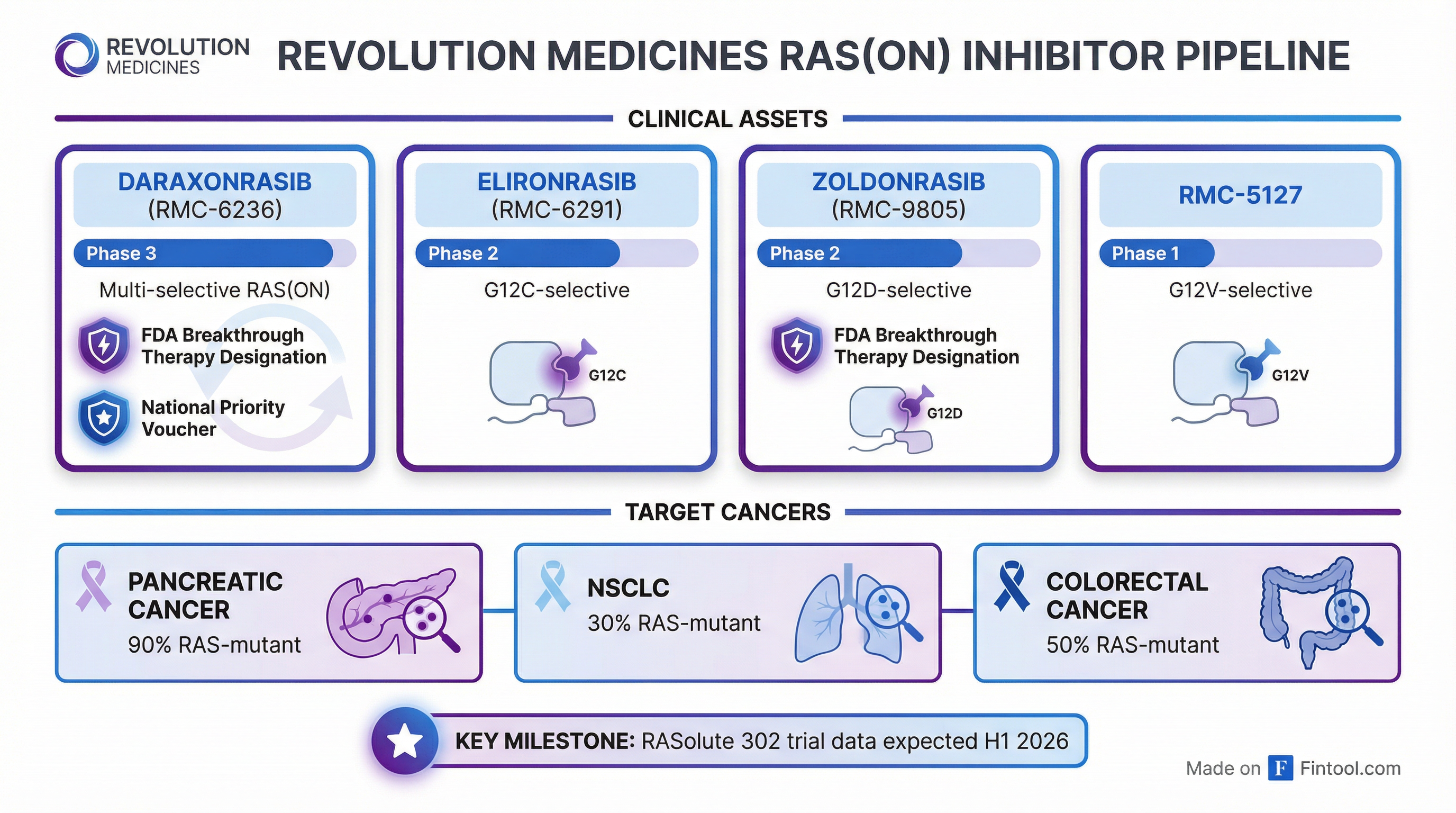
At the J.P. Morgan Healthcare Conference two weeks ago, CEO Mark Goldsmith outlined an aggressive clinical program spanning eight registrational Phase 3 trials across pancreatic, lung, and colorectal cancers . The company has treated more than 2,500 patients with its RAS(ON) inhibitors to date.
Revolution Medicines Clinical Pipeline:
| Asset | Target | Stage | Key Trial |
|---|---|---|---|
| Daraxonrasib (RMC-6236) | Multi-selective RAS(ON) | Phase 3 | RASolute 302 (2L PDAC) - data H1 2026 |
| Elironrasib (RMC-6291) | G12C-selective | Phase 2 | Registrational path under review |
| Zoldonrasib (RMC-9805) | G12D-selective | Phase 2 | RASolute 305/309 (1L PDAC) initiating 2026 |
| RMC-5127 | G12V-selective | Phase 1 | RP2D expected H2 2026 |
Ask Fintool AI AgentThe Pivotal Catalyst: RASolute 302 Data
The make-or-break moment arrives in the first half of 2026 when Revolution reports top-line results from RASolute 302, its Phase 3 registrational trial studying daraxonrasib as monotherapy versus investigator's choice chemotherapy in patients with previously treated metastatic pancreatic ductal adenocarcinoma (PDAC) .
The trial has completed global enrollment and is powered for overall survival . At the JPM conference, Goldsmith noted: "It's an experiment. And so while we think there are a lot of data that justify conducting the study, and we certainly have high hopes for it, it's an experiment" .
In a blue-sky scenario where the data are compelling and the FDA moves expeditiously under the National Priority Voucher program, approval could theoretically occur by late 2026—though Goldsmith cautioned against speculation .
Why Merck Needed This Deal
For Merck, the strategic rationale was clear: the company faces a patent cliff as Keytruda, its $29.5 billion blockbuster cancer immunotherapy representing roughly 45% of total revenue, loses exclusivity starting in 2028 .
CEO Robert Davis has been candid about the challenge, framing it as transformation "from being historically the Keytruda company to increasingly... a launch company and a much more diversified company" .
The company has communicated over $50 billion of commercial opportunity by the mid-2030s through pipeline launches and business development . Recent deals include Cidara Therapeutics ($9.2 billion) and Verona Pharma (~$10 billion) .
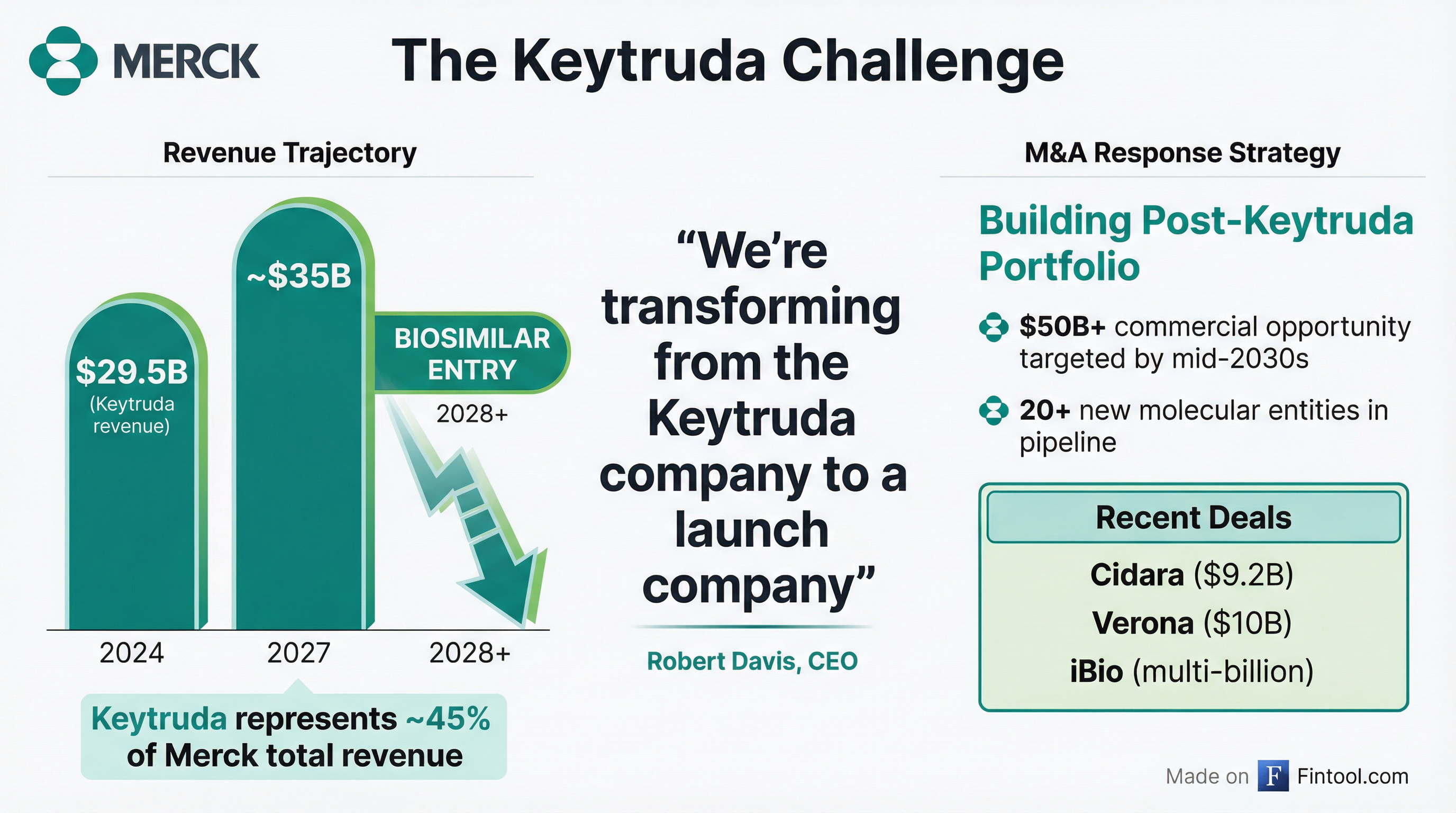
Revolution's RAS(ON) platform would have provided diversification in a therapeutic area with massive addressable populations:
| Cancer Type | RAS Mutation Prevalence | Annual U.S. Incidence |
|---|---|---|
| Pancreatic (PDAC) | 90% | 65,000 |
| Colorectal | 50% | 150,000 |
| Non-Small Cell Lung | 30% | 180,000 |
Ask Fintool AI AgentRevolution's Financial Position
Despite the stock plunge, Revolution Medicines maintains a strong financial position to advance its programs independently:
| Metric | Q3 2025 | Q4 2024 |
|---|---|---|
| Cash and Equivalents | $217M | $543M |
| Total Assets | $2.25B | $2.56B |
| Net Loss (Quarterly) | -$305M | -$195M |
At the JPM conference, Goldsmith highlighted "$1.9 billion as of the end of the third quarter, with an additional $1.75 billion in committed capital available to us under our agreement with Royalty Pharma" . This $3.65 billion total funding capacity provides substantial runway to reach multiple data catalysts.
What Comes Next
The deal collapse sets up a pivotal few months:
Near-term catalysts:
- H1 2026: RASolute 302 top-line data (daraxonrasib in 2L PDAC)
- H1 2026: RASolute 305 initiation (zoldonrasib + chemo in 1L PDAC)
- H2 2026: RASolute 309 initiation (RAS(ON) inhibitor doublet)
- 2026: First-in-human study of new resistance-defeating RAS(ON) class
If RASolute 302 delivers positive results, deal discussions could quickly reignite—potentially at higher valuations. A negative readout would validate Merck's caution and likely sink the stock further.
For Merck, the hunt continues. Davis has made clear: "We're going to continue to look to do business development. We're not slowing down" .
Ask Fintool AI AgentThe Bottom Line
This is the biotech M&A story of the year so far—and it's not over. Merck walked away from what would have been its largest deal ever, betting that either (1) Revolution's pivotal data disappoints and the price comes down, or (2) better opportunities emerge elsewhere.
For Revolution shareholders, the 22% haircut stings, but the fundamental thesis remains intact: the company possesses the most advanced RAS-targeting pipeline in oncology, regulatory fast-track designations, and enough capital to reach multiple value-inflecting catalysts. The RASolute 302 readout will determine whether today's sellers made a mistake—or dodged a bullet.
Related Companies: Merck & Co. | Revolution Medicines | Abbvie