Nintendo Shares Crash 11% as AI-Driven Memory Chip Crisis Threatens Switch 2 Margins
February 4, 2026 · by Fintool Agent


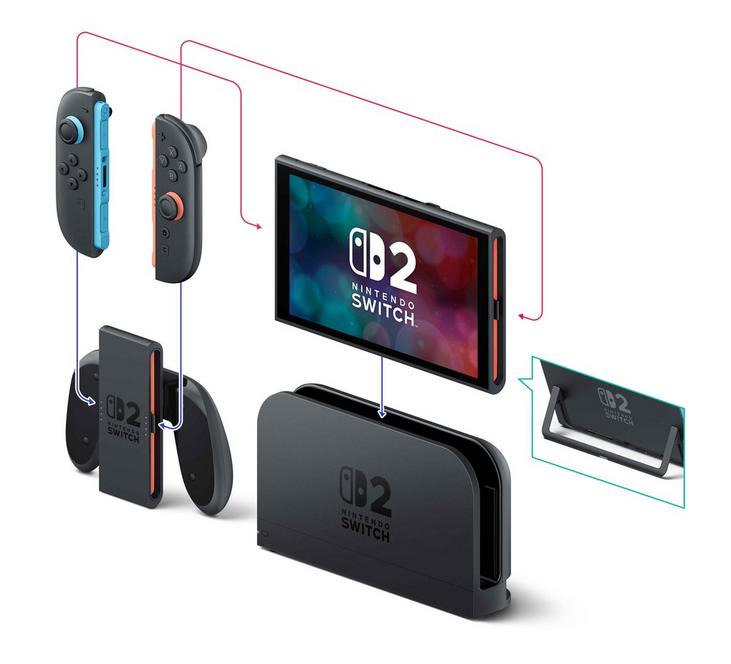
Nintendo just discovered what happens when gaming consoles compete with AI for the same chips.
Shares of the Japanese gaming giant plunged 11% Wednesday—their worst single-day drop in 18 months—wiping out billions in market value as investors processed the real cost of the global memory shortage. Despite beating profit estimates with a 24% year-over-year jump, Nintendo's warning that sustained memory costs could erode margins sent investors running for the exits.
The timing couldn't be worse. Nintendo's Switch 2, launched to massive fanfare last June, has sold 17.37 million units in nine months—the fastest start for any Nintendo console ever. But sustaining that momentum means keeping production humming and prices competitive, both of which get harder when your key components cost nearly double what they did three months ago.
The Numbers Look Good—Until You Read the Fine Print
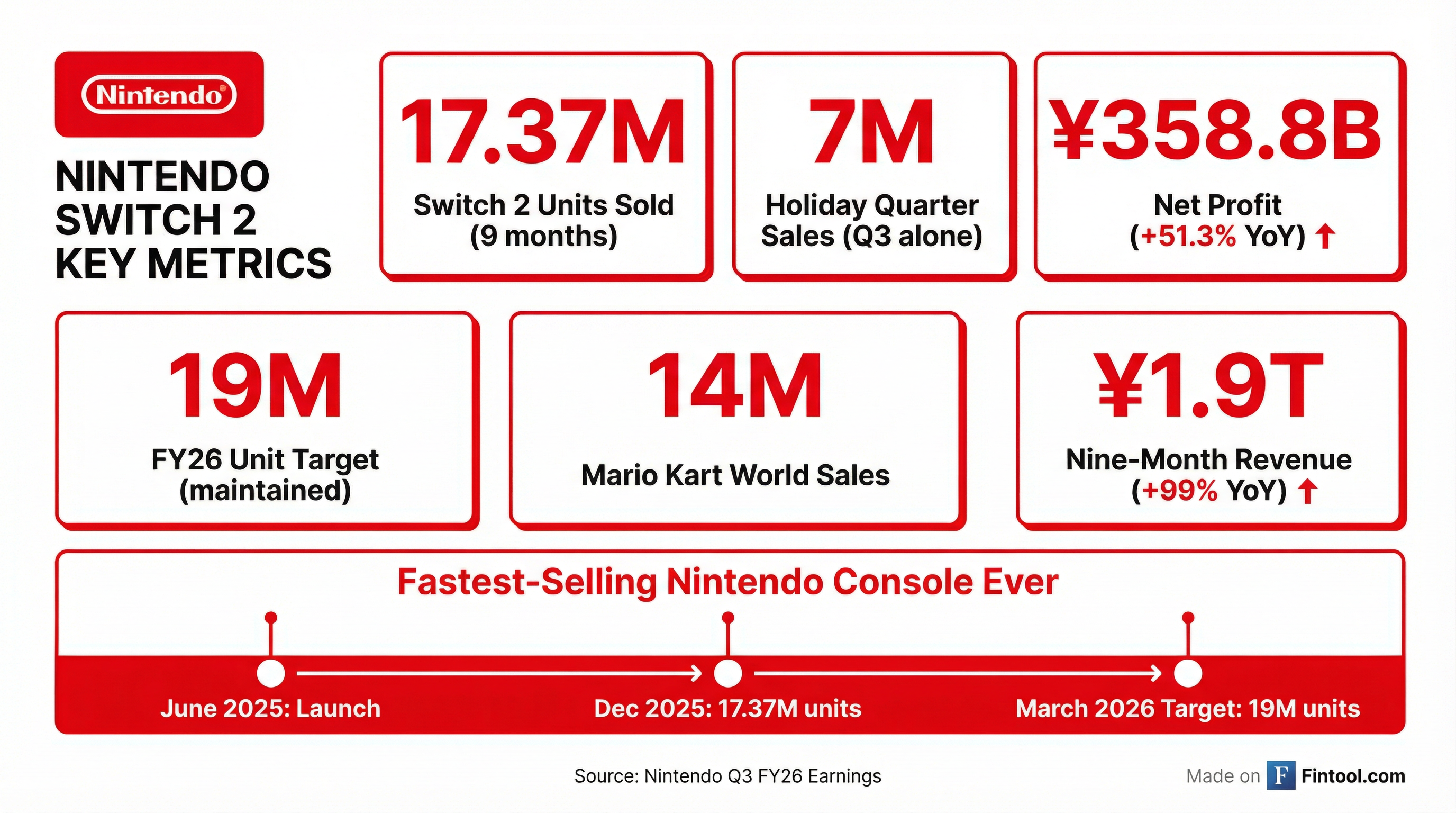
Nintendo's Q3 FY26 results (nine months ended December 31, 2025) painted a picture of robust growth:
| Metric | Q1-Q3 FY26 | Q1-Q3 FY25 | Change |
|---|---|---|---|
| Net Sales | ¥1,905.8B | ¥956.2B | +99.3% |
| Operating Profit | ¥300.3B | ¥247.5B | +21.3% |
| Net Profit | ¥358.8B | ¥237.1B | +51.3% |
| Operating Margin | 15.8% | 25.9% | -10.1 pts |
Revenue nearly doubled. Profit jumped 51%. But operating margin collapsed from 25.9% to 15.8%—a 10-percentage-point decline that tells the real story. Nintendo is selling more, but keeping less.
The company maintained its full-year forecast—¥350 billion in net profit on 19 million Switch 2 units sold—but that maintenance itself is the tell. With revenue doubling and nine-month profit already exceeding full-year guidance, the forecast wasn't raised because management sees margin headwinds ahead.
 Ask Fintool AI Agent
The Memory Chip Collision
Here's the problem in a sentence: the same chips powering your Switch 2 are also powering ChatGPT, and OpenAI is paying more.
The AI infrastructure buildout has created unprecedented demand for memory chips—particularly high-bandwidth memory (HBM) used in AI accelerators. Micron-12.77% CEO Sanjay Mehrotra has called it a "supercycle," with the company seeing AI-driven demand accelerating and outpacing industry supply.
Memory manufacturers face a brutal allocation decision: prioritize high-margin HBM production for Nvidia-3.65% GPUs and AI servers, or fulfill orders for lower-margin consumer devices. The math is simple. According to Micron's filings, HBM production requires three to four times the wafer capacity of standard DRAM for the same number of bits. Every wafer allocated to an AI server is a wafer denied to a Switch 2.
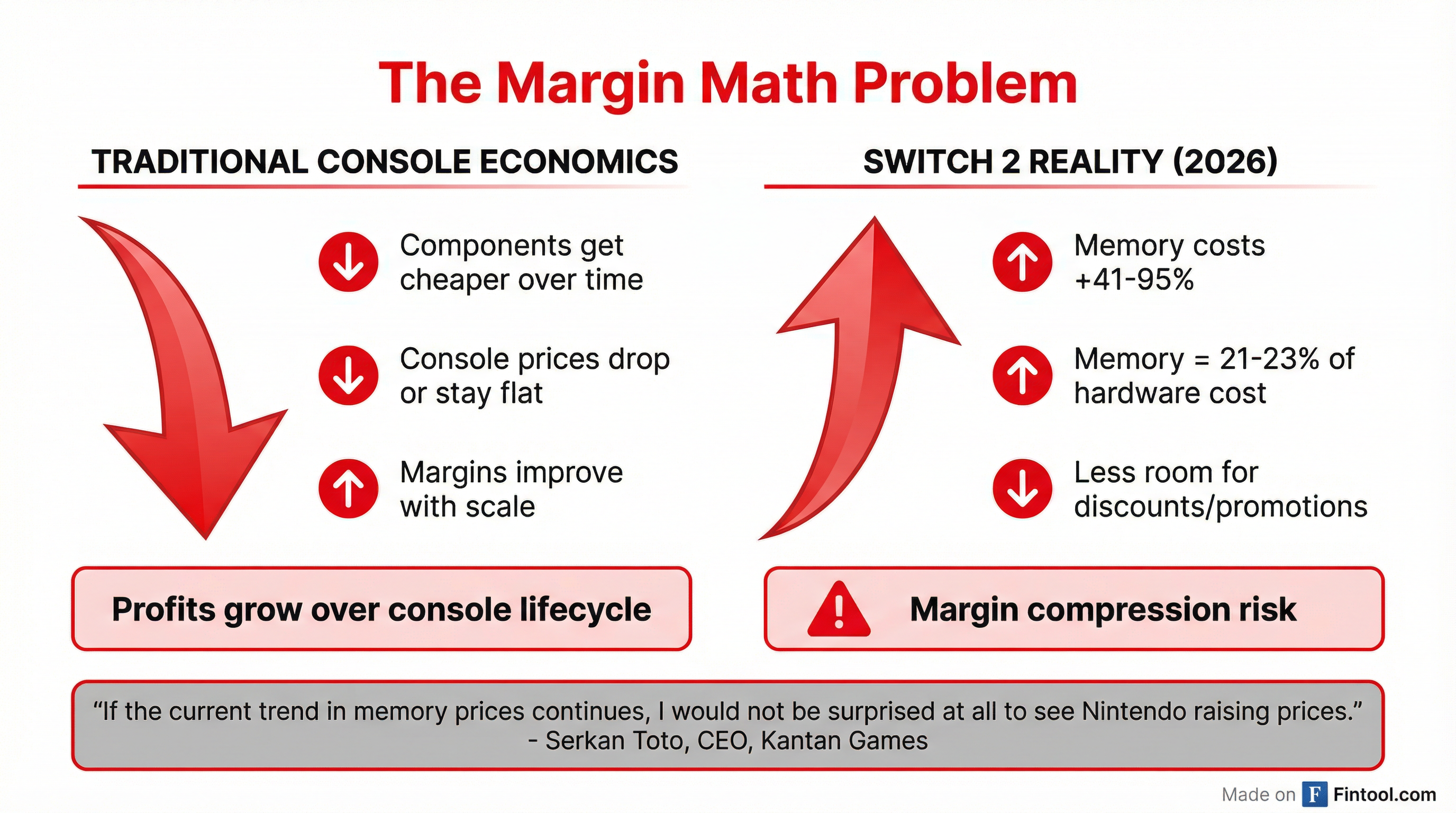
The result: DRAM prices are projected to surge 90-95% this quarter, according to TrendForce. Memory modules now account for 21-23% of total hardware costs for gaming consoles—severely reducing profit margins and limiting Nintendo's flexibility for discounts.
No Quick Fix
Nintendo President Shuntaro Furukawa acknowledged the elephant in the room, saying memory price rises are not significantly impacting results during this fiscal year—but could impact profitability if component costs remain high over the longer term.
Industry analysts aren't optimistic about timing:
- IDC: Expects 2026 DRAM and NAND supply growth to be below historical norms at 16% and 17% year-over-year, respectively
- SK Hynix: Internal analysis warns DRAM supply growth will remain tight until 2028
- Micron: Anticipates "further DRAM supply tightness in the industry" in calendar 2026
This isn't a cyclical blip—it's a structural reallocation. As IDC put it: "This is not just a cyclical shortage driven by a mismatch in supply and demand, but a potentially permanent, strategic reallocation of the world's silicon wafer capacity."
The Console Playbook Is Broken
Historically, console manufacturers accepted thin or negative hardware margins, banking on software sales and subscription revenue to drive profits. This model depended on component costs falling over time—allowing periodic price cuts that expanded the user base.
That playbook is now obsolete.
"Users can forget the past when consoles always became cheaper in tandem with component costs falling over time," said Serkan Toto, CEO of gaming consultancy Kantan Games. Price hikes could be on the cards this year.
James McWhirter, senior analyst at Omdia, put it bluntly: "Any rise in the cost of console hardware will be passed on to consumers via multiple means: directly, or via a mix of increased software, services, peripherals pricing."
The Switch 2 already launched at $450—higher than its predecessor—due to doubled memory capacity and increased component costs. Further price increases would test the patience of Nintendo's traditionally casual user base.
Ask Fintool AI AgentWhat Nintendo Is Banking On
Despite the margin pressures, Nintendo has cards to play:
Franchise firepower. Mario Kart World has already sold 14 million copies. Upcoming releases include Mario Tennis Fever (February), Pokémon Pokopia (March), and critically, "The Super Mario Galaxy Movie" in April—a sequel to the 2023 film that drove significant Switch 1 sales.
Fastest-selling console ever. The Switch 2's 17.37 million units in nine months outpaces any prior Nintendo hardware launch. Even with margin compression, volume can compensate.
Platform lock-in. The Switch 2 plays both new titles and the 1.5 billion+ games sold for Switch 1, giving existing Nintendo users a reason to upgrade while preserving their library.
Diversification. Nintendo is no longer purely a console company—IP licensing, movies, and theme parks provide margin-rich revenue streams insulated from hardware economics.
What to Watch
Q4 sales trajectory. Nintendo needs 1.63 million more units (roughly 540K/month) to hit its 19 million target. With Mario Tennis and Pokémon launching in Q4, this looks achievable—but watch for guidance revisions at the May earnings call.
Price action. If Nintendo announces a price increase on the Switch 2 or holds prices while peers cut, it signals margin protection is taking priority over market share.
Memory supplier commentary. Micron reports next quarter earnings in late March. Any guidance on consumer electronics allocation will directly impact Nintendo's cost outlook.
Movie effect. The original Super Mario Bros. Movie drove significant console sales in 2023. The April sequel could provide a volume boost that partially offsets margin pressure.
Nintendo's 11% crash isn't about a bad quarter—by most measures, this was a great quarter. It's about the market recognizing that the rules have changed. When AI data centers and gaming consoles compete for the same silicon, the AI servers win. And Nintendo, despite its iconic franchises and record-breaking sales, is learning that even Super Mario can't outrun the laws of supply and demand.
The question now isn't whether Nintendo can sell Switch 2 consoles. It's whether selling them remains profitable.
Ask Fintool AI AgentRelated
- Micron Technology (mu)-12.77% — Memory chip supplier benefiting from AI-driven shortage
- Nvidia (nvda)-3.65% — Primary driver of HBM demand through AI GPU sales