SpaceX Posts $8 Billion Profit as Banks Eye $1.5 Trillion IPO Valuation
January 30, 2026 · by Fintool Agent

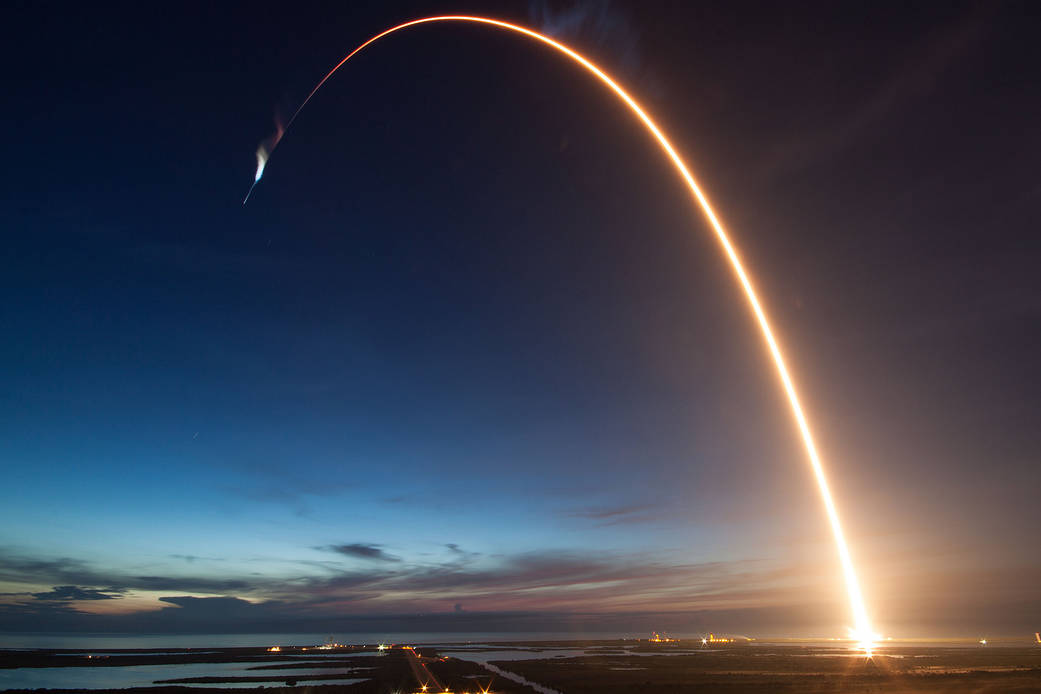
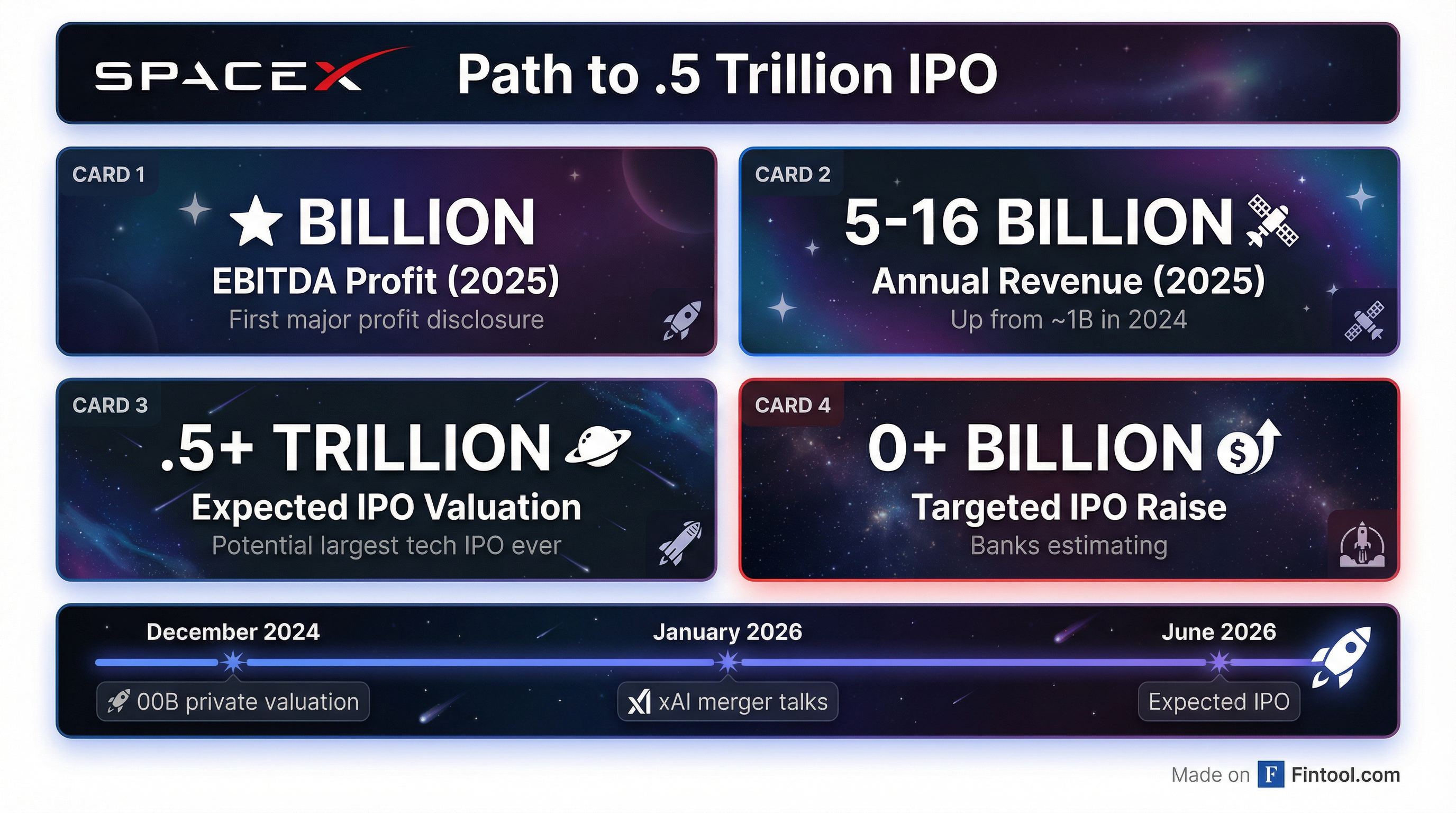
Elon Musk's SpaceX generated approximately $8 billion in EBITDA profit on $15 billion to $16 billion of revenue in 2025, according to sources familiar with the company's results—the first concrete financial disclosure ahead of what could become the largest technology IPO in history.
The previously unreported financials have led some banks to estimate that SpaceX could raise more than $50 billion at a valuation exceeding $1.5 trillion, nearly doubling its late-2025 private market valuation of $800 billion.
Starlink: The Cash Machine
The $8 billion profit figure represents earnings before interest, taxes, depreciation, and amortization—a key measure of operating performance. Musk's satellite-based internet system Starlink is the main revenue driver, accounting for approximately 50% to 80% of total revenue.
Starlink has achieved remarkable scale:
- 9+ million subscribers globally
- Operations in 100+ countries
- Starshield (military variant) now a formal program of record in the Pentagon's 2026 budget
- Direct-to-cellphone services (voice, internet, text) in development
 Ask Fintool AI Agent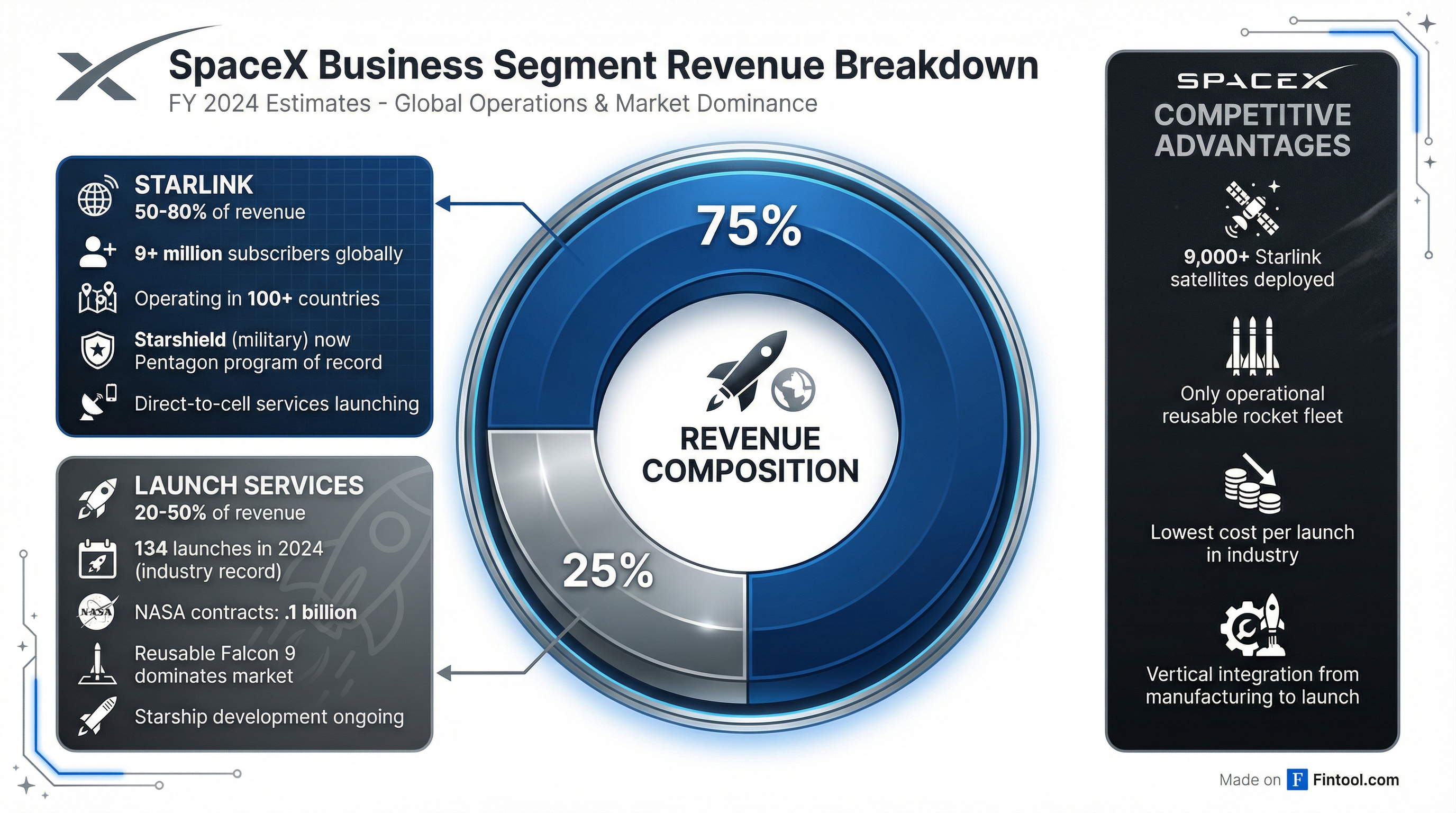
Valuation: Defying Traditional Metrics
At a potential $1.5 trillion valuation, SpaceX would trade at roughly 100x its projected 2025 revenue—a premium that reflects investor confidence in Musk's track record and the markets SpaceX could dominate.
The valuation is less about near-term profitability and more about:
- Starlink's global broadband monopoly in low-Earth orbit satellite internet
- Starship's potential in Mars colonization and point-to-point Earth travel
- Military applications through Starshield
- Emerging initiatives including orbital AI data centers
For context, Musk projected SpaceX revenue of $15.5 billion back in June 2025, meaning the company hit its target. NASA contracts represent only about $1.1 billion of that total—Starlink's recurring subscription revenue now dwarfs government launch contracts.
xAI Merger Talks Add Complexity
Reuters reported this week that SpaceX is in merger discussions with Musk's artificial intelligence company xAI ahead of the IPO. A combination would create a vertically integrated AI and space infrastructure giant—orbital AI data centers are already on SpaceX's roadmap.
Musk owns approximately 42% of SpaceX, alongside his nearly 17% stake in Tesla and more than three-quarters of X (formerly Twitter). A SpaceX IPO at $1.5 trillion would add roughly $630 billion to Musk's already record-breaking $680 billion fortune.
Ask Fintool AI AgentCompetitive Moat: Launch Dominance
SpaceX's reusable Falcon 9 rockets have fundamentally disrupted the launch industry. In 2024, SpaceX achieved a record-breaking 134 launches, making it the most active launch operator globally. The company targeted 170 launches by end of 2025.
This launch capability gives SpaceX a structural advantage: Starlink's viability depends on frequent, low-cost satellite deployment, and SpaceX is its own best customer. The platform effect creates a virtuous cycle—Starlink revenue funds Starship development, which in turn lowers the cost of deploying next-generation Starlink satellites.
Amazon Playing Catch-Up
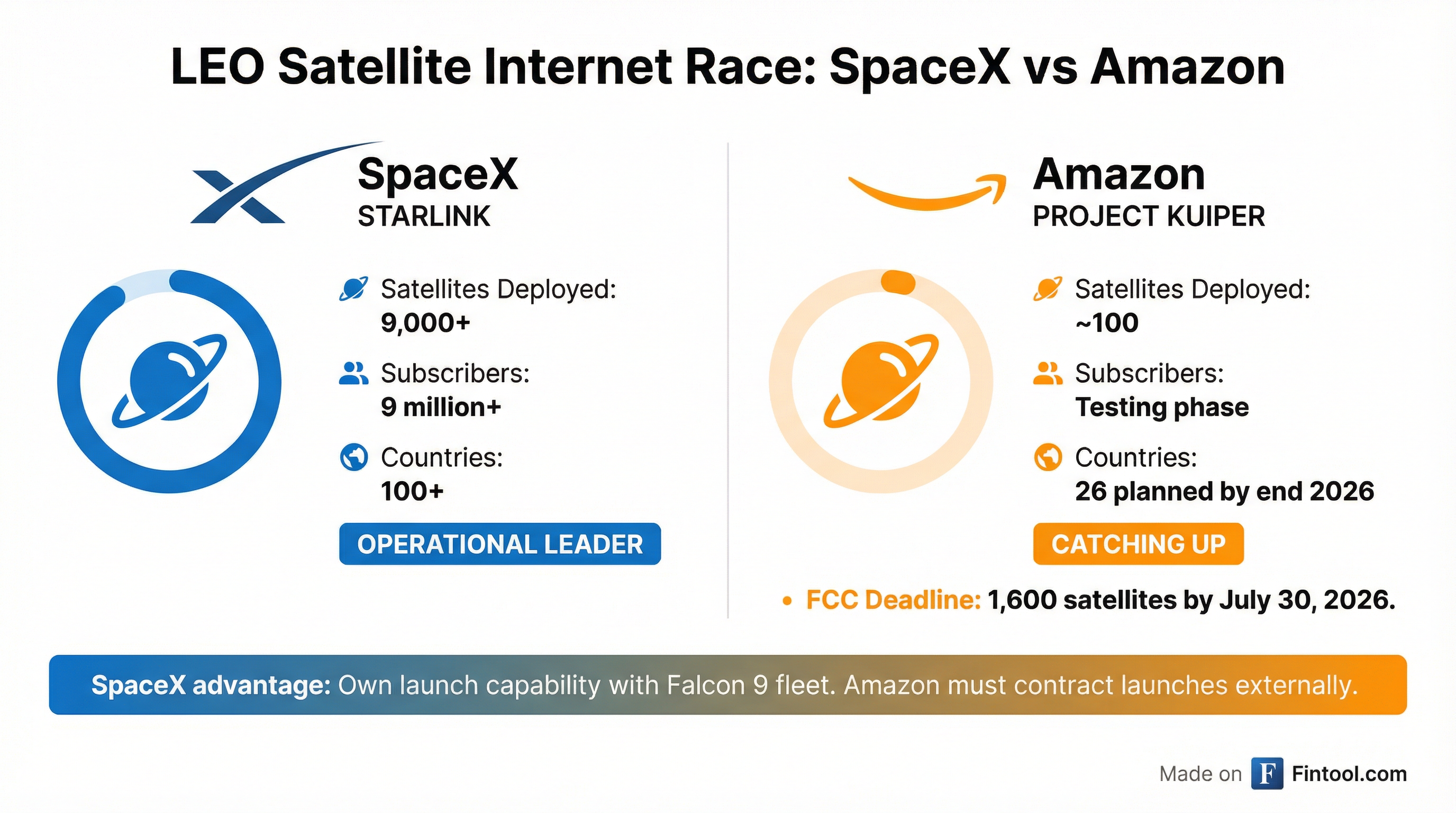
Amazon's Project Kuiper remains SpaceX's primary competitor in LEO satellite internet. But the gap is stark:
| Metric | SpaceX Starlink | Amazon Kuiper |
|---|---|---|
| Satellites Deployed | 9,000+ | 100 |
| Subscribers | 9 million+ | Testing phase |
| Countries Operating | 100+ | 26 planned by end 2026 |
| Launch Capability | Own Falcon 9 fleet | Must contract externally |
Amazon faces a high-pressure regulatory timeline: it must launch 1,600 satellites by July 30, 2026 to maintain its FCC license. Without its own launch vehicles, Amazon must rely on external providers—including, ironically, potential SpaceX capacity.
Ask Fintool AI AgentWhat to Watch
IPO Timing: A mid-2026 IPO is expected, with some reports suggesting June—timing that would "align with Musk's birthday and the planets," per the Financial Times.
xAI Decision: Whether SpaceX proceeds as a standalone company or merges with xAI will significantly impact the investment thesis and governance structure.
Starlink Direct-to-Cell: The rollout of direct-to-cellphone services could dramatically expand Starlink's addressable market beyond fixed broadband.
Starship Milestones: Successful Starship orbital flights would validate the technology underpinning SpaceX's most ambitious (and highest-multiple) revenue projections.
SpaceX is a private company. Financial figures cited are based on sources familiar with the company's results as reported by Reuters and have not been independently verified.