Trump's 25% AI Chip Tariff Opens the Door to China—With a Tax
January 15, 2026 · by Fintool Agent


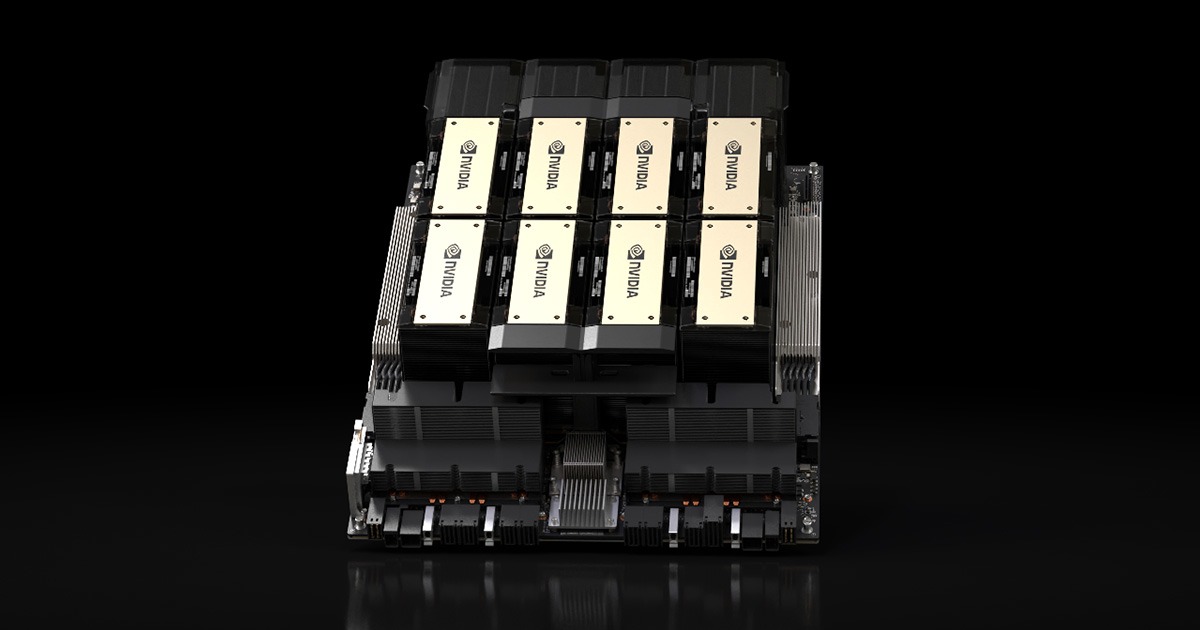
President Trump signed a proclamation Wednesday imposing a 25% tariff on select advanced AI chips, including Nvidia's H200 and Amd's MI325X—but the market cheered . Why? The tariff is narrowly targeted at chips being re-exported to China, while exempting the vast majority of domestic uses. For NVIDIA, this is actually a path back into the $50 billion China market it was effectively locked out of.
NVDA closed up 3.2% at $188.94, while AMD surged 5.6% to $236.15 .
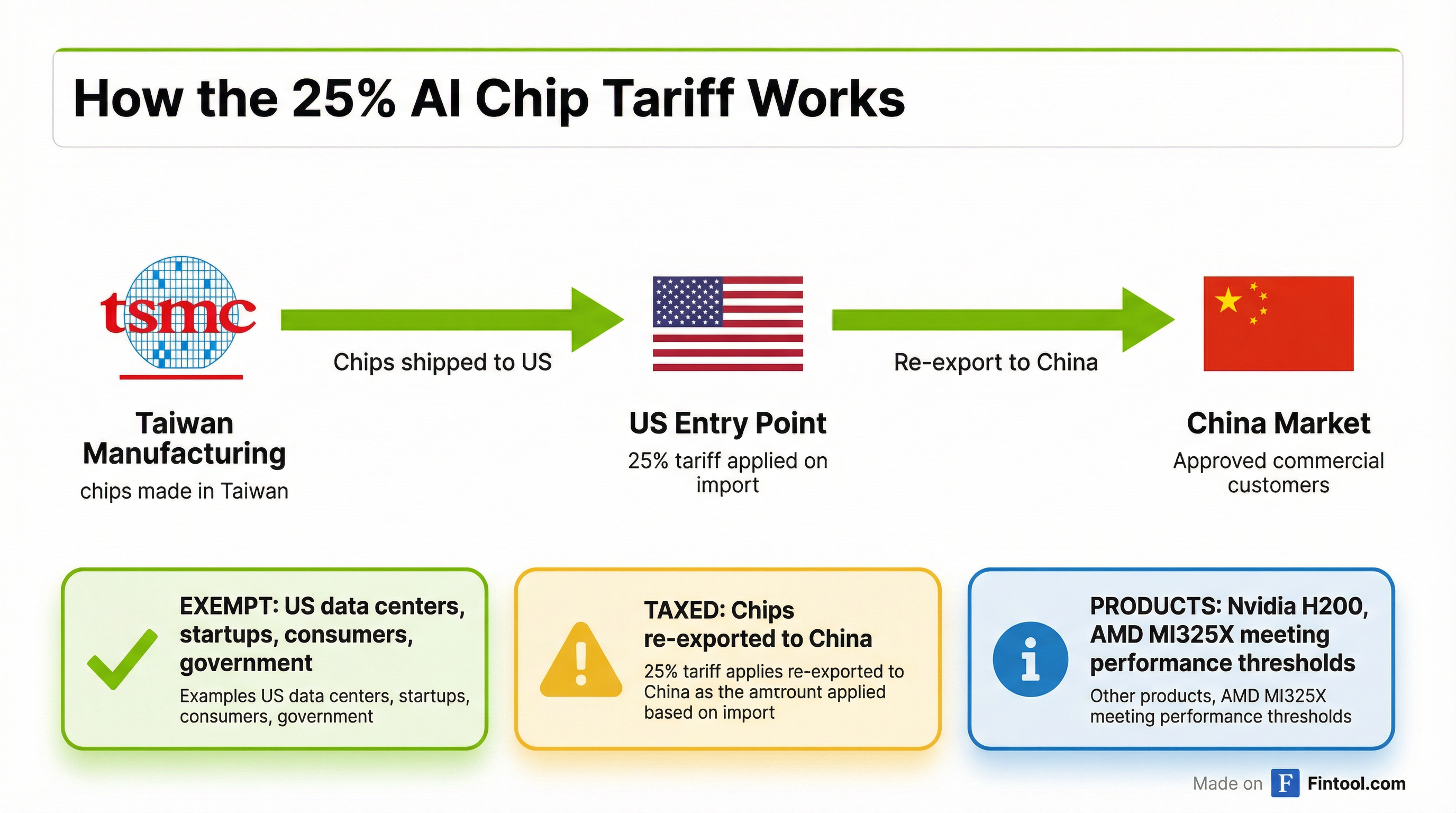
The Mechanism: Tax China Sales, Not Domestic AI
The tariff follows a nine-month Section 232 investigation that found US semiconductor production covers only ~10% of domestic demand, creating "significant economic and national security risk" .
But the exemptions are what matter. The 25% tariff explicitly does not apply to chips imported for :
- US data centers — the largest consumer of AI chips
- Startups
- Consumer applications
- Industrial use
- Government/public sector
Commerce Secretary Howard Lutnick has broad discretion to grant additional exemptions .
What is taxed: chips manufactured in Taiwan (primarily by TSMC), routed through the US, and re-exported to China. One day before the tariff announcement, the Commerce Department revised its policy to allow case-by-case licensing of H200 exports to China—provided buyers pass security screenings .
 Ask Fintool AI Agent
Why the Street Is Bullish
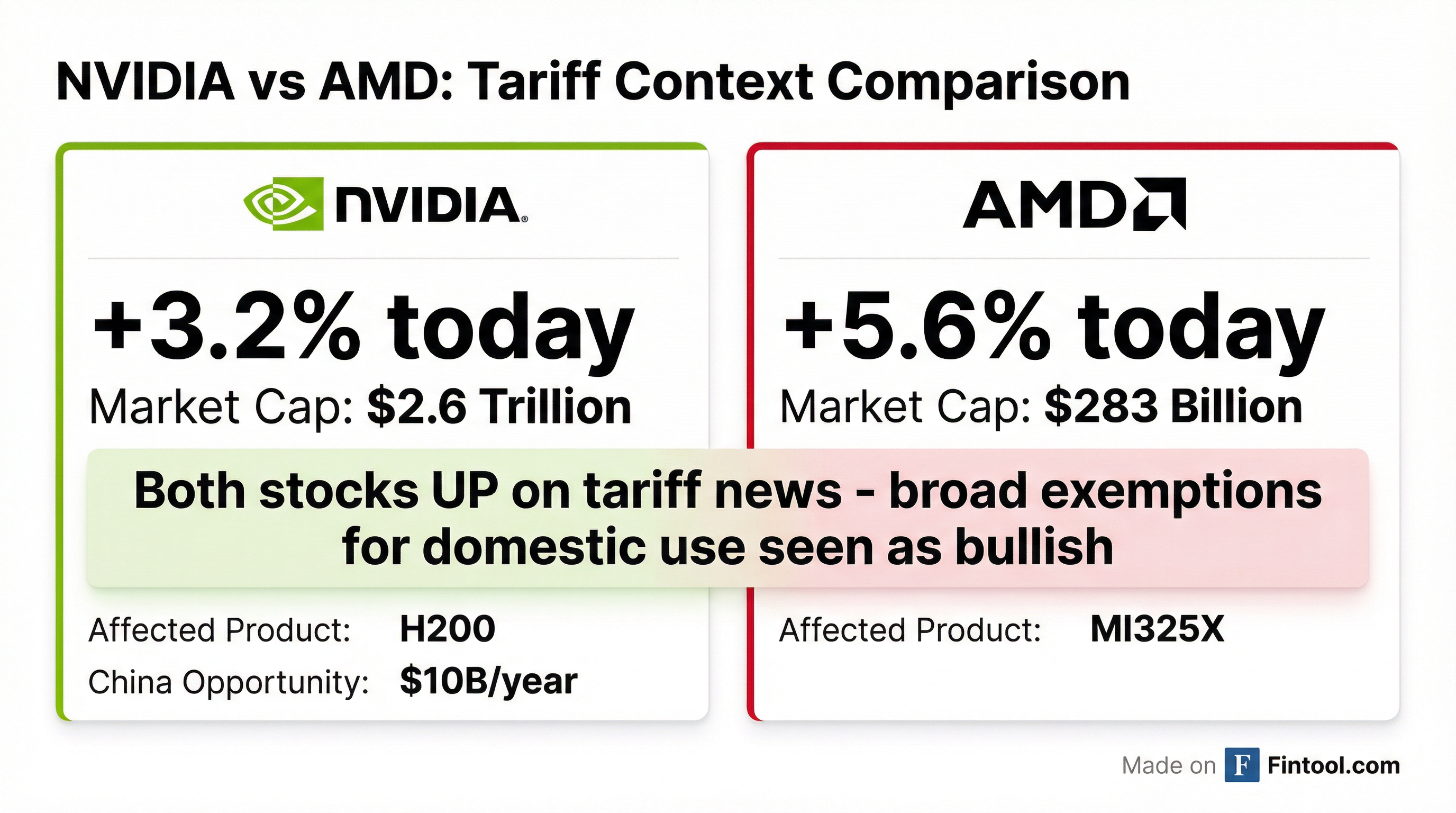
The positive reaction reflects a simple calculation: 75% of something is better than 100% of nothing.
Jensen Huang has publicly estimated the China AI market at $50 billion annually, growing at 50% per year . Under previous export controls, NVIDIA was "effectively foreclosed from competing in China's data center computing market" .
The company took a $4.5 billion charge in Q1 FY26 when the H20 chip was placed under license requirements in April 2025 . As of August 2025, NVIDIA had generated only ~$50 million in H20 revenue under limited licenses .
Now, with H200 licensing opening up and a clear tariff framework, the path to China revenue is clearer—even with Washington taking a 25% cut.
| Metric | NVDA | AMD |
|---|---|---|
| Today's Move | +3.2% | +5.6% |
| Market Cap | $4.6T | $383B |
| Q3 Revenue | $57.0B | $9.2B |
| Gross Margin | 73.4% | 54.5% |
| Affected Product | H200 | MI325X |
NVIDIA said in a statement it "applauds" the decision, noting that offering H200 to "approved commercial customers, vetted by the Department of Commerce, strikes a thoughtful balance that is great for America" .
AMD responded simply: "We comply with all U.S. export control laws and policies" .
Ask Fintool AI AgentThe Road Here: Nine Months of Section 232
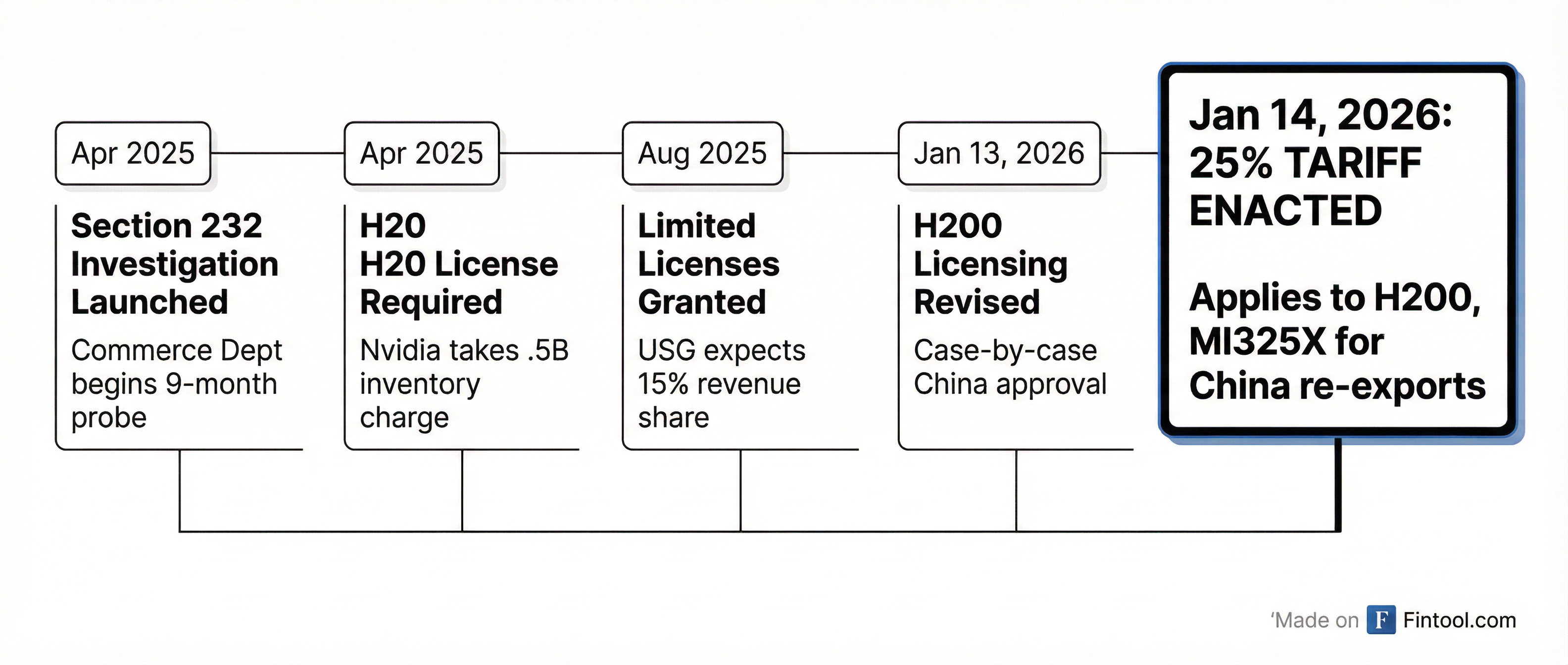
The tariff caps a year-long evolution in US semiconductor trade policy:
April 2025: Commerce Department launches Section 232 investigation into semiconductor imports. The same month, USG requires licenses for H20 exports to China, triggering NVIDIA's $4.5B inventory charge .
August 2025: Limited H20 licenses granted. USG officials signal expectation of 15% revenue share from licensed China sales—though no regulation codified it .
January 13, 2026: Commerce revises H200 licensing policy to allow case-by-case approval for China exports with security vetting .
January 14, 2026: Trump signs the 25% tariff proclamation, formalizing the revenue-share mechanism at a higher rate than previously discussed .
Critics, including former Trump Asia advisor Matt Pottinger, testified Wednesday that the administration is on the "wrong track" by allowing chip sales to China at all, arguing it will hurt the US in the AI race .
What to Watch
Near-term: The White House warned that Trump "in the near future may impose broader tariffs on imports of semiconductors and their derivative products" along with "an accompanying tariff offset program to incentivize domestic manufacturing" .
China's response: Beijing has previously limited access to US chips despite approval. It remains unclear whether Chinese buyers will purchase H200s even with the new licensing framework .
Congressional pushback: Republicans on the Hill are "looking to rein in" Trump on chip sales to China, even as they avoid public criticism .
NVIDIA risk factors: The company warns that export controls have "effectively foreclosed" it from the China data center market and that this foreclosure "will have a material and adverse impact on our business, operating results, and financial condition" if sustained .
Ask Fintool AI Agent