Werner Pays $283M for FirstFleet, Becomes 5th-Largest Dedicated Trucking Carrier
January 28, 2026 · by Fintool Agent


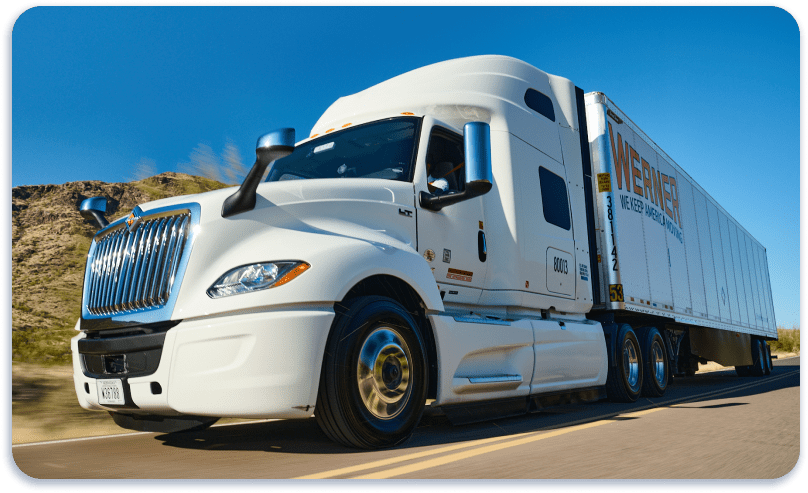
Werner Enterprises closed its acquisition of Tennessee-based FirstFleet yesterday for approximately $283 million, a deal that vaults the Omaha-based trucking company into the top five dedicated carriers in the United States and shifts its revenue mix decisively toward higher-margin, contract-based business.
Shares of Werner jumped 4% to $34.32 on Wednesday morning as management outlined the strategic rationale during a business update conference call, emphasizing immediate EPS accretion and $18 million in annual synergies expected within 18 months.
The Deal at a Glance
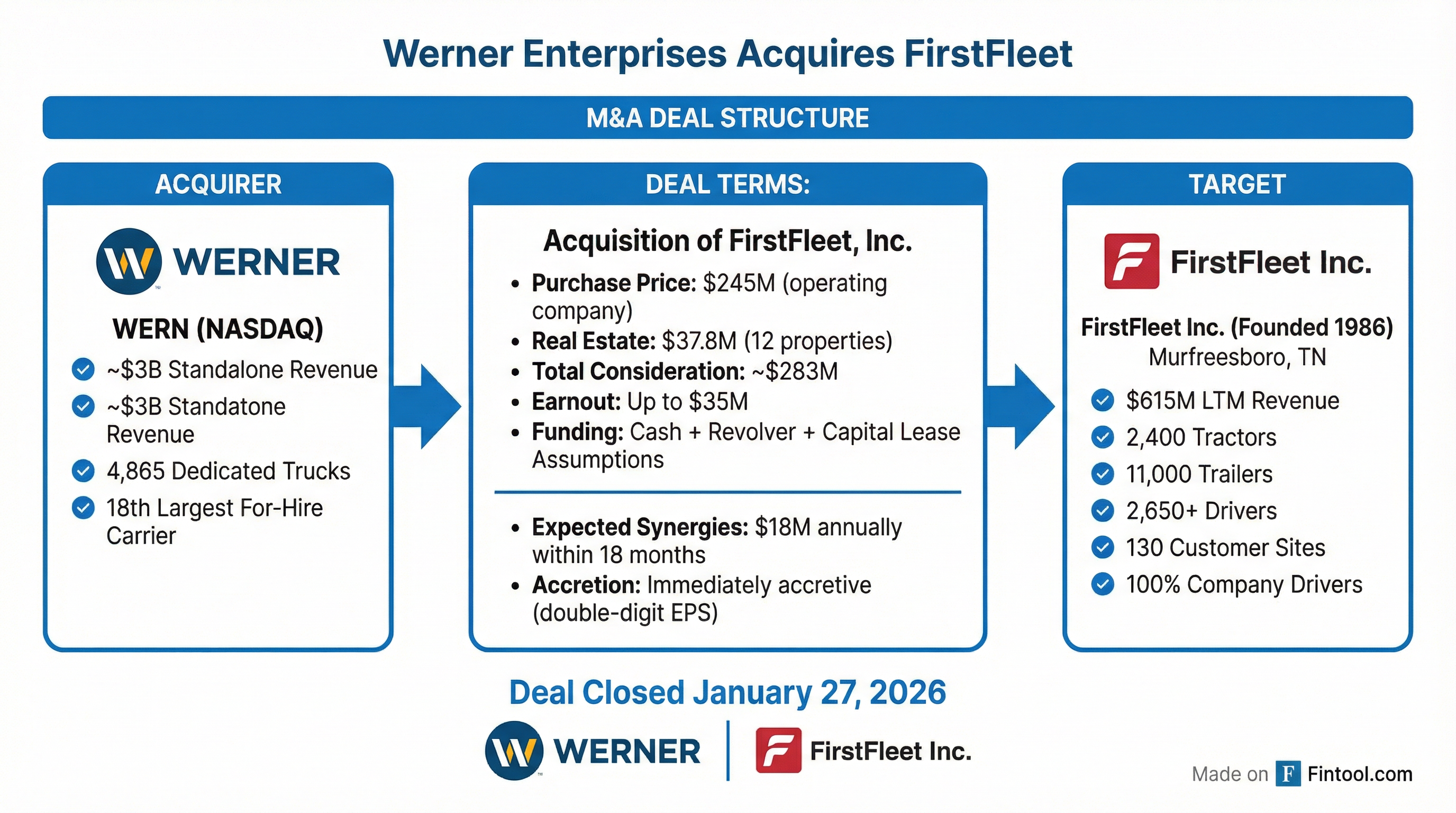
Werner acquired 100% of the equity in FirstFleet's operating entity for $245 million in cash and debt, plus a separate $37.8 million purchase of 12 owned real estate properties. News reports indicate an additional earnout of up to $35 million is possible, which would bring the total transaction value to approximately $318 million.
The acquisition was funded through cash on hand, Werner's existing revolving credit facility, and the assumption of certain capital leases. CFO Chris Wikoff indicated the company expects peak leverage of approximately 2x, including pro forma synergies, with plans to prioritize debt reduction going forward.
 Ask Fintool AI Agent
What Werner Gets: Scale, Density, and Expertise
FirstFleet brings substantial scale to Werner's platform. The Murfreesboro, Tennessee-based company, founded in 1986, generated more than $615 million in trailing twelve-month revenue through September 2025 and operates approximately 2,400 tractors and 11,000 trailers, supported by over 2,650 drivers serving customers across roughly 130 sites nationwide.
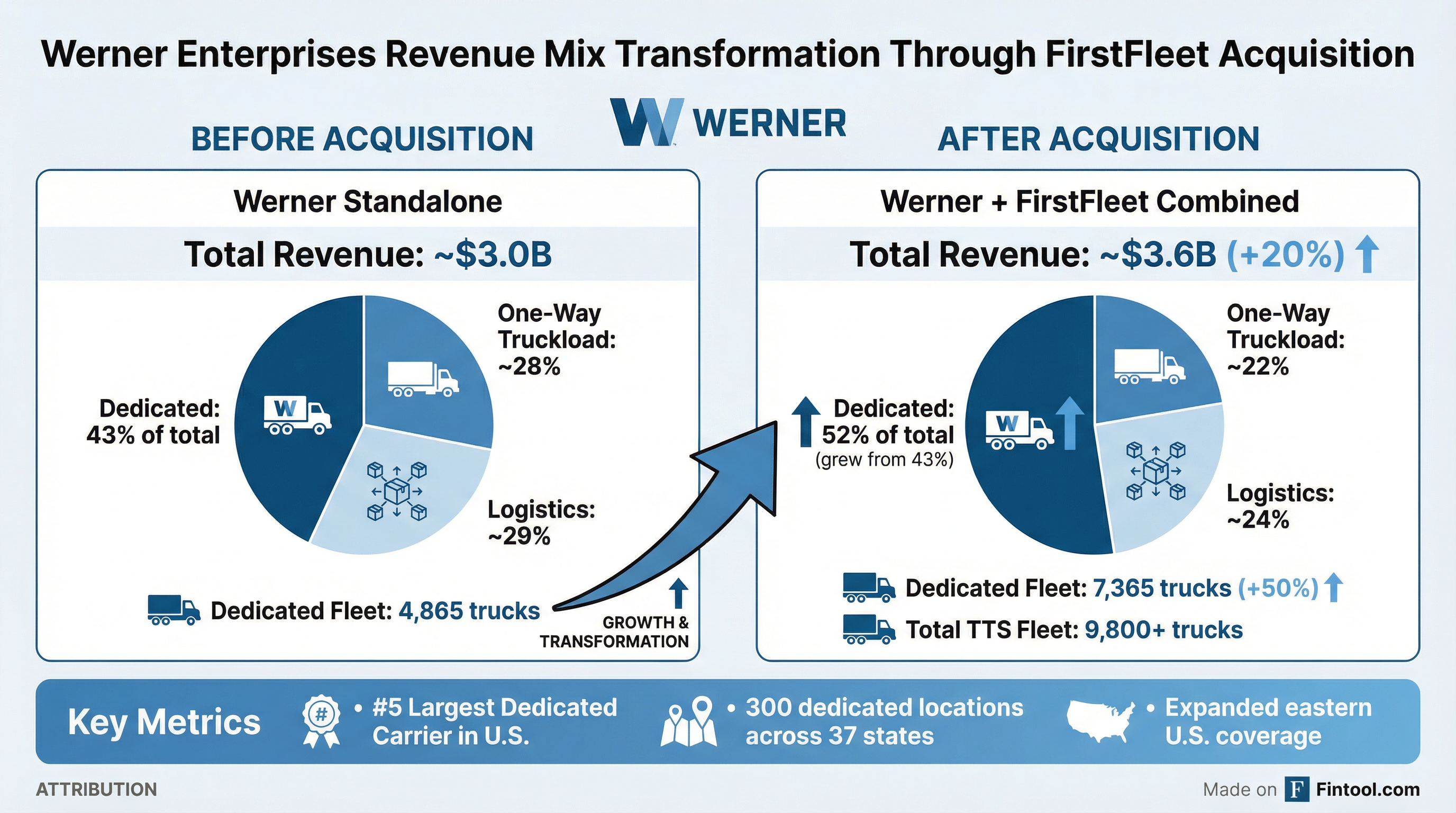
The combination creates a dedicated trucking powerhouse with approximately 7,365 dedicated trucks—a 50% increase from Werner's standalone fleet of 4,865 units. The combined company will operate over 9,800 trucks in total across its Truckload Transportation Services segment.
Perhaps more importantly, the deal fundamentally reshapes Werner's revenue mix. Dedicated trucking—a $30+ billion addressable market that CEO Derek Leathers characterized as "closer to $40 billion than $30 billion"—now represents approximately 52% of combined revenues, up from 43% on a standalone basis.
| Metric | Werner Standalone | Combined |
|---|---|---|
| Total Revenue (LTM) | $3.0B | $3.6B |
| Dedicated Revenue % | 43% | 52% |
| Dedicated Trucks | 4,865 | 7,365 |
| Total TTS Fleet | 7,400 | 9,800+ |
| Dedicated Locations | 170 | 300 |
Why Dedicated Matters
Werner has been deliberately transitioning its portfolio toward dedicated trucking for several years, viewing it as a more resilient, higher-margin business protected by significant barriers to entry.
"Differentiators like scale, flexibility, and industry expertise are critical here," Leathers explained during the call. "Addressing complex customer needs drives higher margins, strong customer retention, and robust cross-selling opportunities."
FirstFleet's customer base exemplifies these characteristics. Among its top 10 customers, the average tenure is 17 years, with three of its top four customers maintaining relationships for more than 25 years. The company operates with a 100% company driver base—no owner-operators—and maintains below-average industry turnover.
The acquisition deepens Werner's exposure across three primary verticals:
- Retail (~60% of combined portfolio): Discount, grocery, and home improvement retailers
- Manufacturing & Industrial (~19%): Heavy equipment OEMs, industrial distributors, and corrugated packaging
- Food & Beverage (~15%): Temperature-controlled services and specialty bakery
FirstFleet brings particularly unique capabilities in corrugated packaging solutions, serving large enterprises with high volumes tied to recovering e-commerce and manufacturing demand.
Ask Fintool AI AgentSynergy Roadmap
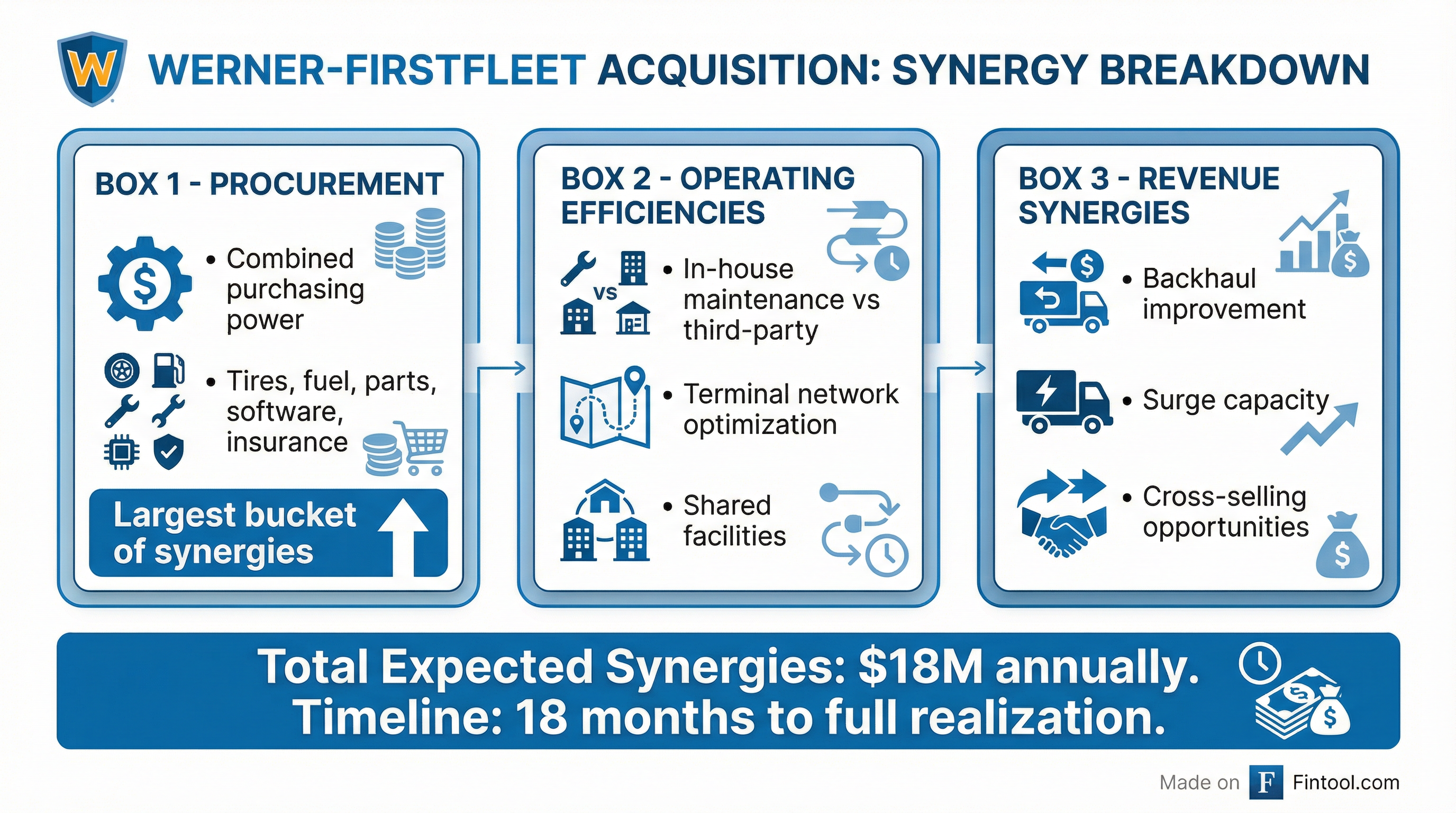
Management outlined $18 million in expected annual synergies at the midpoint (with a ±10% range), to be largely implemented within 18 months of closing.
CFO Wikoff broke down the synergy sources into three buckets:
1. Procurement – The largest contributor, leveraging Werner's combined purchasing power across tires, brake pads, oil filters, windshields, fuel, software, and insurance.
2. Operating Efficiencies – Including maintenance optimization. FirstFleet lacked terminal access in certain regions and relied heavily on third-party maintenance; Werner can shift this work in-house through its broader terminal network.
3. Revenue Synergies – Improving backhaul value, surge capability, and cross-selling opportunities—though management noted these are expected to develop over time rather than immediately.
"These are low to mid-lying fruit," Wikoff emphasized, noting that none of the synergies require changes to driver pay or customer service levels. "This is about blocking and tackling—maintenance, tires, tractors, trailers, fuel."
Financial Impact and Valuation
The deal is immediately accretive to earnings per share—Wikoff confirmed "double-digit accretive" before synergies are realized. The transaction also improves free cash flow, as FirstFleet maintains strong conversion and a lower-than-typical CapEx run rate.
While management declined to provide detailed EBITDA figures, Wikoff characterized the purchase price as "a mid-single-digit TEV multiple" based on management's forward-looking adjusted EBITDA estimates.
FirstFleet's margins, while described as "profitable and durable through this prolonged and challenging downturn," are currently below Werner's dedicated segment margins due to differences in mix—including more trailer pools and operating leases. The $18 million in synergies (approximately 3% of FirstFleet's revenue) provides a clear path to margin expansion.
Werner Recent Financial Performance
| Metric | Q4 2024 | Q1 2025 | Q2 2025 | Q3 2025 |
|---|---|---|---|---|
| Revenue | $755M | $712M | $753M | $772M |
| Net Income | $12M | -$10M | $44M | -$21M |
| EPS (Diluted) | $0.19 | -$0.16 | $0.72 | -$0.34 |
Werner's recent results reflect the challenging freight environment, with the company reporting a net loss in Q3 2025. The deal comes at a strategic time, as management expects market conditions to improve and views the acquisition as positioning Werner to "capitalize on growth opportunities."
Integration and Branding
FirstFleet's management team will largely remain in place, and the company will operate as a business unit within Werner's TTS segment from its Tennessee headquarters. Results will be combined with Werner Dedicated in quarterly earnings reporting.
CEO Leathers, who conducted the call from FirstFleet's Murfreesboro headquarters, emphasized the cultural alignment between the two organizations. "One of the most attractive things about FirstFleet is the cultural fit... their commitment to safety and service above all else, all align with us," Leathers said.
On branding, management indicated the FirstFleet name will remain unchanged for now, though a longer-term decision will be made collaboratively with customers. "We want to do what's best for our customers and our associates and ultimately our shareholders," Leathers noted.
What to Watch
Near-term catalysts:
- Werner's Q4 2025 earnings call next week, where management will provide consolidated 2026 guidance including FirstFleet
- Integration progress updates and synergy realization timeline
- Customer retention metrics, particularly with FirstFleet's long-tenured accounts
Key risks:
- Prolonged freight recession could pressure margins even with synergies
- Integration execution in an asset-intensive business with 2,650+ drivers
- Customer concentration—details on top customer revenue exposure not disclosed
Ask Fintool AI AgentThe Bottom Line
Werner's acquisition of FirstFleet represents a strategic acceleration of its dedicated trucking strategy at an attractive valuation. The deal immediately adds scale, geographic density, and exposure to resilient end markets while maintaining modest leverage and delivering near-term EPS accretion. With $18 million in identified synergies and a clear integration playbook from four prior acquisitions, Werner is betting that dedicated trucking's higher margins and contract-based stability will prove increasingly valuable as the freight market normalizes.
For investors, the key question is whether Werner can execute the integration while preserving FirstFleet's strong customer relationships and driver retention—both hallmarks of the 40-year-old company that made it an attractive target in the first place.
Related