GM Takes $7.6 Billion EV Hit—Detroit's Second Massive Retreat in a Month
January 8, 2026 · by Fintool Agent


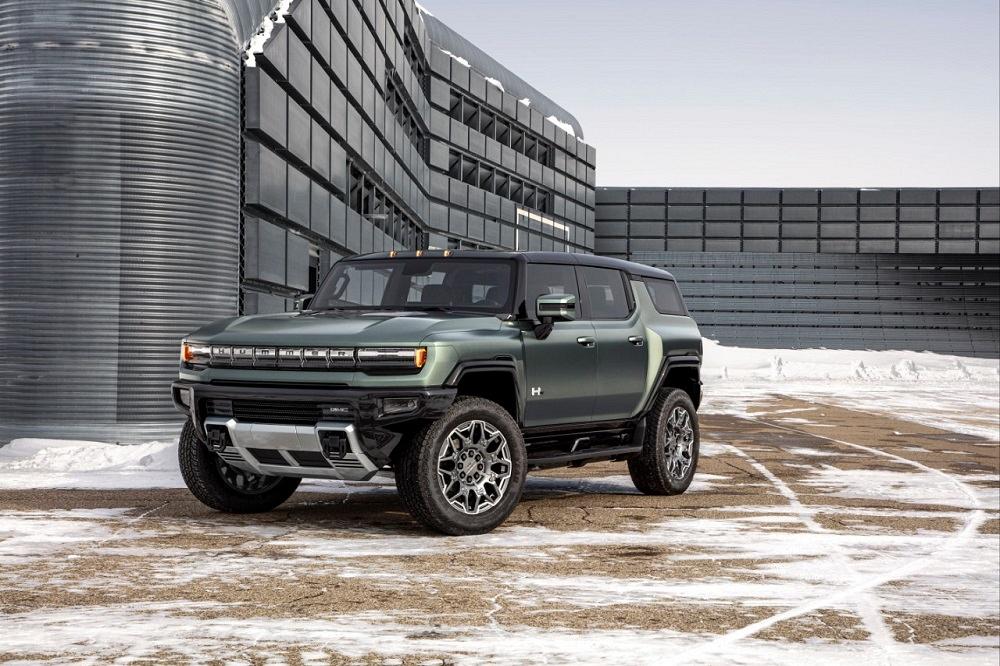
General Motors disclosed Thursday an additional $6 billion in charges to unwind electric vehicle investments—bringing its total 2025 EV-related writedowns to $7.6 billion and cementing the auto industry's wholesale retreat from battery-powered vehicles.
The announcement comes less than a month after rival Ford stunned markets with a $19.5 billion EV charge—the largest in industry history. Combined, America's two largest traditional automakers have now written off more than $27 billion in EV investments in the span of four weeks.
Despite the massive charges, GM shares rose 3.9% to $85.13 on Thursday—hitting a 52-week high—as investors cheered the company's decisive pivot away from money-losing electric vehicles and toward profitable trucks and SUVs.
 Ask Fintool AI Agent
The $7.6 Billion Breakdown
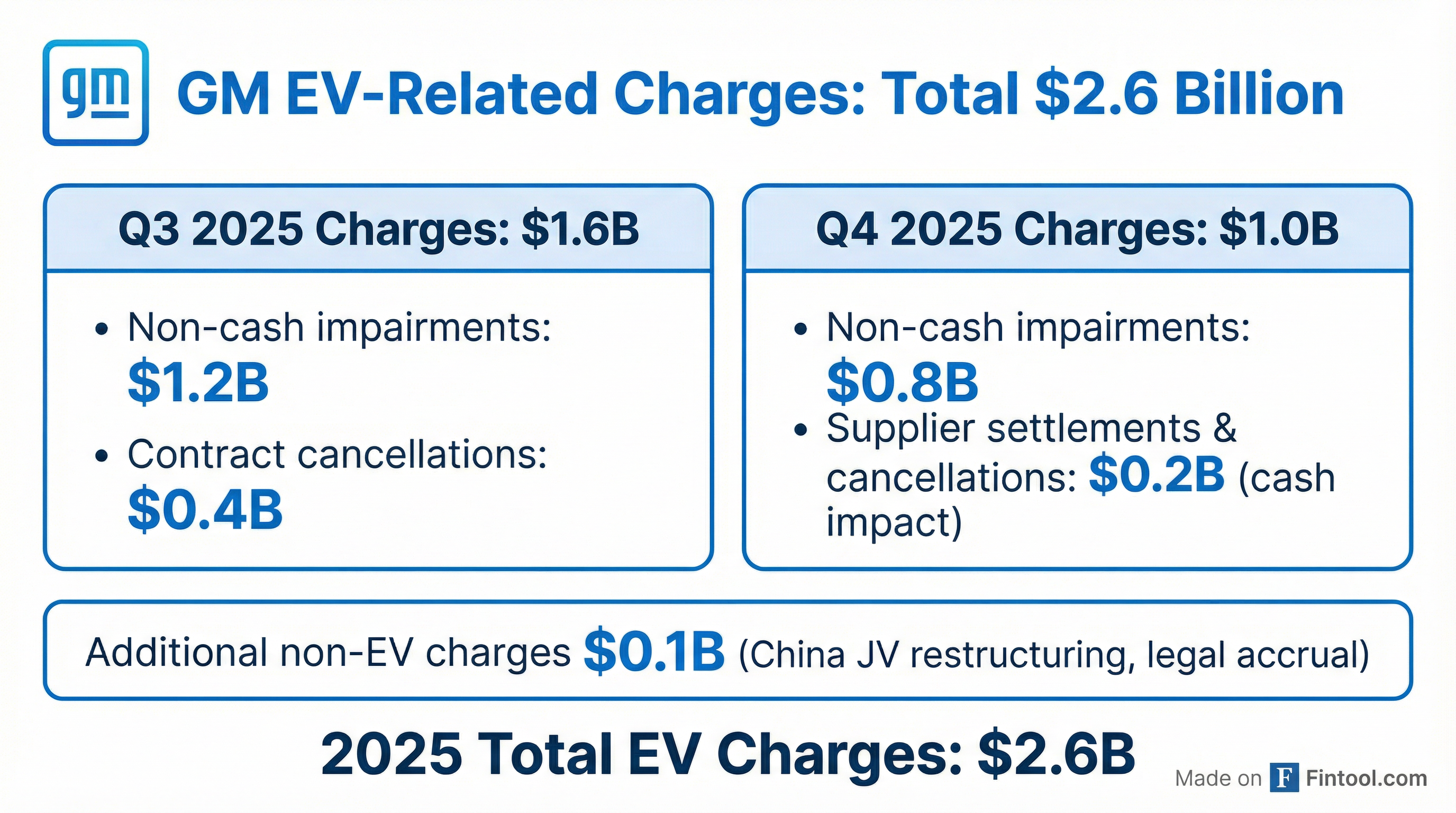
GM's EV charges have accumulated across two quarters in 2025:
| Quarter | Charge | Components | Cash Impact |
|---|---|---|---|
| Q3 2025 | $1.6B | Non-cash impairments ($1.2B), contract cancellations ($0.4B) | $0.4B |
| Q4 2025 | $6.0B | Non-cash impairments ($1.8B), supplier settlements & cancellations ($4.2B) | $4.2B |
| Total | $7.6B | ~$4.6B |
The Q4 charge breakdown reveals the painful cost of unwinding supplier relationships. GM had locked in contracts with battery suppliers, component manufacturers, and equipment providers who had invested heavily in capacity to meet the automaker's once-ambitious EV production targets.
"Most of GM's writedown—a $4.2 billion cash charge—is related to contract cancellations and settlements with suppliers, who had planned for much higher production volumes before the market turned," GM stated in its 8-K filing.
GM also disclosed an additional $1.1 billion in non-EV charges for Q4 2025, primarily related to restructuring its China joint venture (SAIC General Motors) and a legal accrual—bringing total special items for the quarter to approximately $7.1 billion.
Critically, GM warned that more charges are coming: "We expect to recognize additional material cash and non-cash charges in 2026 related to continued commercial negotiations with our supply base, which we believe will be significantly less than the EV-related charges incurred in 2025."
What GM Is—and Isn't—Doing
Unlike Ford, which killed its next-generation electric truck and ended F-150 Lightning production entirely, GM is keeping its current EV lineup intact:
"Our strategic realignment of EV capacity does not impact today's retail portfolio of Chevrolet, GMC, and Cadillac EVs in production, and we plan to continue to make these models available to consumers."
Actions Already Taken
- Orion Assembly Plant Pivot: GM is converting its Michigan facility from EV production to full-size SUVs and pickups (ICE-powered), citing "unmet demand" for gas-powered vehicles
- Battery Capacity Reduction: Sold its stake in Ultium Cells LLC's Lansing, MI facility to JV partner LG Energy Solution
- Factory Zero Cuts: Reduced production to one shift at GM's EV-only Detroit plant; halted battery production at two JV plants for six months
What Remains
GM still claims the "industry's widest range of EVs" in North America, including:
- Chevrolet Equinox EV (affordable entry point)
- Chevrolet Silverado EV
- Chevrolet Blazer EV
- GMC Hummer EV (pickup and SUV)
- GMC Sierra EV
- Cadillac Lyriq
- Cadillac Escalade IQ
Ask Fintool AI AgentDetroit's EV Retreat: By the Numbers
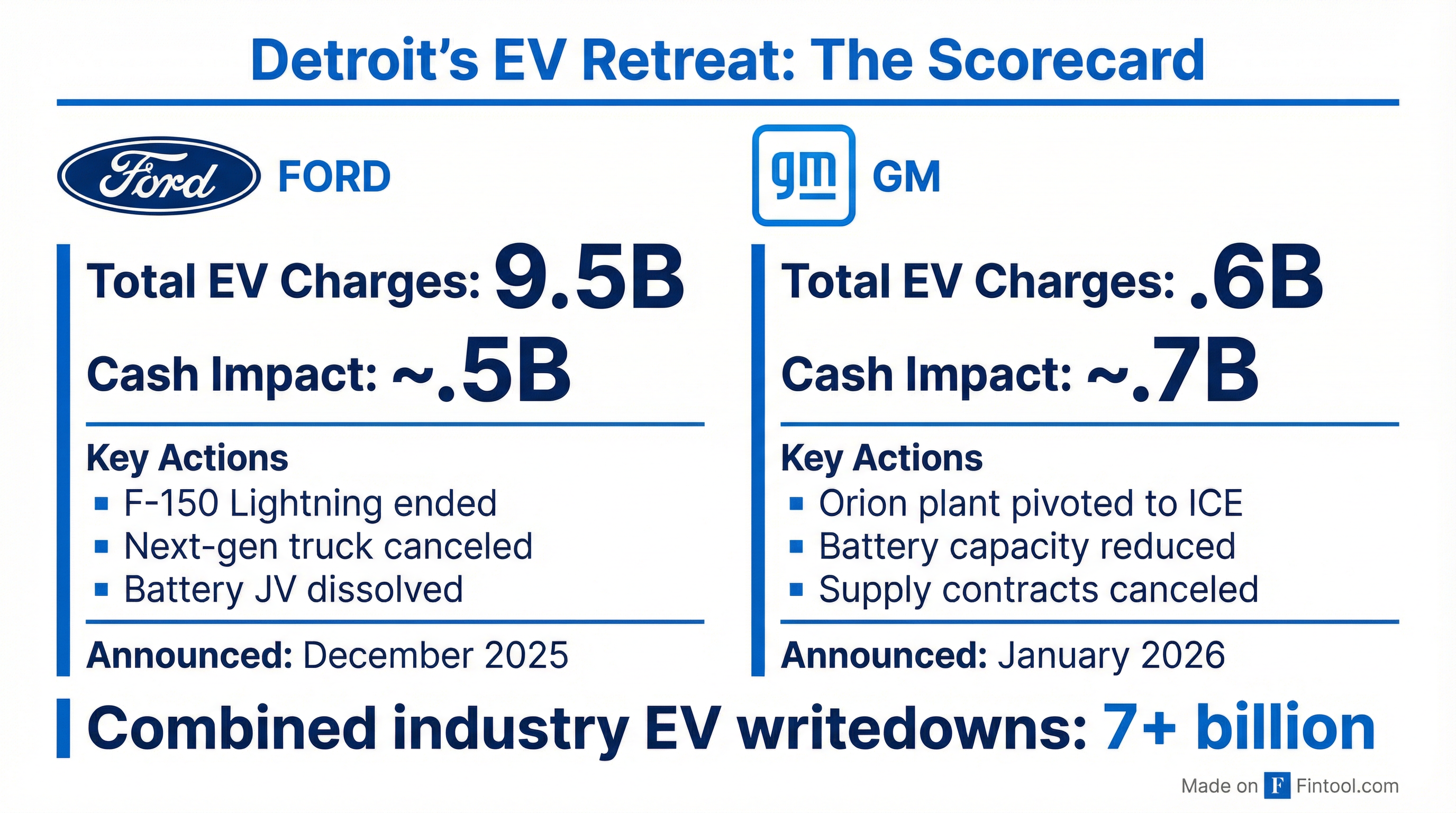
The combined Ford-GM writedowns mark an extraordinary reversal for an industry that just two years ago was racing to electrify. The $27+ billion in charges represent the financial reckoning for investments made during the EV euphoria of 2021-2023.
| Company | Total EV Charges | Cash Impact | Key Actions |
|---|---|---|---|
| Ford | $19.5B | $5.5B | F-150 Lightning ended, next-gen truck canceled, battery JV dissolved |
| GM | $7.6B | $4.6B | Plant pivots, battery capacity reduced, supplier contracts canceled |
| Combined | $27.1B | ~$10.1B |
Ford's December charge was nearly three times larger than GM's, reflecting Ford's more aggressive—and costly—bet on a dedicated second-generation EV platform that was ultimately scrapped entirely.
Why Now: The Policy Collapse
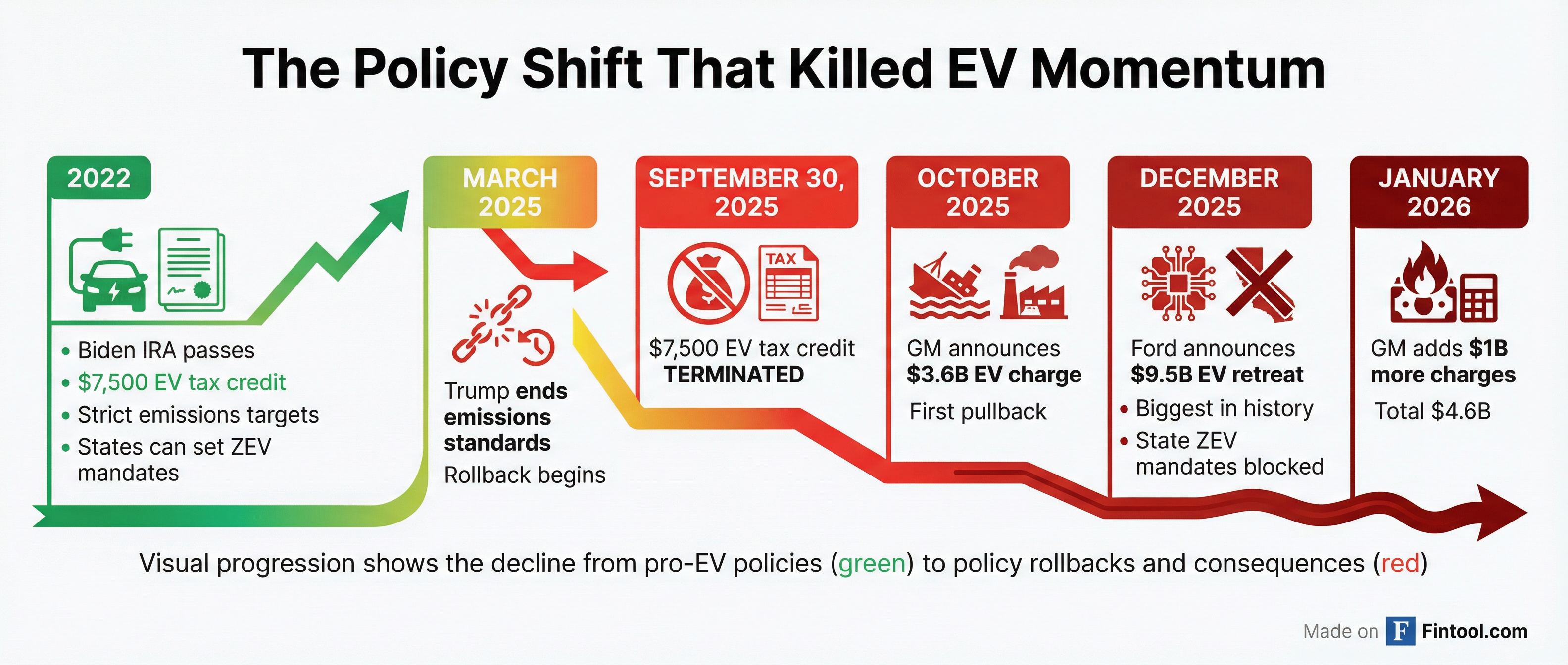
GM explicitly linked its retreat to Trump administration policies:
"With the termination of certain consumer tax incentives and the reduction in the stringency of emissions regulations, industry-wide consumer demand for EVs in North America began to slow in 2025."
The key policy shifts:
-
$7,500 Tax Credit Terminated (September 30, 2025): The federal EV buyer tax credit—a cornerstone of Biden's Inflation Reduction Act—was ended early, immediately cooling demand
-
Emissions Standards Rolled Back: The Trump administration weakened fuel economy and emissions targets, removing the regulatory pressure that forced automakers to sell EVs
-
State Mandates Blocked: Federal action stripped California and other states of authority to set stricter zero-emission vehicle requirements
The result: U.S. EV sales plunged in Q4 2025 after surging in Q3 as buyers rushed to capture expiring tax credits.
GM Financial Snapshot
GM's core business remains strong despite the EV headwinds:
| Metric | Q1 2024 | Q2 2024 | Q3 2024 | Q4 2024 | Q1 2025 | Q2 2025 | Q3 2025 |
|---|---|---|---|---|---|---|---|
| Revenue ($B) | $39.2 | $44.1 | $44.7 | $43.6 | $39.9 | $42.9 | $44.3 |
| Net Income ($B) | $3.0 | $2.9 | $3.1 | -$3.0* | $2.8 | $1.9 | $1.3** |
| EBITDA Margin % | 12.4% | 12.3% | 11.4% | 4.7%* | 11.7% | 8.5% | 9.4%** |
*Q4 2024 impacted by Cruise restructuring charges
**Q3 2025 impacted by $1.6B EV strategic realignment charge
*Values retrieved from S&P Global
GM updated its 2025 guidance in October to reflect its underlying business strength—raising adjusted EBIT guidance to $12.0-13.0 billion despite the EV charges, up from $10.0-12.5 billion previously.
The company has been the #2 seller of EVs in North America since the second half of 2024, behind only Tesla, driven by its broad portfolio of electric SUVs and trucks. But that position was built on aspirations that no longer match market reality.
Ask Fintool AI AgentMarket Reaction: Why Shares Rose
GM stock hit a 52-week high on Thursday despite the writedown news—a counterintuitive move that reflects investor sentiment about EVs:
- Closing Price: $85.13 (+3.9%)
- 52-Week Range: $41.60 - $85.18
- Market Cap: ~$79.4 billion
The positive reaction mirrors Ford's post-writedown rally in December. Investors are signaling that they prefer automakers acknowledge EV losses and pivot to profitable businesses rather than continue pouring capital into money-losing ventures.
"The market is rewarding companies for facing reality," one auto analyst noted. Both GM and Ford have effectively told investors: We made a big bet that didn't work, we're cutting our losses, and we're refocusing on what makes money—trucks and SUVs.
What to Watch
Near-Term Catalysts:
- Q4 2025 Earnings (January 28, 2026): Full accounting of the $6B charge impact; updated 2026 guidance
- 2026 Additional Charges: GM warned of more supplier settlements coming
- EV Sales Trajectory: Will GM maintain its #2 EV position with reduced capacity?
Longer-Term Questions:
- Emissions Credit Risk: GM warned that proposed regulatory changes could trigger impairments of emissions credits
- China Exposure: The additional $1.1B in charges includes SAIC GM restructuring costs—GM's China business continues to struggle
- Pure-Play Competition: With legacy automakers retreating, does Tesla consolidate EV market share, or do Rivian and Chinese competitors fill the void?
Related Companies: General Motors | Ford | Tesla | Rivian | Stellantis | LG Energy Solution