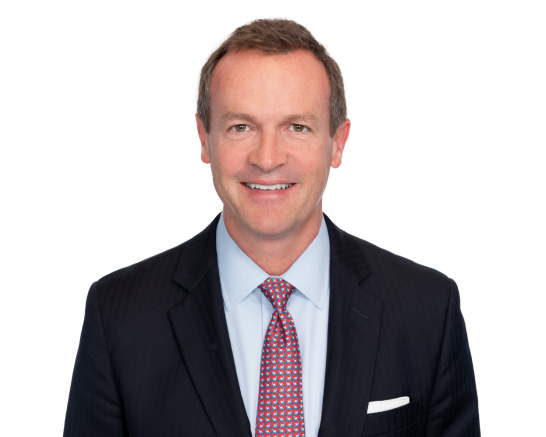
Mitchell Krebs
 Coeur Mining
About Mitchell Krebs
Mitchell J. Krebs is Chairman, President & CEO of Coeur Mining (appointed CEO in July 2011 and Chairman in May 2024) with prior roles in corporate development and CFO; age 53; education: BS Economics (Wharton) and MBA (Harvard) . He joined Coeur in 1995 after investment banking at PaineWebber and has held external leadership positions including former Chair of the National Mining Association and past President of The Silver Institute . Company performance context: Coeur’s revenues and EBITDA expanded materially from FY 2022 to FY 2024, supporting pay-for-performance alignment (see Financial Trend table below; Values retrieved from S&P Global). Say‑on‑pay support exceeded 96% in 2024, the seventh straight year ≥90% approval, indicating shareholder endorsement of the program .
Past Roles
| Organization | Role | Years | Strategic Impact |
|---|---|---|---|
| Coeur Mining, Inc. | Chairman of the Board; President & CEO | Chairman since May 2024; CEO since July 2011 | Combined strategic leadership and execution oversight; continuity through commodity cycles . |
| Coeur Mining, Inc. | SVP & CFO; Treasurer | CFO Mar 2008–Jul 2011; Treasurer Jul 2008–Mar 2010 | Capital markets stewardship during prior cycle; finance and liquidity leadership . |
| Coeur Mining, Inc. | SVP Corporate Development; VP Corporate Development | SVP May 2006–Mar 2008; VP Feb 2003–May 2006 | M&A and portfolio development groundwork supporting subsequent growth . |
| Coeur Mining, Inc. | Manager of Acquisitions | From Aug 1995 | Early-stage deal and asset evaluation capability . |
External Roles
| Organization | Role | Years | Strategic Impact |
|---|---|---|---|
| National Mining Association | Chair | Sep 2022–Sep 2024 | Industry advocacy and policy engagement . |
| The Silver Institute | Executive Committee member; past President | N/A | Sector leadership and network influence . |
| Kansas City Southern Railway Co. | Director | May 2017–Apr 2023 | Cross-industry logistics insights; public co. governance experience . |
Fixed Compensation
| Year | Base Salary ($) | Notes |
|---|---|---|
| 2022 | 800,000 | |
| 2023 | 850,000 | |
| 2024 | 850,000 | No salary increases for NEOs in 2024 . |
Performance Compensation
- Program design: CEO AIP is 100% corporate performance; LTIP mix is 60% PSUs and 40% time‑vesting restricted stock; RS vests ratably over 3 years; PSUs cliff‑vest after 3 years; PSU metrics include growth in inferred mineral resources and ROIC with a ±25% relative TSR modifier . Target LTIP for CEO set at 300% of base salary ($2,550,000 for 2024) .
Annual Incentive Plan (AIP) – CEO
| Metric | Weighting | Target | Actual Payout | Comments |
|---|---|---|---|---|
| Corporate Scorecard (Operational/Financial/ESG/Strategic) | 100% | 125% of base salary target; implied $1,062,500 at target for 2024 | $1,051,875 for 2024 | CEO AIP entirely company performance; no individual component . |
Long-Term Incentive Plan (LTIP) – Target and Structure
| Grant Year | LTIP Target (% of Salary) | Target $ | Mix | Vesting |
|---|---|---|---|---|
| 2024 | 300% | $2,550,000 | 60% PSUs / 40% RS | RS ratable over 3 yrs; PSUs 3-yr cliff with rTSR modifier . |
PSU Outcomes – 2022–2024 Performance Cycles (Vest in 2025)
| PSU Metric/Cycle | Target Shares at Grant | Shares Awarded | Realized Value at Award |
|---|---|---|---|
| Reserves & Resources Growth (2022–2024) | 85,375 | 97,327 | $531,405 |
| GHG Net Intensity Reduction (2022–2024) | 56,917 | 64,885 | $354,272 |
| Rochester Stage VI Silver Eq. Production (2022–2024) | 56,917 | 0 | $0 |
The zero payout on the Rochester production PSU underscores rigor; environmental and resource growth metrics paid above target, reflecting strategic mix of financial/operational and ESG goals .
CEO Total Compensation Mix and Realization Checks
| Year | SCT Total ($) | Salary ($) | Stock Awards ($) | Non-Equity Incentive ($) | All Other ($) | Realized/Realizable vs Shareholder ROI |
|---|---|---|---|---|---|---|
| 2022 | 3,905,654 | 800,000 | 2,045,212 | 940,000 | 120,442 | CEO $100→$89 vs stockholder $100→$113 (to 12/31/24) . |
| 2023 | 4,108,972 | 850,000 | 2,215,262 | 892,500 | 151,210 | CEO $100→$131 vs stockholder $100→$170 . |
| 2024 | 4,387,806 | 850,000 | 2,334,161 | 1,051,875 | 151,770 | CEO $100→$154 vs stockholder $100→$175 . |
Equity Ownership & Alignment
| Item | Detail |
|---|---|
| Beneficial Ownership | 2,259,962 shares; less than 1% of 638,384,526 outstanding as of Mar 5, 2025 . |
| Unvested Time‑Vesting Stock (12/31/24) | 602,911 shares; market value $3,448,651 at $5.72/share . |
| Unearned PSUs Outstanding (12/31/24) | 1,237,753 target units; market/payable value $7,079,947 at $5.72/share . |
| Ownership Guidelines | CEO 6x base salary; five-year compliance window; each director/executive has met or is within compliance period . |
| Hedging/Pledging | Hedging prohibited; directors/executive officers prohibited from pledging or holding in margin accounts . |
| Clawback | NYSE Rule 10D‑1 compliant; restatement-based recovery plus misconduct-based recoupment by CLD/Board . |
| Deferred Compensation | Company contribution $83,850 in last FY; aggregate balance $1,654,752; no defined benefit pension . |
Insider selling/trading plans:
- A Rule 10b5‑1 plan adopted by Krebs on June 6, 2025 provided for up to 250,000 shares sold between Sep 5, 2025 and Feb 15, 2026; the plan was terminated Sep 8, 2025 after all 250,000 shares were sold .
- Annual equity grants are typically approved in Q1 using a 60‑trading‑day average price; RS vests ratably over three years and PSUs cliff-vest after three years, which can cluster vesting-related share releases in early-year windows .
Employment Terms
| Term | Detail |
|---|---|
| Employment Agreement | Amended & Restated Feb 5, 2018; provides for base salary (adjustable) and annual incentive . |
| Term and Renewal | Current term runs through June 30, 2025; auto-renews for successive one-year periods unless modified/terminated per agreement . |
| Severance (Non‑CIC) | If terminated without cause or for good reason (not in connection with CIC): 2.75x base salary + target AIP, paid over 12 months; up to 12 months of healthcare benefits . |
| Severance (CIC Double Trigger) | If terminated without cause or for good reason within 90 days before or up to 2 years after CIC: lump sum 2.75x base + target AIP; up to 24 months healthcare; accelerated vesting of unvested equity per plan . |
| CIC Definition & 280G | CIC includes 35% ownership threshold, board turnover, or transaction as determined by Board; 280G cutback applies if beneficial on after‑tax basis . |
| Equity Plan Vesting | Double‑trigger acceleration under LTIP; RS vests 100% and PSUs vest based on actual performance up to CIC date upon qualifying termination . |
Board Governance
- Board service: Director since 2011; elevated to Chairman in May 2024 while serving as President & CEO .
- Committee roles: Chair, Executive Committee; all standing committees (Audit, CLD/Compensation, EHSCR, Finance & Technical, Nominating & Corporate Governance) are composed solely of independent directors .
- Independence and mitigation: Krebs is not independent; the Board maintains a Lead Independent Director role (J. Kenneth Thompson, since May 2024) and fully independent key committees to balance combined Chair/CEO leadership .
- Attendance: Board met 8 times in 2024; each incumbent director attended ≥95% of Board and committee meetings; annual meeting attendance policy in place .
- Director pay: The CEO/Chairman receives no additional compensation for director service .
Compensation Committee Analysis
- Committee composition and activity: CLD Committee (independent) met 6 times in 2024; responsible for CEO pay approval (with Board), executive pay, equity plans, risk oversight, succession, and leadership development .
- Market benchmarking: Uses an independent compensation consultant; reviews vs 25th/50th/75th percentiles but does not tie to a fixed percentile target .
- 2024 peer group: Precious metals/mining peers (e.g., Alamos Gold, B2Gold, Centerra, Eldorado, Equinox, Hecla, etc.); Yamana removed after acquisition .
- Say‑on‑pay: 2024 approval >96%; seventh consecutive year ≥90% approval .
Performance & Financial Trend
| Metric | FY 2022 | FY 2023 | FY 2024 |
|---|---|---|---|
| Revenues ($, millions) | 785.6* | 821.2* | 1,054.0* |
| EBITDA ($, millions) | 83.5* | 77.5* | 325.6* |
Values retrieved from S&P Global.
Pay‑versus‑Performance (company‑reported):
- PVP table indicates for 2024: Company TSR $100→$71 vs peer group TSR $100→$125; net income $58.9m; adjusted EBITDA $339.2m .
- Realized/realizable CEO pay compared to shareholder ROI shows 2024 CEO $100→$154 vs shareholder $100→$175; 2023: $131 vs $170; 2022: $89 vs $113 .
Risk Indicators & Red Flags
- Pledging/Hedging: Prohibited, reducing misalignment risk .
- Double‑trigger CIC vesting: Limits single‑trigger windfalls; CIC multiple of 2.75x is above many mid‑cap medians but governed by cutback .
- Option repricing: Prohibited without shareholder approval under LTIP; no discounted or reload options; independent administration .
- Insider selling: 250,000 shares sold under a terminated 10b5‑1 plan in 2025, indicating episodic liquidity that could introduce supply near plan windows .
Investment Implications
- Pay-for-performance alignment is credible: majority variable, rigorous PSU metrics with a zero‑payout component (Rochester production) alongside above‑target resource growth and GHG intensity outcomes; CEO AIP fully company‑weighted .
- Retention risk appears contained near term: sizable unvested RS (602,911 shares) and unearned PSUs (1,237,753) plus severance/CIC protections and strong say‑on‑pay support; pledging is banned .
- Governance mitigants offset combined Chair/CEO: independent Lead Director and fully independent key committees; attendance and engagement metrics are strong .
- Trading signals: 2025 10b5‑1 sales by Krebs (250,000 shares) suggest potential supply around plan activity; monitor future plan adoptions and vesting calendars (Q1 grants; three‑year cliffs) for timing risk .
- Performance leverage: With FY 2024 revenue/EBITDA momentum and 2024 PVP EBITDA at $339.2m, incentive structures should continue to reward durable operational and capital returns execution; however, TSR underperformance vs peers over multi‑year PVP window underscores the need for sustained delivery to convert operating gains into shareholder returns .


