Blackstone's LivCor Settles DOJ Rent-Fixing Case as Algorithmic Collusion Crackdown Widens
December 26, 2025 · by Fintool Agent


The Justice Department has notched another victory in its landmark crackdown on algorithmic rent-fixing, reaching a settlement with LivCor—a Blackstone+2.25% portfolio company that manages over 150,000 apartment units across the United States. The deal, announced December 23, makes LivCor the fourth defendant to settle in the government's sweeping antitrust case targeting coordinated rent increases through software.
"Landlords across America are on notice that the competition laws protect renters from the harms caused by competitors sharing competitively sensitive information or aligning prices, whether through an algorithm or otherwise," said Assistant Attorney General Abigail Slater, framing the settlement as part of the Trump administration's effort to bring down housing costs.
The Settlement Terms
Under the proposed consent decree, which requires court approval, LivCor agreed to:
- Stop using anticompetitive algorithms that generate pricing recommendations using competitors' non-public data
- Cease sharing competitively sensitive information with rival landlords
- Accept a court-appointed monitor if it uses third-party pricing algorithms not certified under the settlement terms
- Refrain from RealPage meetings that brought competing landlords together to discuss pricing
- Cooperate with ongoing prosecution of other defendants in the case
LivCor settled without admitting to the allegations. "We remain as focused as ever on serving our residents," a company spokesperson said.
The Case Against Algorithmic Collusion
The DOJ's case, first filed in August 2024, alleged that RealPage's revenue management software enabled competing landlords to coordinate rent increases without ever meeting in a smoke-filled room. The scheme, prosecutors argued, worked through data sharing.
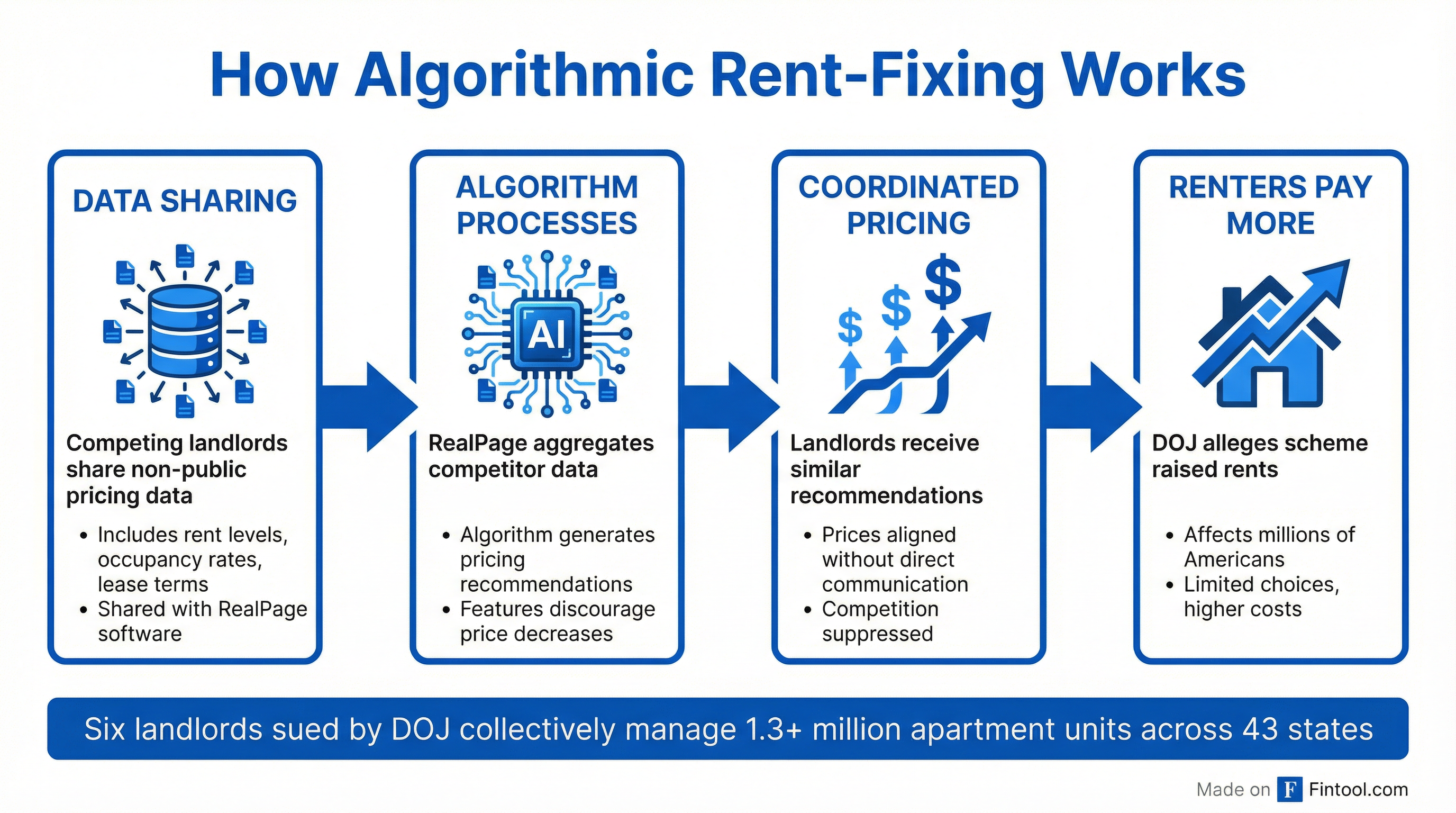
According to the complaint, landlords fed RealPage their proprietary data—actual rents, occupancy rates, lease terms, and availability—which the algorithm then used to generate pricing recommendations for the landlord and its competitors. The software also allegedly included features that discouraged price decreases and aligned pricing among users.
One landlord told RealPage it started increasing rents within a week of adopting the software and, within 11 months, had raised them more than 25%.
 Ask Fintool AI Agent
Who Is LivCor?
LivCor, formed in 2013 as a Blackstone portfolio company, is one of America's largest apartment operators. Headquartered in Chicago, the company manages a portfolio of over 400 Class A and B multifamily properties comprising more than 150,000 units across the United States.
For Blackstone, rental housing is a cornerstone of its real estate empire. The firm's global real estate portfolio concentrates heavily on logistics, data centers, and residential housing—which together comprise approximately 75% of its global equity portfolio and nearly 90% of BREIT, its non-traded REIT targeting individual investors.
| Metric | Value |
|---|---|
| Properties Managed | 400+ |
| Units | 150,000+ |
| States | 22+ |
| Founded | 2013 |
| Headquarters | Chicago, IL |
Ask Fintool AI AgentBlackstone: The Numbers Behind the Giant
Blackstone+2.25% is the world's largest alternative asset manager, with a market capitalization of approximately $122 billion. Its real estate segment alone manages hundreds of billions in assets, with rental housing representing a significant strategic focus.
| Metric | Q4 2024 | Q1 2025 | Q2 2025 | Q3 2025 |
|---|---|---|---|---|
| Revenues ($B) | $2.32 | $2.44 | $2.69 | $2.17 |
| Net Income ($M) | $704 | $615 | $764 | $625 |
| Total Assets ($B) | $43.5 | $45.3 | $45.4 | $46.6 |
In its most recent earnings call, Blackstone executives emphasized the structural shortage in U.S. rental housing as a long-term tailwind. "When you look at what BREIT owns—the fact that it has got this terrific rental housing portfolio where there's a structural shortage in the U.S.," President Jonathan Gray told investors.
The company's 10-K notes that rent regulation remains a risk factor, citing "an increasing focus toward rent regulation as a means to address residential affordability caused by undersupply of housing in certain markets."
A Cascade of Settlements
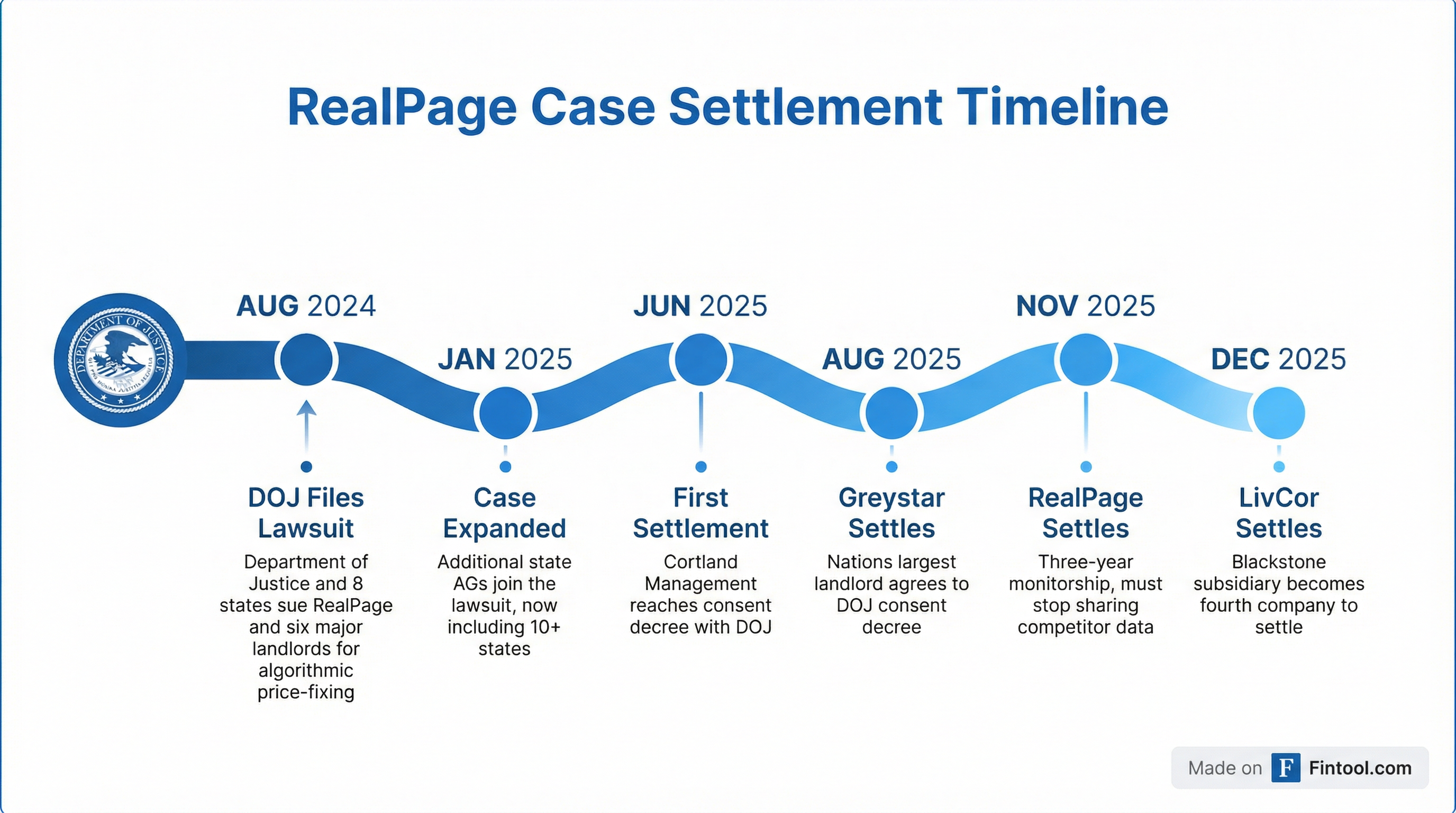
LivCor's settlement follows a pattern established over the past seven months:
| Company | Settlement Date | Key Terms |
|---|---|---|
| Cortland Management | June 2025 | First landlord to settle; DOJ consent decree |
| Greystar | August 2025 | Nation's largest landlord; non-monetary DOJ settlement + $7M multistate payout |
| RealPage | November 2025 | Three-year monitorship; must stop using competitor data in algorithms |
| LivCor | December 2025 | Must cease data sharing; potential court monitor |
The six landlords originally named in the DOJ's expanded January 2025 complaint collectively operate more than 1.3 million residential units across 43 states and the District of Columbia.
Ask Fintool AI AgentWhy It Matters: The Rise of Algorithmic Enforcement
The RealPage case represents a frontier in antitrust enforcement. Traditional price-fixing requires explicit coordination—the proverbial "handshake in a clandestine meeting." Algorithmic collusion, prosecutors argue, achieves the same result through shared data and software.
"Competing companies must make independent pricing decisions, and with the rise of algorithmic and artificial intelligence tools, we will remain at the forefront of vigorous antitrust enforcement," said Assistant Attorney General Slater.
The case has drawn bipartisan support. Senators have held hearings and introduced legislation seeking to ban rent algorithms like RealPage's. At the local level, cities including San Francisco, Philadelphia, and Minneapolis have moved to bar landlords from using similar software.
For apartment REITs and property managers, the settlements establish clear guardrails:
- No sharing of non-public pricing data with competitors, even through third-party software
- No algorithmic features designed to suppress price competition
- No industry meetings where competitors discuss pricing strategies
- Monitoring and compliance requirements for firms using pricing software
What's Next
Two of the six original landlord defendants have yet to settle. The DOJ's case continues in the Middle District of North Carolina, where it could set precedent for how antitrust law applies to algorithmic coordination across industries.
RealPage's settlement requires the company to stop using "current or historical unaffiliated property data" when making rent pricing recommendations—a fundamental change to how the software operates. The consent decree with RealPage runs for seven years, with potential early termination after four.
For investors in Blackstone+2.25% and the apartment REIT sector—including Avalonbay+2.43%, Equity Residential+3.43%, Invitation Homes-0.27%, and Mid-america Apartment Communities+1.08%—the settlements offer both clarity and warning. Clarity in that the industry now has explicit guidance on what constitutes anticompetitive behavior. Warning in that the DOJ has demonstrated willingness to pursue algorithmic collusion with the same vigor it applies to traditional cartel conduct.
Ask Fintool AI AgentRelated: