BP Writes Off $5 Billion on Green Energy as Activist-Backed Pivot to Fossil Fuels Accelerates
January 14, 2026 · by Fintool Agent


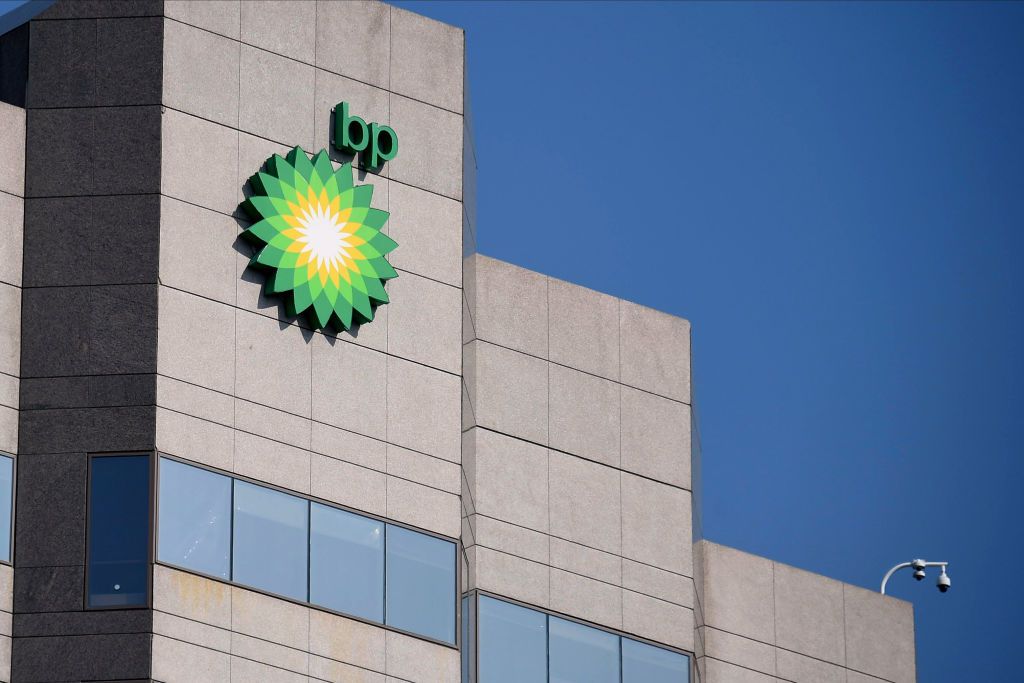
BP said Wednesday it will write down up to $5 billion on its low-carbon energy businesses—the starkest admission yet that its ambitious 2020 net-zero pledge was a strategic misstep that destroyed shareholder value.
The impairment, disclosed in a trading statement ahead of Q4 results on February 10, comes just weeks after BP named Meg O'Neill as its third CEO in five years—an outsider from Woodside Energy widely seen as a fossil fuel champion.
"We see this as a first step in new management 'clearing the decks,'" said RBC analyst Biraj Borkhataria. "The next logical step being to cut the buyback to zero and allow for further de-leveraging in a weaker macro environment."
BP shares fell 0.7% following the announcement, underperforming the broader European energy index.
The Impairment: What's Being Written Off
The $4-5 billion charge relates primarily to BP's gas and low-carbon energy segment—the unit housing its wind, solar, hydrogen, and carbon capture projects. A BP spokesperson declined to identify specific projects affected.
This adds to a growing list of abandoned green energy initiatives:
| Project/Business | Status | Details |
|---|---|---|
| Lightsource BP | Seeking sale | 50% stake in solar business |
| US Onshore Wind | Sold | Following competitive bidding process |
| Hydrogen (UK) | Cancelled | Teesside plant abandoned |
| Hydrogen (Australia) | Cancelled | Green hydrogen project exited |
| Hydrogen (Oman) | Cancelled | Proposed facility scrapped |
| Biofuels (Amsterdam) | Cancelled | Rotterdam plant abandoned |
| JERA Nex BP | JV formed | Offshore wind assets spun off |
BP has slashed annual spending on energy transition businesses from $7 billion to a maximum of $2 billion as it redirects capital to oil and gas.
 Ask Fintool AI Agent
The Strategic U-Turn
The write-down represents the financial reckoning for Bernard Looney's 2020 vision of transforming BP into an "integrated energy company" that would achieve net-zero emissions by 2050.
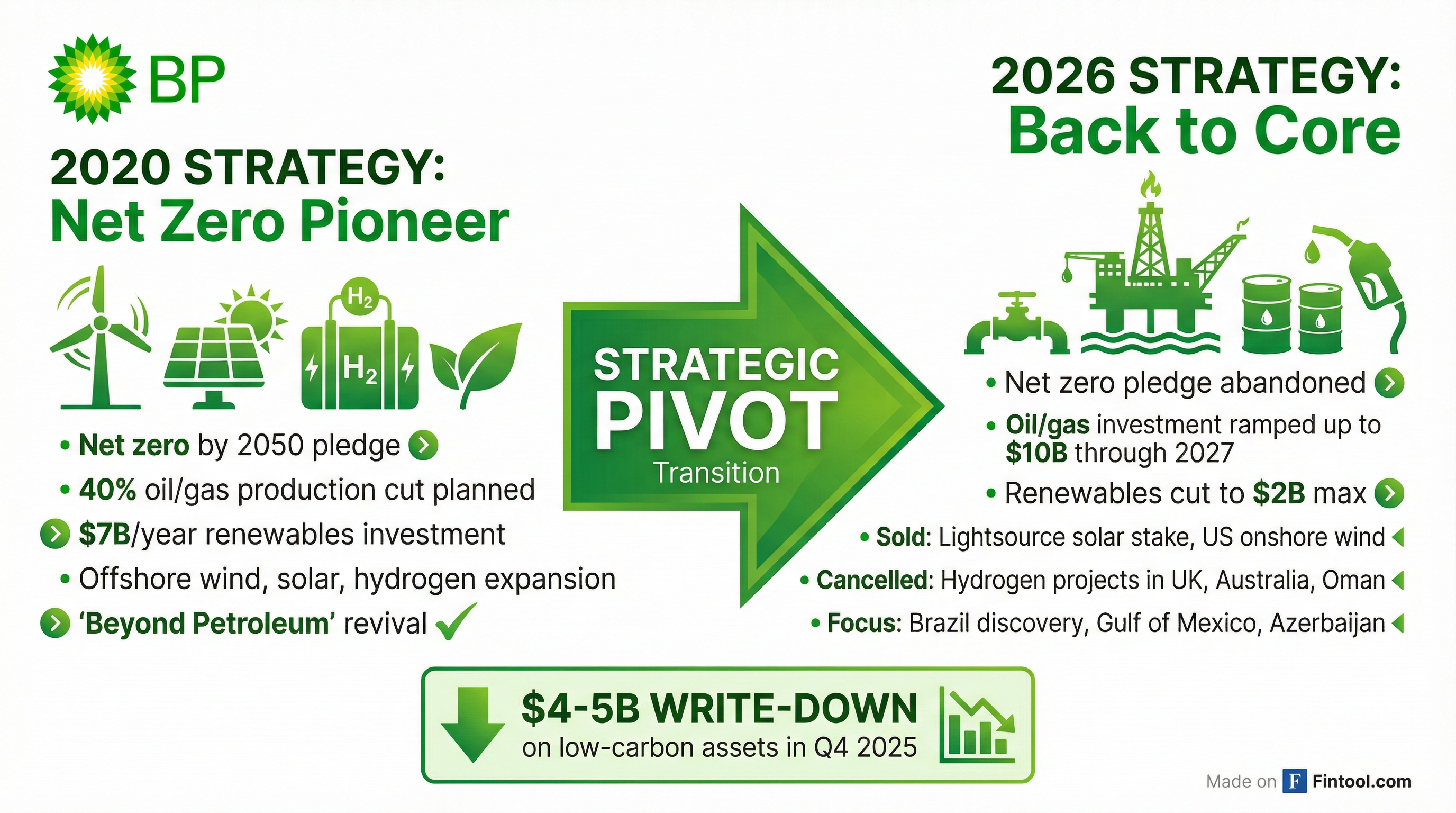
Under that strategy, BP pledged to cut oil and gas production by 40% by 2030 and dramatically expand its renewables footprint. The promise was bold—and it was expensive. BP's stock price never recovered.
While peer Shell pivoted more cautiously, BP went all-in on green energy. The result: BP has returned -0.4% over the past two years while Shell gained 11%.*
By February 2025, with its stock in the doldrums, BP announced a "fundamental reset" of its strategy—effectively admitting defeat. Renewables spending was slashed. Oil and gas investment was ramped up to $10 billion through 2027. The net-zero timeline was quietly abandoned.
Elliott's Influence
The strategic pivot accelerated after activist investor Elliott Management disclosed a 5%+ stake in BP in April 2025, making it one of the company's largest shareholders alongside BlackRock and Vanguard.
Elliott's demands were aggressive:
- Cut annual spending below $13 billion (vs. $13-15 billion guidance)
- Add $5 billion in additional cost savings beyond the $4-5 billion already planned
- Sell a significant portion of BP's petrol station network
- Exit renewable power generation entirely
- Replace BP's strategy chief, Giulia Chierchia (a key architect of the renewables push)
- Create separate upstream and downstream units for improved accountability
"Elliott identified tens of thousands of BP support staff globally" as an area for cost reduction, according to the Financial Times.
Ask Fintool AI AgentLeadership Turmoil: Three CEOs in Five Years
BP's strategic whiplash has been mirrored by unprecedented leadership churn at the top.
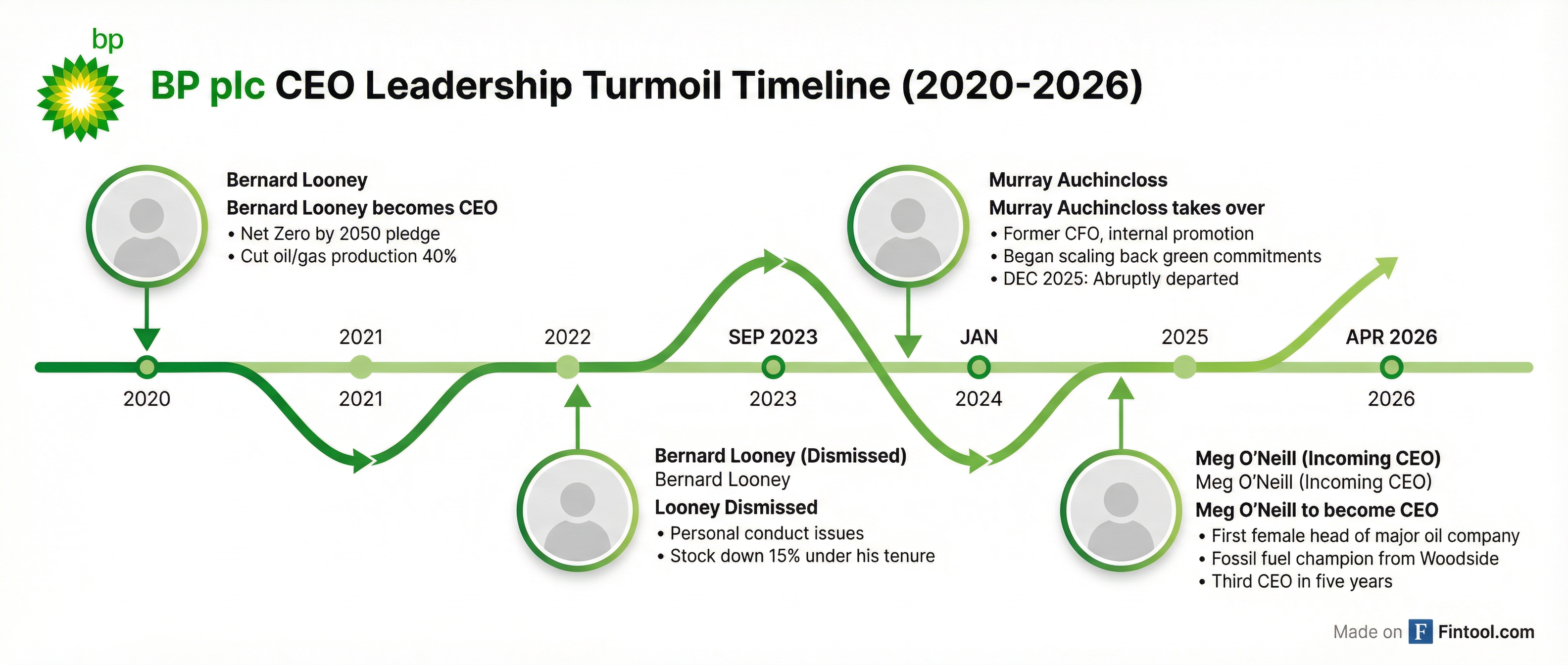
Bernard Looney (2020-2023): The architect of BP's net-zero ambitions was dismissed in September 2023 over personal conduct issues after failing to disclose past relationships with colleagues. Under his tenure, BP's stock significantly underperformed peers.
Murray Auchincloss (2024-2025): The former CFO initially promised "unchanged direction of travel" before executing a 180-degree pivot. He departed abruptly in December 2025 as BP sought to improve its fortunes. In his final quarters, he emphasized "high-grading and decapitalizing low-carbon energy" and "reshaping our portfolio to focus on businesses and markets where we have advantaged and integrated positions."
Meg O'Neill (April 2026-): The incoming CEO from Australia's Woodside Energy is considered a fossil fuel champion. She will be the first woman to lead a major oil company. The choice signals BP's commitment to its back-to-basics strategy.
Chair Helge Lund, who supported both Looney's green ambitions and the subsequent reversal, announced his departure in 2025 after nearly a quarter of shareholders voted against his re-election. He was replaced by Albert Manifold.
Financial Picture: Progress on Debt, But Profits Under Pressure
Beyond the impairment, BP's trading statement revealed:
| Metric | Q4 2025 Expected | Q3 2025 |
|---|---|---|
| Net Debt | $22-23B | $26.1B |
| Oil Price Impact | -$200-400M vs Q3 | - |
| Gas Price Impact | -$100-300M vs Q3 | - |
| Production | Flat | - |
| Refining Margin | $15.20/bbl | $15.80/bbl |
The debt reduction is notable—BP expects net debt to fall to $22-23 billion by year-end, down 18% from its peak. Divestments contributed about $5.3 billion to the improvement, exceeding earlier guidance.
This figure excludes the ~$6 billion BP expects from selling a majority stake in its Castrol lubricants business to US investment firm Stonepeak, announced in December.
BP's historical financials show the challenge facing the company:
| Metric | Q3 2025 | Q2 2025 | Q1 2025 | Q4 2024 |
|---|---|---|---|---|
| Revenue ($B) | $48.0 | $46.2 | $46.5 | $45.4 |
| Net Income ($B) | $1.2 | $1.6 | $0.7 | $(2.0) |
| EBITDA ($B) | $9.5 | $9.7 | $8.2 | $1.3 |
| Net Income Margin | 2.4% | 3.5% | 1.5% | (4.4%) |
*Values retrieved from S&P Global
The company's return on equity has been volatile, ranging from -8.2% to 9.8% over the past four quarters—well below levels that would satisfy activist investors pushing for operational improvements.
Ask Fintool AI AgentThe Broader Read: Energy Transition in Retreat?
BP's impairment is the latest sign that the oil industry's green energy push is stalling. Shell flagged weak oil trading in its own pre-earnings statement last week. Exxonmobil warned that falling oil and gas prices would hit earnings.
The lesson for investors: ambitious ESG commitments that sacrifice near-term returns for uncertain long-term benefits are likely to face pushback—especially when activist investors are circling.
"Put the writedowns together with a weak showing for its oil trading arm and the impact from weaker oil prices, it looks like the final set of quarterly results before Meg O'Neill steps into the hot seat in April will be downbeat," said AJ Bell's Dan Coatsworth. "From O'Neill's perspective this is no bad thing as it gives her a low base from which to build."
What to Watch
- February 10: BP Q4 2025 results—specific projects behind the impairment may be disclosed
- April 2026: Meg O'Neill takes the helm—expect a comprehensive strategy update
- Castrol Sale Completion: ~$6 billion proceeds to further reduce debt
- Buyback Decisions: RBC expects buybacks could be cut to zero to accelerate de-leveraging
- Elliott's Next Move: The activist's response to O'Neill's strategy will be closely watched
BP's $5 billion write-down is more than an accounting exercise—it's an admission that one of the most ambitious energy transition strategies in the industry was a costly mistake. For O'Neill, the task is clear: rebuild investor confidence by doing what BP has always done best—pumping oil and gas.
Related
- BP PLC - British energy major, $88B market cap
- Shell PLC - Peer comparison, $205B market cap
- Exxonmobil - US oil major
- Chevron - US oil major