Grocery Prices Post Biggest Monthly Jump in Over Three Years
January 13, 2026 · by Fintool Agent


Food prices surged 0.7% in December—the largest monthly increase in more than three years—as Americans heading into 2026 face sticker shock at the grocery store with beef, coffee, and produce prices climbing sharply. The data, released today by the Bureau of Labor Statistics, puts renewed pressure on the Trump administration to deliver on campaign promises to lower everyday costs.
The Numbers
The Consumer Price Index rose 0.3% in December and 2.7% year-over-year, matching November's annual pace and meeting economists' expectations. But beneath the headline figures lies a troubling picture for household budgets: food prices posted their biggest monthly gain since October 2022.
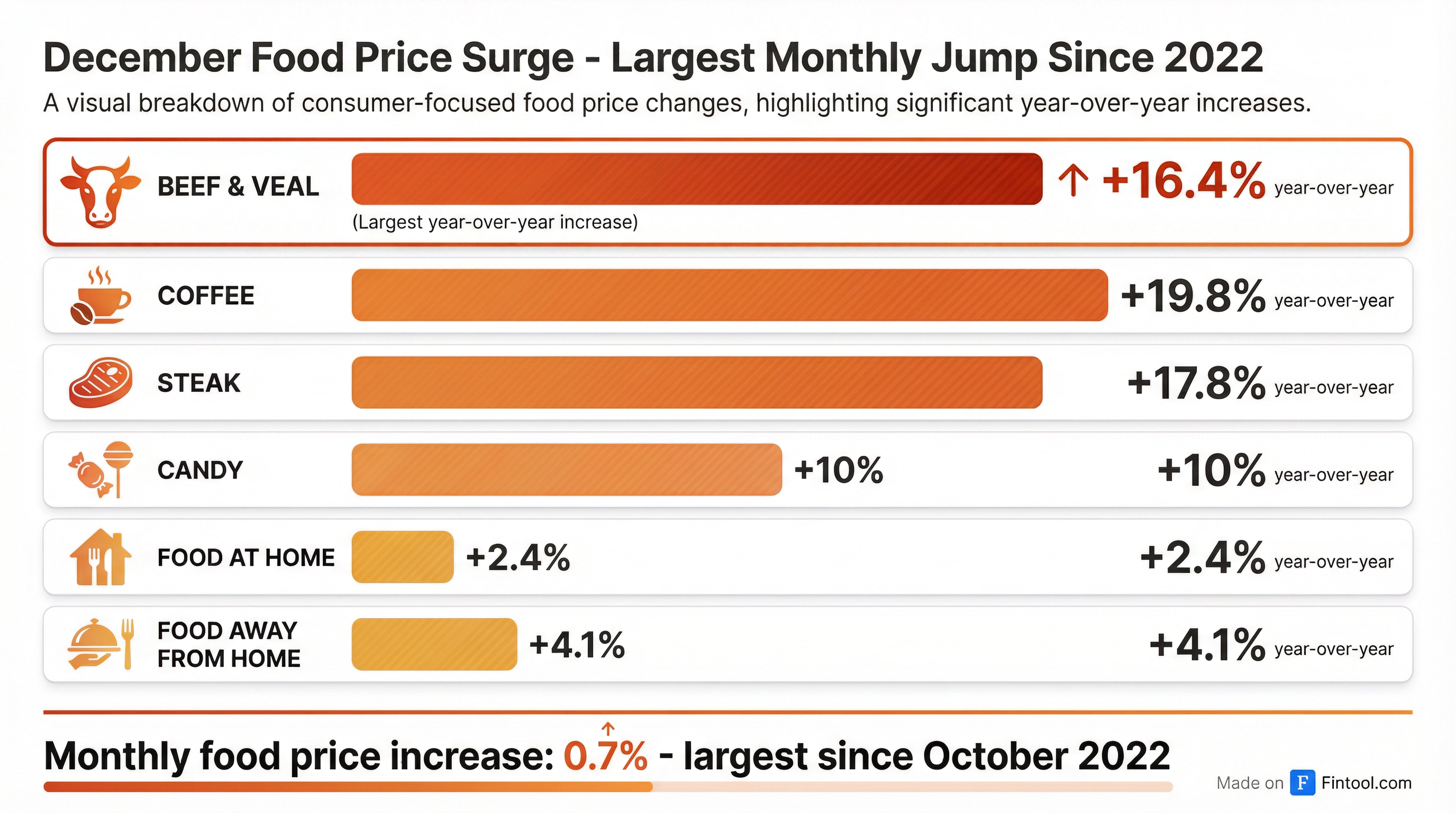
| Category | Monthly Change | Year-over-Year |
|---|---|---|
| Food at Home (Groceries) | +0.7% | +2.4% |
| Food Away from Home | +0.7% | +4.1% |
| Beef & Veal | +1.0% | +16.4% |
| Steak | +3.1% | +17.8% |
| Coffee | +1.9% | +19.8% |
| Candy & Chewing Gum | N/A | +10.0% |
| Eggs | -8.2% | N/A |
| Overall CPI | +0.3% | +2.7% |
| Core CPI | +0.2% | +2.6% |
Source: Bureau of Labor Statistics
The pain is concentrated in protein and morning staples. Beef and veal prices jumped 16.4% from a year ago, with steak specifically soaring 17.8%—the largest annual increase in four years. Coffee, already elevated due to supply disruptions and tariff pressures, climbed 1.9% in the month alone and is up nearly 20% year-over-year.
"Families may not closely track core inflation, but they see grocery prices and restaurant costs immediately," said Sung Won Sohn, a finance and economics professor at Loyola Marymount University. "A renewed push in food prices is not merely a statistical detail, it can influence public perception, wage negotiations and ultimately economic behavior."
What's Driving the Surge
Cattle herd contraction: The U.S. cattle herd has shrunk to multi-decade lows due to drought, rising feed costs, and rancher retirements. With supply tight and demand for protein remaining strong, beef prices have little room to fall.
Coffee supply chain stress: Global coffee prices remain elevated after consecutive years of poor harvests in Brazil and Vietnam. Tariffs have added additional cost pressure, with roasters passing increases to consumers.
Shelter costs persist: Housing remains the CPI's largest component, with shelter rising 0.4% in December. Owners' equivalent rent increased 0.3%, while hotel costs jumped 2.9%.
One bright spot—eggs: After record highs last year amid bird flu outbreaks, egg prices fell 8.2% in December as supply recovered and processing capacity returned to normal.
 Ask Fintool AI Agent
Market Implications
Grocery Retailers Under Pressure
Major grocers face a delicate balancing act: pass through cost increases and risk losing traffic to discount competitors, or absorb the margin hit and squeeze profitability.
| Ticker | Company | Today's Move | Market Cap |
|---|---|---|---|
| WMT | Walmart | -0.1% | $727B |
| COST | Costco | -0.1% | $418B |
| KR | Kroger | +0.2% | $47B |
| TGT | Target | +0.5% | $55B |
| TSN | Tyson Foods | +1.1% | $21B |
| KHC | Kraft Heinz | +0.3% | $38B |
Walmart, the nation's largest grocer, has historically gained market share during inflationary periods as budget-conscious consumers trade down. But the scale of food inflation—particularly in protein—tests even Walmart's ability to maintain everyday low prices.
Costco, with its membership model and buying power, has been a relative winner in the inflation environment. However, at nearly $942 per share and trading at elevated multiples, the stock leaves little room for disappointment.
Food producers like Tyson Foods benefit on the margin side when protein prices rise, though input costs for feed and labor can offset gains. Tyson shares rose 1.1% on the day, outperforming the broader consumer staples sector.
Fed Watch
The report provides mixed signals for Federal Reserve policymakers. Core inflation—which excludes food and energy—rose just 0.2% in December, the smallest gain in nine months, keeping alive hopes for rate cuts later this year.
"The recent run of figures suggests inflation has peaked," said Michael Pearce, chief U.S. Economist at Oxford Economics. "We think tariff-driven price rises have mostly been passed through and anticipate further disinflation in services inflation in 2026 will drive inflation back closer to the 2% target by the end of the year."
However, economists warn that January CPI data has historically run hot—core CPI has jumped 0.4% or more in each of the past four Januarys—as businesses implement beginning-of-year price increases.
The Fed is widely expected to hold rates steady at its January 28-29 meeting. Markets are pricing in two to three rate cuts for 2026, but the path depends heavily on inflation's trajectory in the coming months.
Ask Fintool AI AgentPolitical Dimension
The food inflation data arrives at a politically sensitive moment. President Trump campaigned aggressively on lowering everyday prices, and his approval ratings have been weighed down by persistent cost-of-living concerns.
The administration has taken several steps to address food costs:
- Rolled back some agricultural tariffs
- Directed the Attorney General and FTC to investigate price-fixing in the food supply chain
- Touted the decline in egg prices
But economists note that policy changes take time to filter through to grocery shelves, and structural factors like the cattle herd shortage cannot be quickly reversed.
What to Watch
January CPI (February release): The first reading of the new year will show whether the December spike was an aberration or the start of a new trend. Beginning-of-year price increases by food manufacturers could push the index higher.
Grocery earnings season: Kroger reports March 6, followed by Costco on March 6 and Walmart on February 20. Management commentary on traffic, basket sizes, and promotional intensity will signal how retailers are navigating the environment.
Fed communications: Fed officials will parse the data carefully. Richmond Fed President Tom Barkin called today's report "encouraging" on core inflation but acknowledged that households care more about visible costs like food and rent.
Cattle inventory report: The USDA's next cattle inventory update will provide insight into whether the herd is stabilizing or continuing to contract, with implications for beef prices through year-end.
Ask Fintool AI AgentRelated Companies: Walmart · Costco · Kroger · Target · Tyson Foods · Kraft Heinz · Starbucks