Harold Hamm Halts Bakken Drilling for First Time in 30 Years as Margins Evaporate
January 17, 2026 · by Fintool Agent


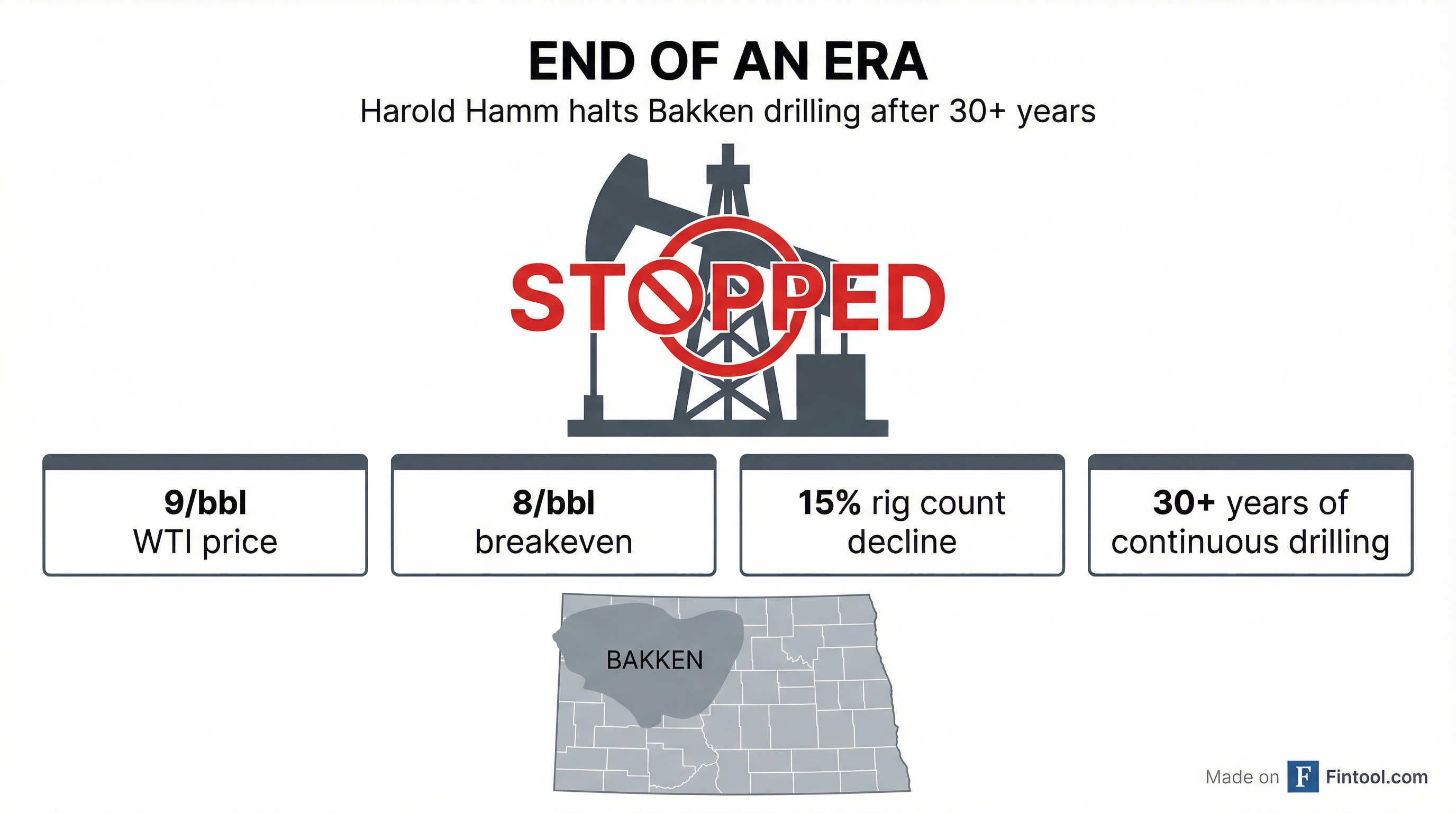
The billionaire wildcatter who helped ignite America's shale revolution is shutting down operations in the very basin where it began.
Harold Hamm, founder and executive chairman of Continental Resources, announced Thursday that his company will halt drilling in North Dakota's Bakken formation for the first time in over 30 years.
"This will be the first time in over 30 years that Harold Hamm has not had an operation with drilling rigs in North Dakota," Hamm said in a phone interview with Bloomberg. "There's no need to drill it when margins are basically gone."
The decision marks a historic turning point for the US shale industry and underscores the tension between the Trump Administration's goal of cheap $50 oil and the economic reality facing domestic drillers.
The Math Doesn't Work
The economics are stark:
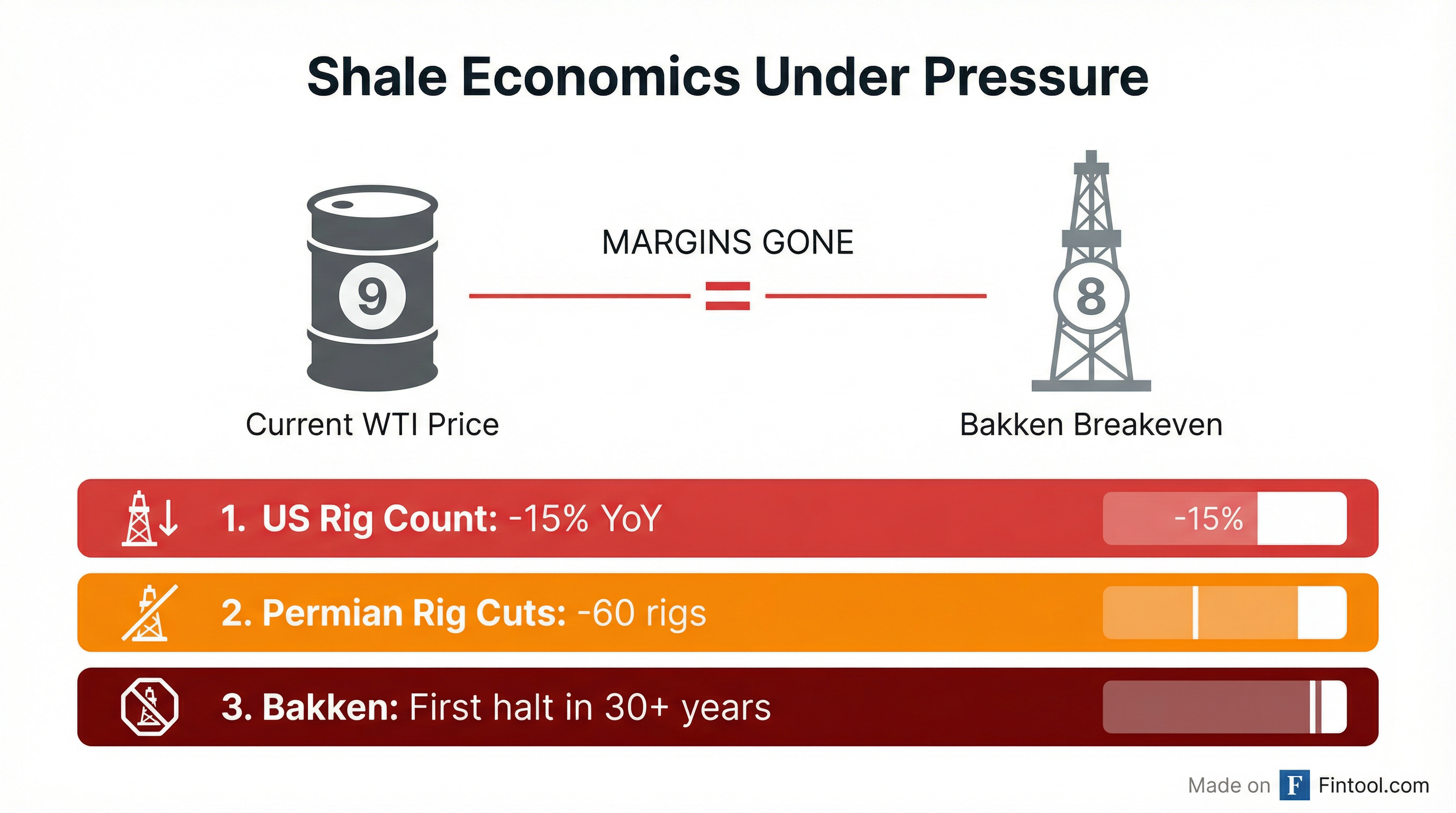
WTI crude settled at $59.44 per barrel on Friday, down 23% over the past 12 months. The average Bakken well now requires a minimum of $58 per barrel to cover costs and generate a small profit, according to BloombergNEF—up nearly 4% from a year ago as drilling costs have escalated.
| Metric | Value |
|---|---|
| WTI Crude (Jan 16, 2026) | $59.44/bbl |
| Bakken Breakeven | $58/bbl |
| WTI YoY Decline | -23% |
| US Rig Count YoY Change | -15% |
| Permian Rig Cuts | -60 rigs |
"We're price takers, as you're aware—not price makers," Hamm said with a laugh. "See what we can get."
 Ask Fintool AI Agent
End of an Era
The Bakken holds special significance in the American energy story. It was here in the Williston Basin of North Dakota, starting in the mid-2000s, that Hamm and Continental first proved that horizontal drilling combined with hydraulic fracturing could unlock vast reserves of oil trapped in tight rock formations.
That breakthrough kicked off the US shale revolution, transforming the country from a major oil importer into the world's top crude producer at over 13 million barrels per day.
Now, at 80 years old, Hamm is walking away from the basin that made his fortune—at least temporarily.
Continental Resources was taken private by the Hamm family in 2022 in a deal valuing the company at approximately $25 billion. While no longer publicly traded, Continental remains one of the largest shale producers in the US with operations spanning Oklahoma, Texas, and North Dakota.
Broader Industry Pullback
Hamm isn't alone in reassessing drilling economics. The industry-wide pullback is accelerating:
Rig Count Collapse: The number of rigs drilling across the US has dropped by 15% over the past year. The Permian Basin alone has seen 60 rigs cut—the largest reduction in the country's most prolific crude region.
Production Stalls: Lower 48 oil production is expected to stall in 2026 for the first time since the pandemic, according to Wood Mackenzie.
Permian Peaking: Diamondback Energy (FANG), one of the biggest pure-play shale producers, said last year that production had likely already peaked in the Permian Basin.
"A lot of people are assessing their activity in all the basins," Hamm noted.
The Dallas Fed's December Energy Survey captured the mood. One E&P executive stated: "Decreasing oil prices are making many of our firm's wells noneconomic."
Ask Fintool AI AgentThe Trump Policy Paradox
The Bakken shutdown exposes a fundamental tension in the Trump Administration's energy policy. President Trump has repeatedly called for oil prices around $50 per barrel to deliver cheap gasoline to American consumers.
But that price level would devastate domestic production. At $50 WTI, breakevens in virtually every major US basin would be underwater:
| Basin | Estimated Breakeven |
|---|---|
| Bakken | $58/bbl |
| Delaware (Permian) | $52-55/bbl |
| Midland (Permian) | $50-54/bbl |
| Eagle Ford | $48-52/bbl |
| SCOOP/STACK | $50-55/bbl |
If prices drop into the low $50s and stay there, "companies are expected to make more drastic cuts to drilling and fracking," according to industry analysts.
Tariff pressures have also increased the cost of essential oilfield equipment including pipe, drilling gear, and generators—further squeezing margins.
What to Watch
Oil Price Trajectory: With WTI hovering just above breakeven, any further decline could trigger more widespread drilling halts. The $55 level is seen as critical—below that, even the most efficient Permian operators would struggle.
Rig Count Data: The Baker Hughes rig count, released weekly, will provide early signals of accelerating or decelerating pullbacks across US basins.
Production Data: EIA weekly production figures will reveal whether drilling cuts translate into actual production declines, which would tighten global supply.
Continental's Return: Hamm explicitly left the door open to resume Bakken drilling if economics improve. Continental maintains its permits and pad infrastructure, enabling a relatively quick restart.
For now, the man who proved shale could work is stepping back from the basin where it all started—a stark reminder that even in the energy business, you can't fight math.
Ask Fintool AI AgentRelated