Microsoft Blinks: Tech Giant Agrees to Pay Full Data Center Power Costs After Trump Pressure
January 13, 2026 · by Fintool Agent


Microsoft+1.90% unveiled a sweeping "Community-First AI Infrastructure" initiative on Tuesday, committing to pay the full electricity costs of its U.S. data centers and rejecting local property tax breaks — a direct response to Trump administration pressure and growing community backlash against Big Tech's insatiable power demands.
The announcement, made by Microsoft President Brad Smith at an event in Washington, D.C., marks a significant policy shift for the $3.5 trillion tech giant and could set a new standard for the industry. Microsoft shares fell 1.9% to $468.25 on a mixed tape day.
"Especially when tech companies are so profitable, it's both unfair and politically unrealistic for our industry to ask the public to shoulder added electricity costs for AI," Smith said in a blog post.
Trump Takes Credit
President Trump previewed the announcement Monday night on Truth Social, claiming credit for the tech industry's pivot.
"Data Centers are key to (the U.S. AI boom) ... but the big Technology Companies who build them must 'pay their own way,'" Trump wrote. "Congratulations to Microsoft. More to come soon."
The administration has been working with tech companies "to secure their commitment to the American People," Trump added, signaling similar announcements may follow from Amazon-5.55%, Alphabet-2.53%, and Meta-1.31%.
 Ask Fintool AI Agent
The Five-Point Plan
Microsoft's initiative includes five concrete commitments designed to address the most common community concerns around data center development:
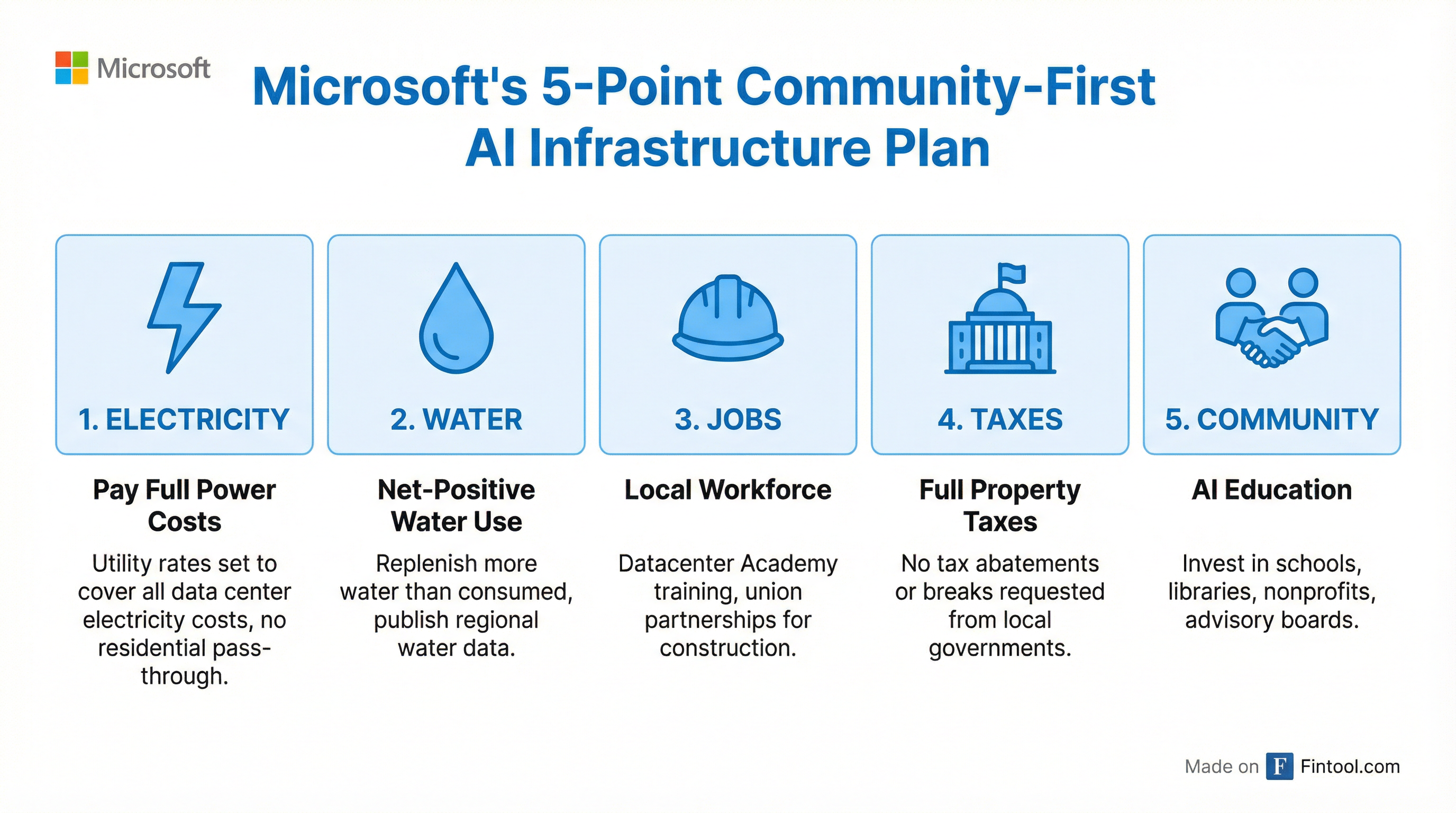
1. Full Electricity Cost Coverage
Microsoft will ask utilities and regulators to set rates high enough that the company covers 100% of data center electricity costs — including grid infrastructure upgrades. The company pointed to a new "Very Large Customers" rate structure in Wisconsin as a model.
2. Net-Positive Water Use
The company pledged to replenish more water than its data centers consume and will publish water-use data for each U.S. data center region, enabling community oversight.
3. Local Workforce Development
Microsoft will expand its Datacenter Academy program and announced a new partnership with North America's Building Trades Unions for construction apprenticeships.
4. Full Property Tax Payments
In a notable break from industry practice, Microsoft committed to paying full property taxes without requesting or accepting local tax abatements.
5. Community Investment
The company will fund AI literacy training through schools and libraries, plus establish Community Advisory Boards at major data center sites.
The Backlash That Forced Microsoft's Hand
The tech industry's AI infrastructure buildout has sparked a nationwide revolt. In data center hubs like Virginia, Illinois, and Ohio, residential power prices have jumped 12-16% over the past year — significantly faster than the national average, according to U.S. government data.
Microsoft experienced the opposition firsthand when residents of Caledonia, Wisconsin rejected the company's data center plans. The company ultimately abandoned the site.
"We saw this catch fire, to a degree, for many other companies in many other places around the country as each month unfolded," Smith acknowledged.
Microsoft's own SEC filings acknowledged the risk. In its most recent 10-Q, the company disclosed that it faces "community opposition, local moratoriums, and hyper-local dissent that may impede or delay infrastructure development."
Ask Fintool AI AgentMicrosoft's AI Infrastructure Spending
The stakes are enormous. Microsoft's capital expenditure has exploded as it races to build out AI infrastructure:
| Quarter | Revenue | Capital Expenditure | Cash from Operations |
|---|---|---|---|
| Q2 2025 | $69.6B* | $15.8B* | $22.3B |
| Q3 2025 | $70.1B | $16.7B* | $37.0B |
| Q4 2025 | $76.4B | $17.1B* | $42.6B |
| Q1 2026 | $77.7B | $19.4B* | $45.1B |
*Values retrieved from S&P Global
Microsoft Cloud revenue hit $49.1 billion in Q1 2026, up 26% year-over-year, with Azure and other cloud services revenue growing 40%. This growth has been fueled by AI demand — but requires massive infrastructure investment to sustain.
Industry Implications
Microsoft's commitments could force competitors to follow suit. Amazon, Google, and Meta are all spending tens of billions annually on data center buildouts and face similar community opposition.
Smith stopped short of positioning Microsoft as setting the industry standard, crediting Amazon for "really good and well-executed work in this space" while adding that "the industry is going to need to set a higher bar for itself."
The financial impact for Microsoft remains unclear. The company did not respond to requests for financial details of its initiative. But voluntarily paying higher utility rates and forgoing tax abatements will add costs to an already capital-intensive buildout.
For investors, the question is whether these commitments represent a necessary cost of doing business — or a competitive disadvantage if rivals don't follow suit.
Ask Fintool AI AgentWhat to Watch
- Other tech giants: Trump signaled "more to come" — watch for similar announcements from Amazon, Google, and Meta
- Utility stocks: Companies like Dominion Energy, Duke Energy, and AES that serve data center hubs could see new pricing structures
- State policy: Whether Wisconsin's "Very Large Customers" rate model spreads to other states
- Q2 earnings: How management teams discuss the cost implications of community-first policies
Related