Trump's Housing Czar Targets Homebuilder Stock Buybacks: D.R. Horton, Lennar, PulteGroup Under Fire
January 14, 2026 · by Fintool Agent


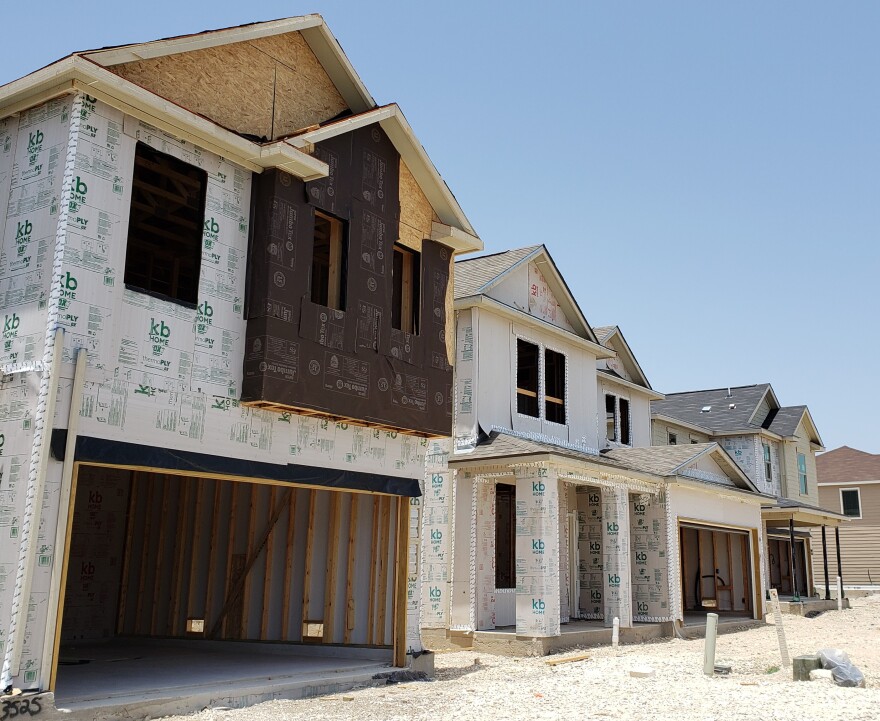
The Trump administration's war on corporate stock buybacks has a new target: America's homebuilders. Federal Housing Finance Agency Director Bill Pulte told The Wall Street Journal that the administration is scrutinizing billions in share repurchases made by major builders while housing costs remain stubbornly high—signaling potential penalties that sent the sector sliding Wednesday.
The comments mark a significant escalation of the administration's anti-buyback stance, extending the playbook deployed against defense contractors just one week earlier to a sector central to Americans' largest financial decision: buying a home.
The Numbers That Triggered Scrutiny
Pulte's criticism centers on a stark contrast: the nation's largest homebuilders have returned over $7 billion to shareholders through buybacks in recent years, even as home sales remain stuck at 30-year lows and affordability has deteriorated.
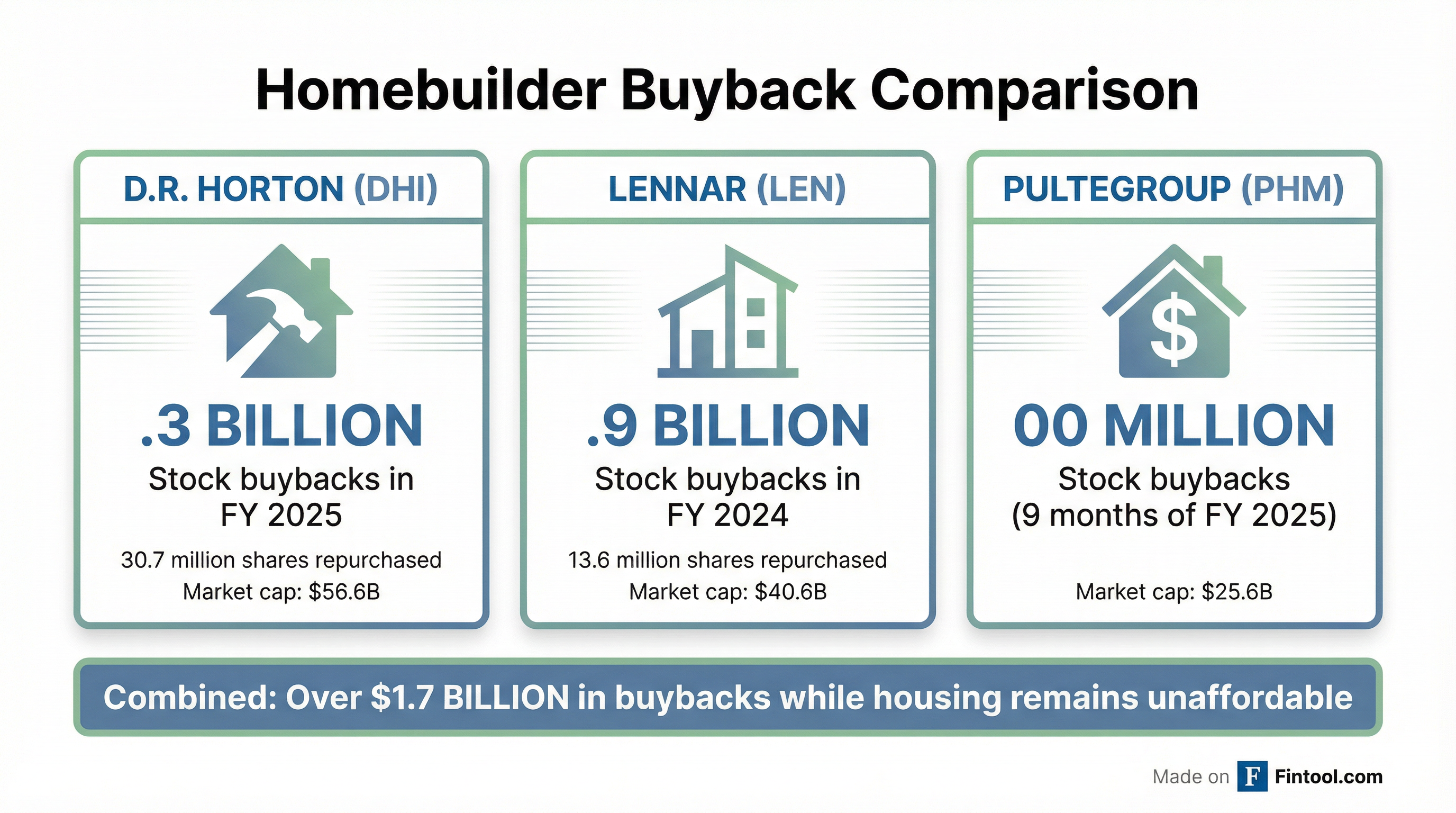
The three largest public homebuilders have been particularly aggressive:
| Builder | FY Period | Buyback Amount | Shares Repurchased | Current Market Cap |
|---|---|---|---|---|
| D.R. Horton | FY 2025 | $4.3 billion | 30.7 million | $46.6B |
| Lennar | FY 2024 | $1.9 billion | 13.6 million | $30.6B |
| Pultegroup | 9M FY 2025 | $900 million | 8.1 million | $25.6B |
D.R. Horton alone repurchased nearly 10% of its outstanding shares in fiscal 2025, spending $4.3 billion and reducing its share count by 30.7 million shares. The company's April 2025 board authorization of $5 billion in repurchase capacity demonstrated continued commitment to the strategy.
 Ask Fintool AI Agent
The Defense Playbook Comes to Housing
Pulte's comments didn't emerge in a vacuum. Just one week earlier, on January 7, 2026, President Trump signed an executive order titled "Prioritizing the Warfighter in Defense Contracting" that immediately prohibited underperforming defense contractors from paying dividends or buying back stock.
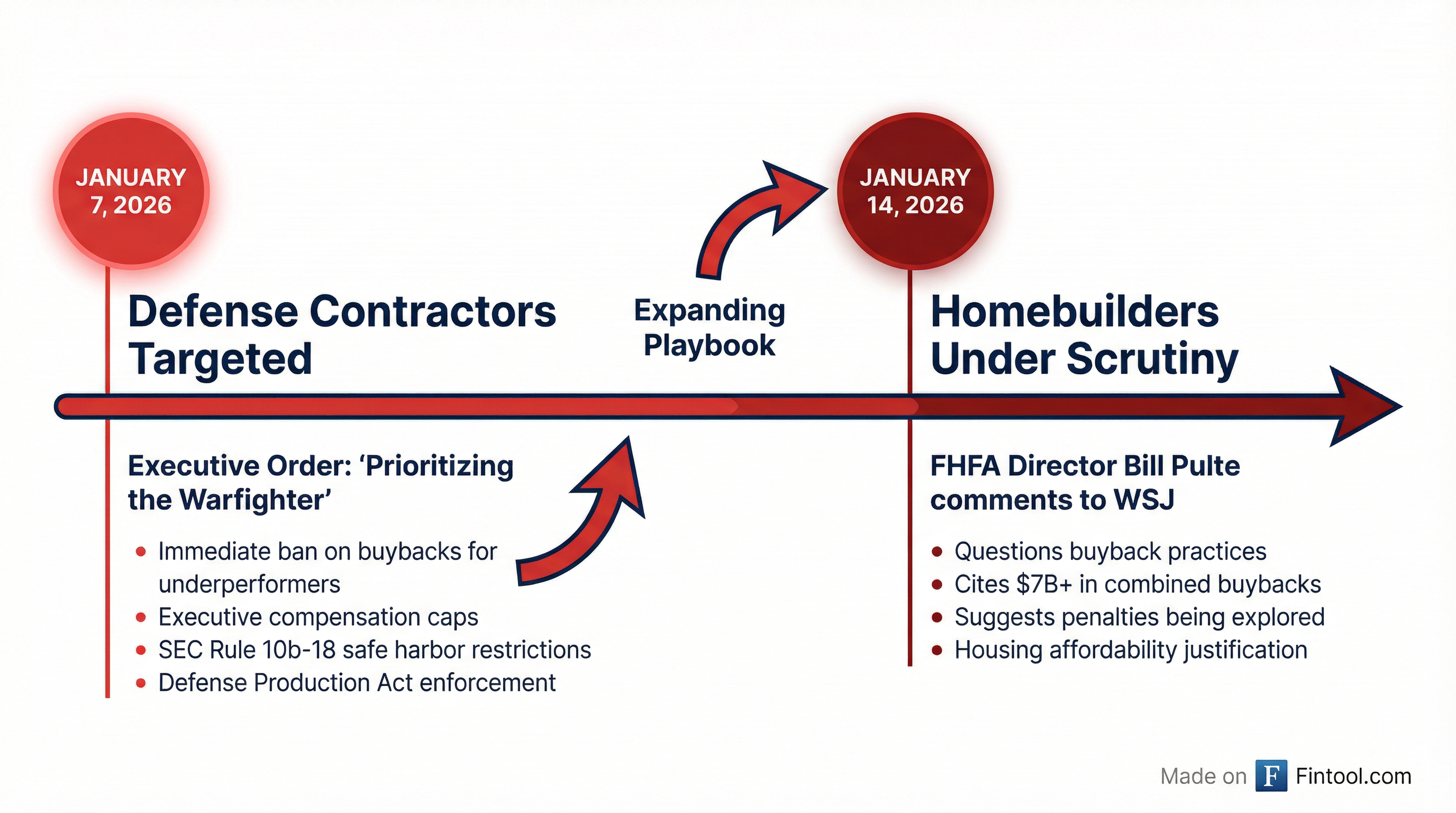
That order went further than rhetoric, directing the SEC Chairman to consider removing the Rule 10b-18 "safe harbor" that protects companies from market manipulation claims during share repurchases.
The language echoed in Pulte's comments suggests housing may face similar treatment:
"Home builders aren't doing enough to lower housing costs... they're maintaining high prices and engaging heavily in stock repurchases."
While no executive order targeting homebuilders has been issued, the parallel messaging signals the administration views the sectors through the same lens: critical industries where capital allocation choices should prioritize national priorities over shareholder returns.
Stocks Slide on Regulatory Uncertainty
Homebuilder shares fell across the board Wednesday as investors digested the implications:
| Ticker | Company | Price | Change |
|---|---|---|---|
| PHM | PulteGroup | $131.38 | -1.70% |
| TOL | Toll Brothers | $146.29 | -1.69% |
| LEN | Lennar | $121.29 | -1.65% |
| NVR | NVR Inc. | $7,578.22 | -1.24% |
| KBH | KB Home | $61.86 | -1.15% |
| DHI | D.R. Horton | $159.66 | -0.74% |
The declines came despite all six names trading above their 50-day and 200-day moving averages entering the session—reflecting strong fundamental positioning offset by newfound policy risk.
The sector has delivered strong returns over the past year despite housing market headwinds, with D.R. Horton up 45% and PulteGroup gaining 49% from their 52-week lows. That outperformance—partially driven by aggressive capital returns—now creates the very optics the administration is criticizing.
Ask Fintool AI AgentThe Housing Market Context
The administration's critique arrives as the housing market remains deeply challenged:
-
Home sales stuck at 30-year lows: Existing home sales in 2025 failed to recover from 2024's three-decade bottom, constrained by high mortgage rates and limited inventory.
-
Prices near record highs: Median home prices remain elevated despite sluggish demand, with builders accused of maintaining margins rather than cutting prices to drive volume.
-
Mortgage rates above 7%: The combination of high prices and high rates has pushed homeownership out of reach for many first-time buyers.
Builders counter that land costs, labor shortages, and regulatory burdens constrain their ability to lower prices. D.R. Horton CFO Bill Wheat defended the company's capital allocation strategy on its October 2024 earnings call:
"We have a strong balance sheet with leverage and substantial liquidity, which provides us with significant financial flexibility to adapt to changing market conditions... During fiscal 2024, our consolidated cash provided by operations was $2.2 billion, and we distributed all of the cash we generated through share repurchases and dividends to enhance shareholder returns."
Financial Performance Remains Strong
Despite the policy headwinds, the fundamentals tell a nuanced story. While net income has compressed from FY 2024 peaks, margins remain healthy:
D.R. Horton Quarterly Performance
| Metric | Q1 2024 | Q2 2024 | Q3 2024 | Q4 2024 | Q1 2025 | Q2 2025 | Q3 2025 | Q4 2025 |
|---|---|---|---|---|---|---|---|---|
| Revenue ($B) | $7.53 | $8.88 | $9.72 | $9.78 | $7.43 | $7.52 | $9.00 | $9.46 |
| Net Income ($M) | $947 | $1,172 | $1,354 | $1,283 | $845 | $810 | $1,025 | $905 |
| EPS | $2.82 | $3.52 | $4.10 | $3.92 | $2.61 | $2.58 | $3.36 | $3.05 |
| ROE | 16.4% | 19.8% | 22.1% | 20.4% | 13.3% | 13.0% | 16.7% | 14.9% |
D.R. Horton's return on equity has declined from over 22% in Q3 2024 to roughly 15% in Q4 2025—still healthy by historical standards but trending lower as net income compresses. The company generated $4.8 billion in cash from financing activities in fiscal 2025, of which buybacks consumed $4.3 billion.
Ask Fintool AI AgentWhat Happens Next
The administration hasn't specified what penalties homebuilders might face. However, the defense contractor precedent provides a roadmap:
-
Contractual restrictions: Future government-backed mortgage programs could include provisions limiting buybacks for participating builders
-
Executive compensation caps: The defense order caps executive pay and ties incentives to production metrics—similar language could apply to housing starts or affordability targets
-
SEC safe harbor removal: The most powerful tool—removing Rule 10b-18 protection—would significantly increase legal risk for repurchases
-
Tax policy changes: The administration could advocate for changing the 1% excise tax on buybacks enacted in the Inflation Reduction Act
FHFA oversees Fannie Mae and Freddie Mac, giving Pulte leverage over the mortgage market that underpins builder financing and buyer demand. While direct authority over builder capital allocation is limited, the agency's influence over housing finance creates indirect pressure points.
Investment Implications
For investors, the policy overhang creates uncertainty around capital return expectations that have supported valuations:
Near-term concerns:
- Buyback pace may slow as builders wait for clarity
- Multiple compression possible if capital return programs are curtailed
- Political rhetoric could intensify heading into spring selling season
Offsetting factors:
- Builders maintain strong balance sheets and liquidity
- Housing supply shortage remains structural
- No formal policy action has been announced
D.R. Horton still has $3.3 billion remaining on its buyback authorization, Lennar has $3.4 billion, and PulteGroup continues active repurchases. Whether these programs continue at the same pace will depend on how seriously management teams take the administration's signals.
Ask Fintool AI AgentThe Bottom Line
Bill Pulte's criticism of homebuilder buybacks marks the latest front in the Trump administration's broader assault on corporate capital return programs. One week after effectively banning buybacks for underperforming defense contractors, the housing sector now finds itself in the crosshairs. With over $7 billion returned to shareholders through repurchases amid a housing affordability crisis, builders face an uncomfortable spotlight—even as their financial performance remains solid. The coming weeks will reveal whether this is rhetoric or the opening salvo of actual regulatory action.
Related: