Waymo Expands to 10 US Cities in Largest Single-Day Robotaxi Rollout
February 24, 2026 · by Fintool Agent


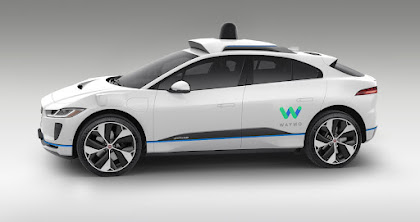
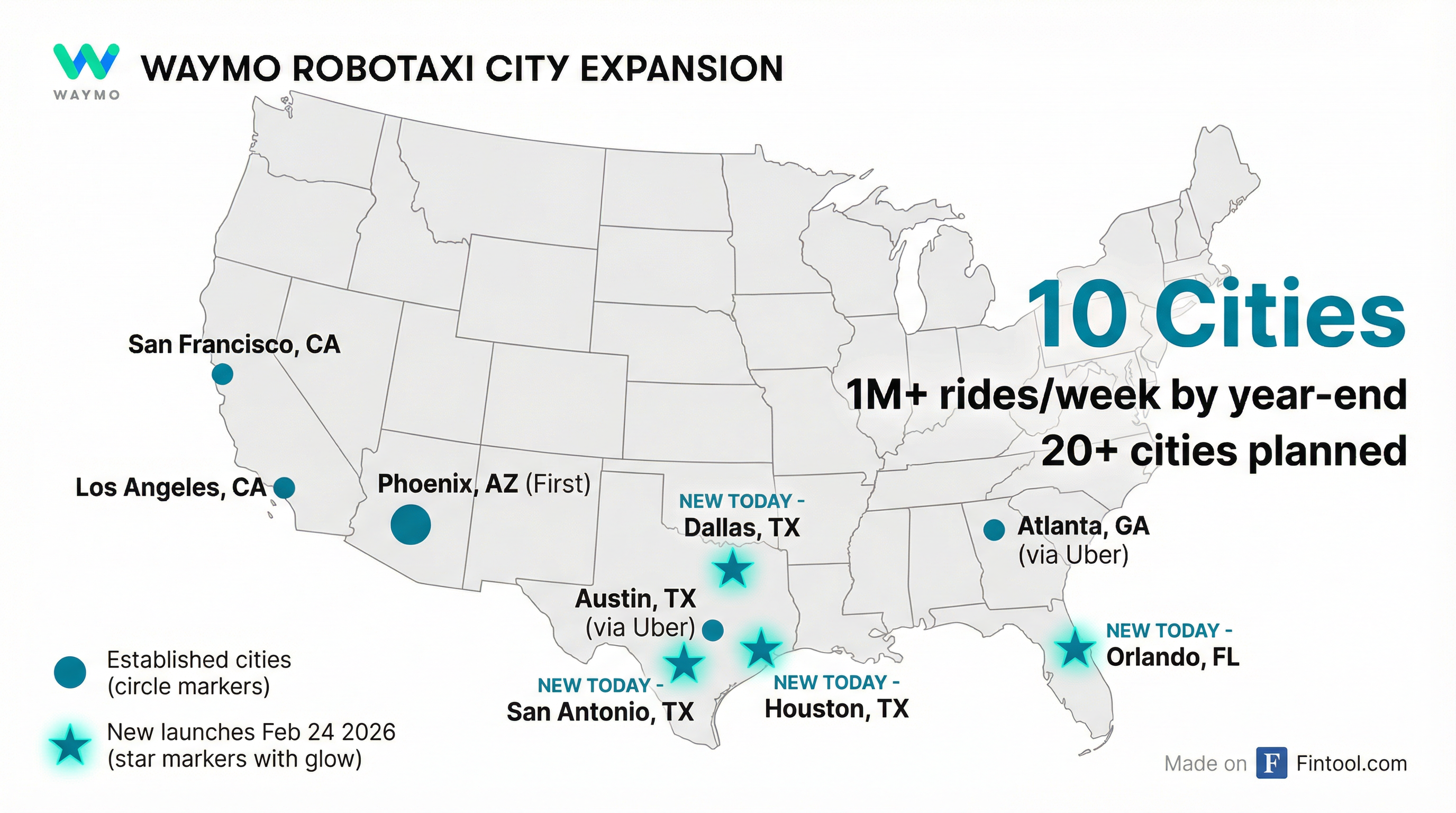
Alphabet's Waymo flipped the switch on commercial robotaxi operations in four major cities today—Dallas, Houston, San Antonio, and Orlando—marking its largest single-day geographic expansion ever and doubling down on the Sun Belt's urban sprawl as the autonomous vehicle race enters a decisive phase.
The move brings Waymo's total commercial footprint to 10 US metropolitan areas and positions the Google spinoff to serve over 1 million rides per week by year-end, according to co-CEO Tekedra Mawakana.
"Dallas, Houston, San Antonio, and Orlando are critical to our plans, as we lay groundwork for service in 20+ cities," Mawakana said in a statement.
The Scale of the Rollout
Select riders from tens of thousands who downloaded the Waymo app in these cities will receive invitations starting today, with the service opening to everyone later this year. The company's Jaguar I-PACE electric vehicles will operate fully autonomously—no safety driver, no monitor, no chase car.
The expansion comes weeks after Waymo secured a $16 billion funding round at a $126 billion valuation, sparking speculation that Alphabet could spin off or IPO the unit.
| Metric | Status |
|---|---|
| Total Cities | 10 |
| Active Robotaxis | 2,500+ |
| Autonomous Miles Driven | 127 million+ |
| Weekly Ride Target (YE 2026) | 1 million+ |
| Valuation | $126 billion |
| Latest Funding | $16 billion |
 Ask Fintool AI Agent
Texas Takes Center Stage
Waymo's Texas bet is particularly aggressive. The state now hosts four Waymo markets—Austin (via Uber partnership), Dallas, Houston, and San Antonio—making it the company's largest geographic concentration.
The decision to flood Texas reflects both opportunity and regulatory reality. Texas offers minimal autonomous vehicle restrictions, sprawling suburban layouts well-suited to robotaxis, and populations that skew tech-forward. Houston alone is America's fourth-largest city.
For incumbent rideshare players, the implications are stark. In Austin, Waymo vehicles already account for roughly 20% of all Uber rides. The expansion could pressure margins at both Uber and LYFT, which trade at $71.18 and $13.46 respectively, both well below their 52-week highs.
Uber has responded by deepening its own Waymo partnership—currently in Austin and Atlanta—while also pursuing robotaxi deals with other AV developers. The relationship is symbiotic but uneasy: Uber provides demand aggregation; Waymo provides the technology that could eventually make Uber's human driver model obsolete.
The Safety Gap Widens
The expansion arrives as Waymo's safety data increasingly outpaces competitors. The company has logged over 127 million fully driverless miles with independent research showing a 10-fold reduction in serious-injury crashes compared to human drivers.
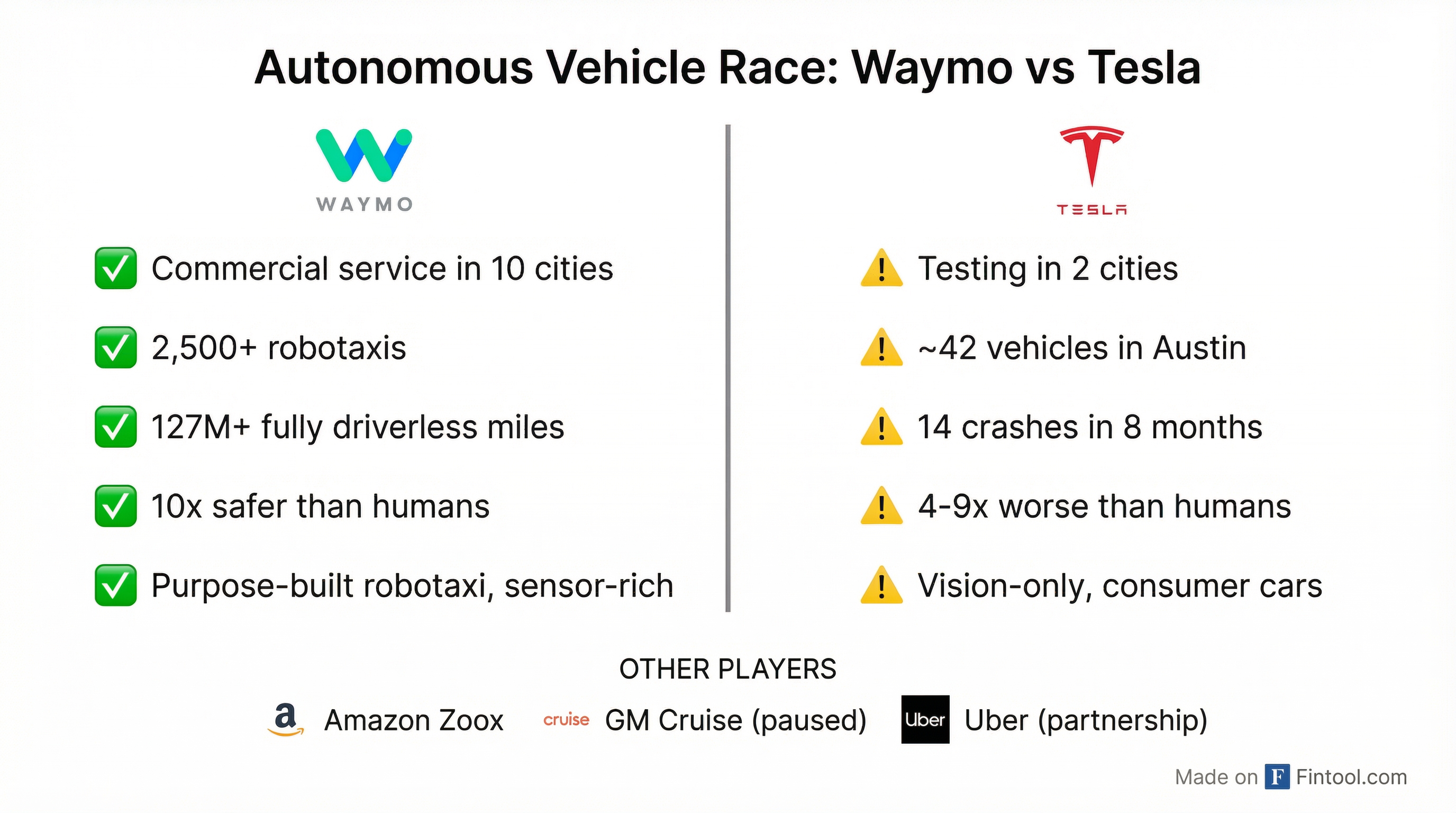
The contrast with Tesla's robotaxi program is striking. Eight months after launching in Austin, Tesla's service has approximately 42 active vehicles, 19% availability, and a crash rate 4-9x worse than human drivers—with a safety monitor present in most rides.
Tesla CEO Elon Musk's promises have consistently outpaced execution:
| Promise | When Made | Reality (Feb 2026) |
|---|---|---|
| 500 cars in Austin by end of 2025 | Oct 2025 | 42 cars, 19% availability |
| Half the US population covered by end of 2025 | Jul 2025 | Two cities only |
| "Unsupervised is pretty much solved" | Dec 2025 | Most rides still monitored |
Tesla shares closed at $402.80, up 0.74% on the day, though the stock remains a battleground between AI optimists and robotaxi skeptics. Waymo's expansion underscores the gap between Tesla's vision and its operational reality.
Ask Fintool AI AgentCompetitive Landscape: Who's Left Standing
The autonomous vehicle industry has consolidated rapidly. GM's Cruise remains suspended after a pedestrian-dragging incident in late 2024. Amazon's Zoox continues testing in a handful of cities but has yet to launch commercial service at scale.
That leaves Waymo largely unchallenged in the fully autonomous commercial ride-hailing market. The company's advantages compound: more miles generate more data, which improves the AI, which enables expansion to more cities, which generates more miles.
The setback last week—when New York Governor Kathy Hochul pulled a proposal to allow driverless rides outside New York City—shows regulatory risk remains. But Waymo's Sun Belt strategy deliberately targets states with friendlier regulatory frameworks.
What to Watch
Near-term catalysts:
- Pace of rider invitations in new markets over coming weeks
- Any updates on potential Waymo spin-off or IPO from Alphabet management
- Tesla's Q1 2026 update on robotaxi fleet size and crash data
- Uber/Lyft commentary on autonomous vehicle partnerships in upcoming earnings
Longer-term questions:
- Can Waymo achieve unit economics that justify its $126 billion valuation?
- Will Tesla's vision-only approach ever match Waymo's sensor-rich safety record?
- How will legacy automakers respond as Waymo cements first-mover advantage?
For Alphabet shareholders, Waymo's expansion validates years of investment in Other Bets—a segment that has accumulated over $30 billion in operating losses since 2015. If Waymo can scale to profitability, it could rival Google Cloud as Alphabet's next major growth engine.
Ask Fintool AI Agent