Waymo Opens Miami to Robotaxis, Extending Lead Over Tesla in Autonomous Race
January 22, 2026 · by Fintool Agent


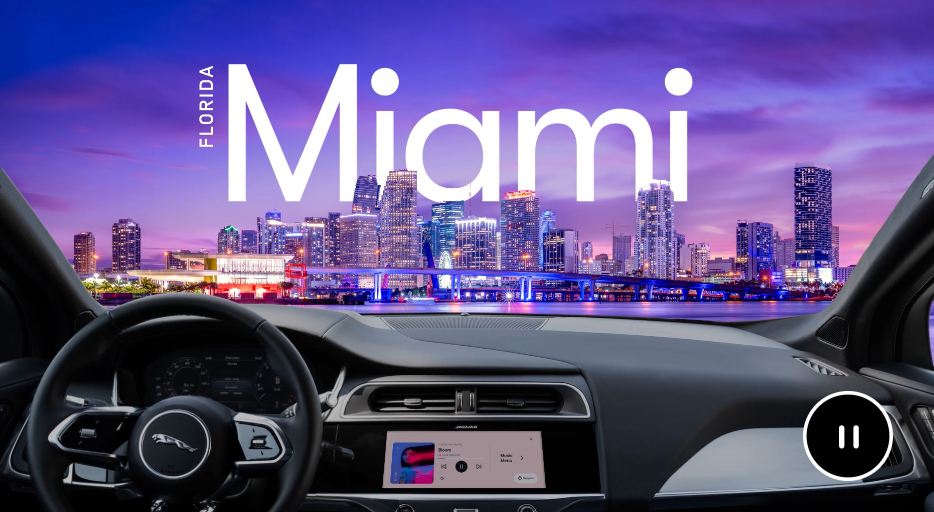
Alphabet-2.53%'s Waymo launched its robotaxi service in Miami on Thursday, marking the company's sixth U.S. market and first expansion of 2026. With nearly 10,000 residents already signed up and plans to reach over a dozen more cities this year—including its first international markets—Waymo is cementing its position as the dominant player in autonomous ride-hailing while competitors struggle to catch up.
The Miami Launch
Waymo is rolling out service within a 60-square-mile area covering Miami's most iconic neighborhoods: the Design District, Wynwood, Brickell, and Coral Gables. Riders can hail a fully autonomous Jaguar I-PACE or the new "Ojai" (rebranded Zeekr) robotaxi using the Waymo app, with no human driver behind the wheel.
"Miami is a city defined by its energy, myriad of global cultures, and its forward-looking spirit, and Waymo is proud to add to that momentum," said co-CEO Tekedra Mawakana. "We're excited to offer its residents and visitors a safe, reliable, and magical way to move around."
The launch follows Waymo's standard playbook: months of mapping and testing, removing safety operators in November, and opening first to employees before today's public rollout. Miami International Airport access is coming "soon," though no specific timeline was provided.
Waymo has partnered with mobility company Moove for fleet management services including vehicle charging, cleaning, and repairs—a model the company has used to scale operations without building out all infrastructure in-house.
 Ask Fintool AI Agent
Widening the Competitive Gap
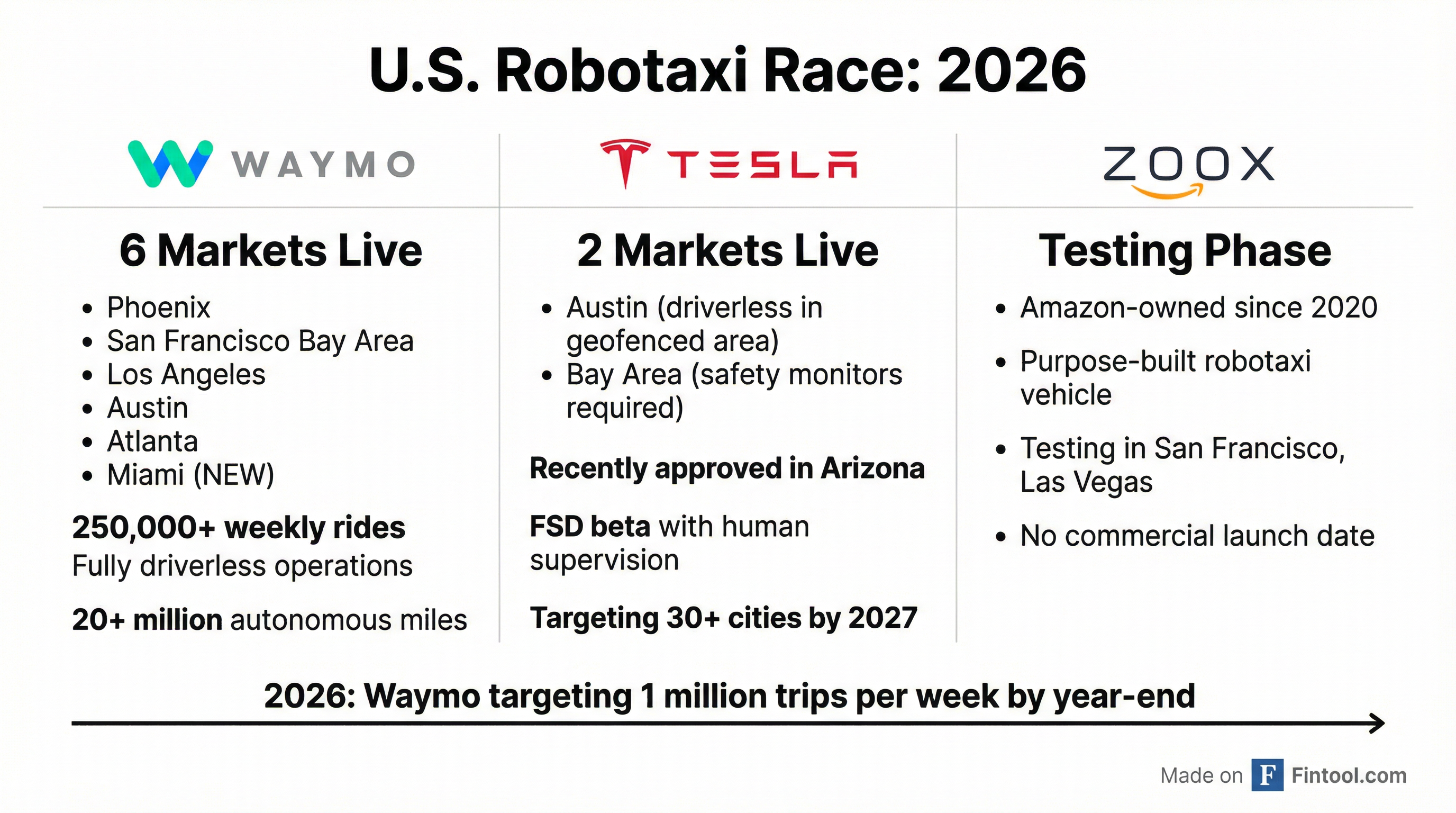
The Miami launch underscores how far ahead Waymo has pulled in the U.S. robotaxi race. While Tesla+3.50% generated headlines with its June 2025 Austin launch, that service still operates with "safety monitors" in the passenger seat and remains confined to a geofenced area. In the Bay Area, Tesla requires human supervisors behind the wheel. Tesla recently received Arizona approval for commercial operations, but has yet to launch fully driverless service there.
Amazon-5.55%-owned Zoox continues testing its purpose-built robotaxi vehicle in San Francisco and Las Vegas but has not announced a commercial launch date. Meanwhile, Waymo has logged over 20 million autonomous miles on public roads and claims a "ten-fold reduction" in serious injury crashes compared to human drivers.
The gap is measured in more than just geography. Waymo completed 10 million paid autonomous rides by June 2025 and was delivering over 250,000 weekly trips as of Q1 2025—up 5x from a year earlier. At the TechCrunch Disrupt conference last October, Mawakana set an ambitious target: "By the end of 2026, you should expect us to be offering 1 million trips per week."
The 2026 Expansion Blitz
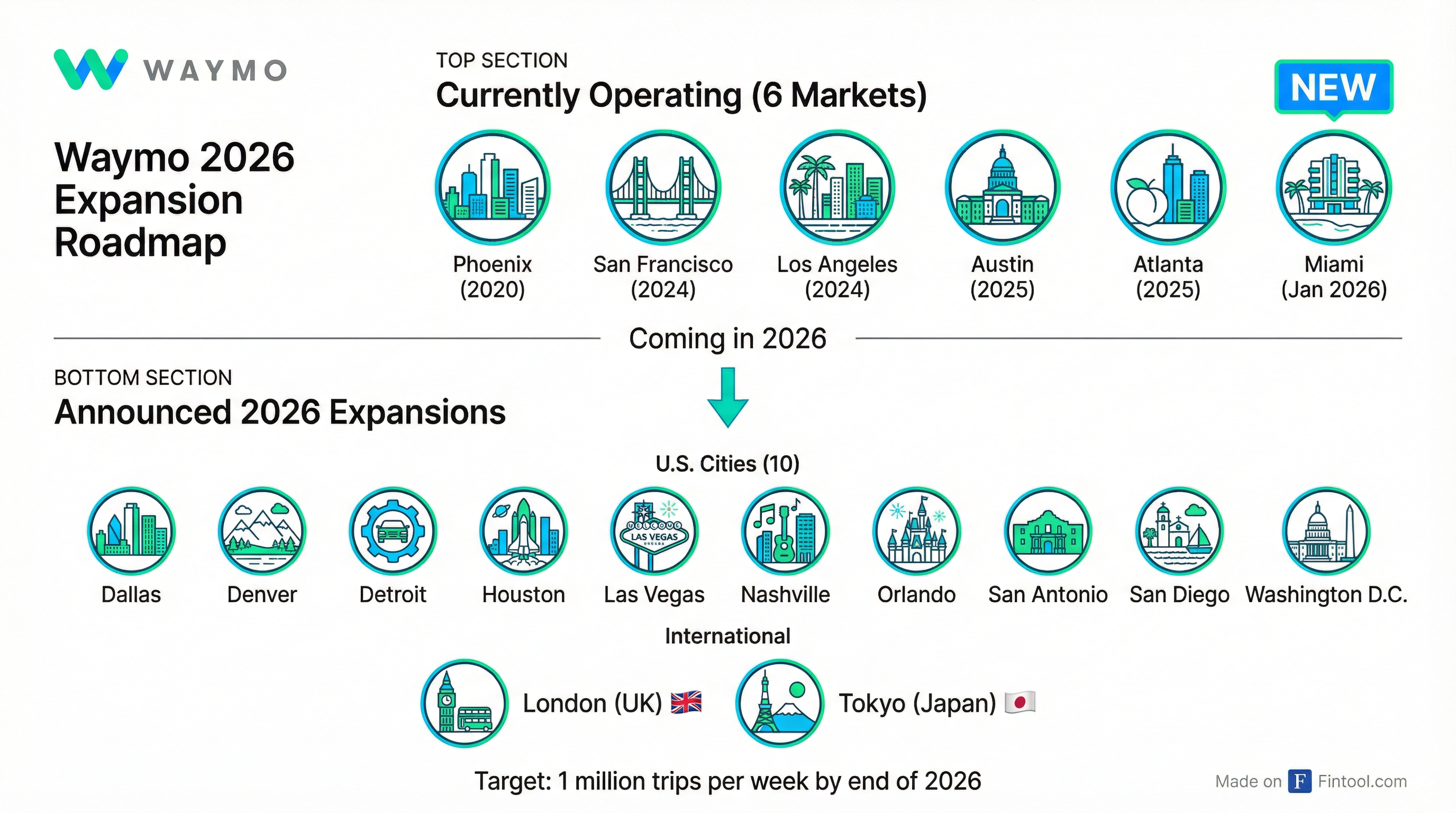
Miami is just the opening act. Waymo has announced plans to expand to nearly a dozen more cities in 2026:
U.S. Markets: Dallas, Denver, Detroit, Houston, Las Vegas, Nashville, Orlando, San Antonio, San Diego, and Washington D.C.
International Markets: London (UK) and Tokyo (Japan) will become Waymo's first commercial services outside the United States.
The company has also secured permission to operate fully autonomously at San Jose and San Francisco airports, addressing a key use case for business travelers. Autonomous testing continues to scale in New York City, though regulatory hurdles remain significant there.
Alphabet CFO Anat Ashkenazi signaled the parent company's commitment on the Q1 2025 earnings call: "We see an opportunity... Waymo's was one of my areas where we need to invest. We have a tremendous opportunity here, phenomenal autonomous vehicles that can have—be used in a variety of ways. So scaling that up rapidly, getting to more markets, getting more vehicles is critical."
Ask Fintool AI AgentThe Investment Case
Waymo sits within Alphabet's "Other Bets" segment, which posted a $1.4 billion operating loss in Q3 2025. But the company has been reallocating resources toward Waymo within that segment, viewing it as the standout opportunity.
The global autonomous vehicle market is projected to reach $4.45 trillion by 2034 at a CAGR of 36.3%, with ride-hailing fleets serving as the commercial anchor. Waymo's head start in commercial deployment, safety record, and regulatory relationships position it to capture significant share of that market.
| Metric | Q4 2024 | Q1 2025 | Q2 2025 | Q3 2025 |
|---|---|---|---|---|
| Alphabet Revenue | $96.5B | $90.2B | $96.4B | $102.3B |
| Net Income | $26.5B | $34.5B | $28.2B | $35.0B |
| Capital Expenditure | $14.3B | $17.2B | $22.4B | $24.0B |
Alphabet shares closed at $330.44 on Wednesday, up 0.6%, with a market cap approaching $4 trillion.
Challenges Ahead
The expansion hasn't been without hiccups. Waymo vehicles contributed to traffic gridlock during power outages in San Francisco last month, prompting software updates. Anti-ICE protests in Los Angeles resulted in vandalism to several robotaxis, temporarily halting downtown operations. And not every city has welcomed the technology—some have pushed back on permits.
But the bigger picture remains: Waymo is proving that autonomous ride-hailing can work at scale. As CEO Sundar Pichai noted on the Q3 earnings call: "Waymo clearly is scaling up, particularly in 2026. I think there's a real opportunity to make the in-car experience dramatically better. Definitely something we are excited about, and you'll see newer experiences in 2026, for sure."
What to Watch
- Trip volume: Can Waymo hit 1 million weekly trips by year-end?
- Airport rollout: Miami International would be Waymo's third airport
- International launch: London and Tokyo would validate the model globally
- Tesla's response: Will Tesla achieve fully driverless operations in more markets?
- Profitability path: When does Waymo move toward breakeven in Other Bets?
Ask Fintool AI AgentRelated Company Profiles