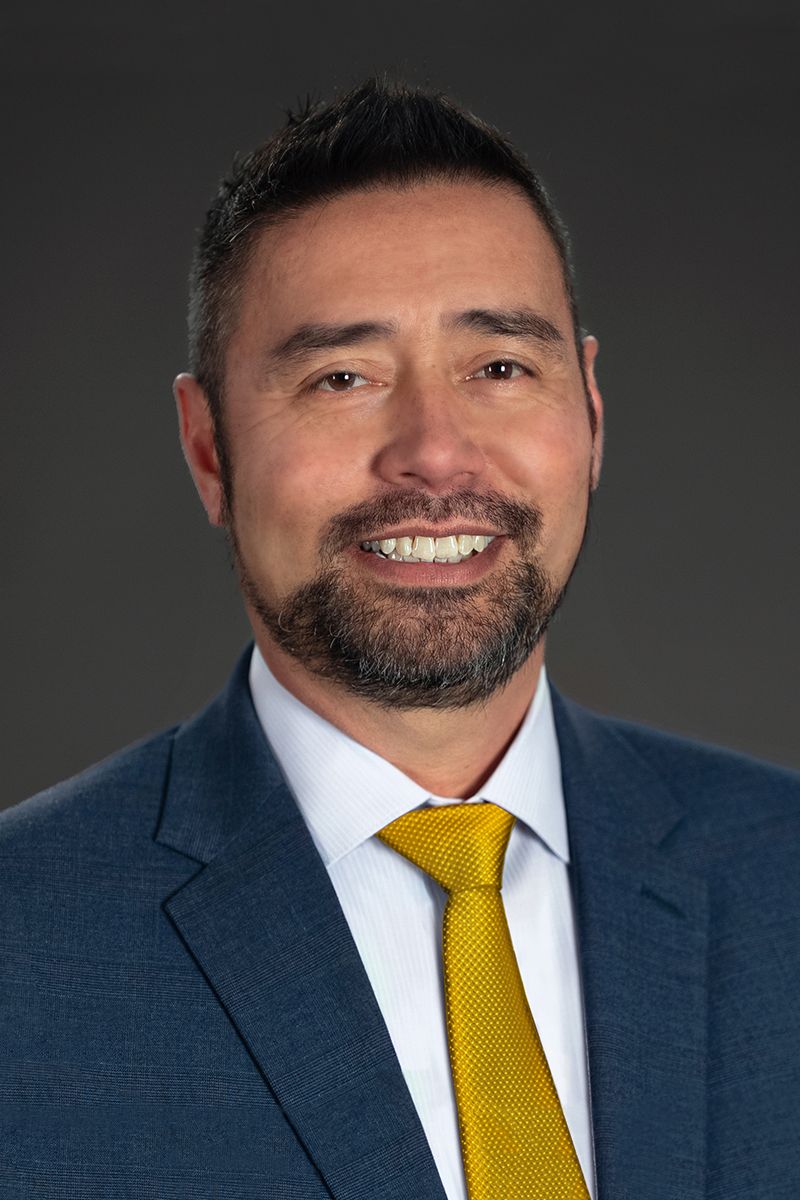
Joseph E. Creed
 CATERPILLAR
About Joseph E. Creed
Joseph E. Creed (age 49) became Caterpillar’s Chief Executive Officer on May 1, 2025, and joined the Board as a non‑independent director the same day; he previously served as Chief Operating Officer (2023–2025) and Group President, Energy & Transportation (2021–2023) . He joined Caterpillar in 1997 and has held senior leadership roles in E&T, Electric Power, Oil & Gas and Marine, Finance Services (and President, Caterpillar Venture Capital), and served as Interim CFO in 2018, building expertise across finance, strategy, engine/power innovations, battery and advanced power, and portfolio M&A in oil & gas and distributed power . Under Caterpillar’s strategy, 2024 delivered operating profit of $13.1B, adjusted profit per share of $21.90, ME&T FCF of $9.4B, and $10.3B returned to shareholders; services revenue reached a record $24B and the company remains a Dividend Aristocrat (31 consecutive annual increases) . Shareholder support for executive pay remained strong (say‑on‑pay approval 93% in 2024, 93% in 2023, 94% in 2022) .
Past Roles
| Organization | Role | Years | Strategic Impact |
|---|---|---|---|
| Caterpillar Inc. | Chief Executive Officer | 2025–present | CEO leading execution of strategy on services growth, expanded offerings, operational excellence and sustainability; appointed following multi‑year board succession process . |
| Caterpillar Inc. | Chief Operating Officer | 2023–2025 | Enterprise operations leadership; base salary and incentive structure aligned to company AIP metrics (Enterprise Operating Profit, OPACC, Services Revenues) . |
| Caterpillar Inc. | Group President, Energy & Transportation | 2021–2023 | Advanced engine power density, established battery/advanced power organization; M&A to amplify oil & gas and distributed power capabilities . |
| Caterpillar Inc. | SVP, Electric Power | 2020–2021 | Led global Electric Power business . |
| Caterpillar Inc. | SVP, Oil & Gas and Marine | 2019–2021 | Led O&G and Marine segments . |
| Caterpillar Inc. | SVP, Finance Services; President, Caterpillar Venture Capital | 2017–2019 | Finance leadership and venture investments supporting strategic growth . |
| Caterpillar Inc. | Interim CFO | 2018 | Enterprise CFO responsibilities . |
| Caterpillar Inc. | CFO, Energy & Transportation | 2013–2016 | Finance leadership for E&T . |
| Caterpillar Inc. | Various roles (joined) | 1997–2013 | Progressive finance/operating roles . |
External Roles
| Organization | Role | Years | Notes |
|---|---|---|---|
| None (public company boards) | — | — | No other current or recent public company directorships disclosed . |
Fixed Compensation
| Year | Base Salary ($) | Target Bonus (% of Salary) | Actual AIP Payout ($) |
|---|---|---|---|
| 2024 | 1,115,000 | 130% | 1,887,700 |
| 2023 | 819,092 | 118% (prorated from 115% to 130% upon COO promotion) | 1,771,700 |
Notes:
- 2024 AIP design metrics: Enterprise Operating Profit, Enterprise/Segment OPACC, and Services Revenues; two strategic modifiers (Services Growth, ESG), each ±10% (aggregate ±20%) .
- 2024 payout formula and Creed’s result: Salary × 130% × Performance Factor 1.16, plus +12% strategic modifiers = $1,887,700 .
Performance Compensation
Long-Term Incentive (LTI) Design and Grants
- 2024 LTI mix shifted to 50% PRSUs (ROIC and relative TSR to S&P Capital Goods, equally weighted), 25% time‑based RSUs, 25% stock options; PRSUs now leverage 50%–200% payout; RSUs/options vest 1/3 annually, options 10‑year term .
- 2022–2024 PRSUs (legacy design) earned at 100% on three‑year average adjusted ROE of 53.9% (vs. 18% goal); adjustments for restructuring, pension/OPEB remeasurement, certain tax items and goodwill impairment were applied by CHRC .
| Grant Date | Instrument | Quantity | Vesting/Terms | Grant FV ($) |
|---|---|---|---|---|
| 3/4/2024 | PRSUs (2024–2026, ROIC + rTSR) | 10,335 target | Cliff vest at 3 years per performance; payout 50%–200% | 4,223,294 |
| 3/4/2024 | RSUs (time‑based) | 5,168 | 1/3 on 3/4/2025, 3/4/2026, 3/4/2027 | 1,750,143 |
| 3/4/2024 | Stock options | 16,783 | 1/3 on 3/4/2025–2027; strike $338.65; 10‑yr expiry | 1,749,968 |
| 3/6/2023 | PRSUs (2023–2025, ROE) | 8,662 target | Cliff at 3 yrs if hurdle met | 2,199,975 |
| 3/6/2023 | Stock options | 29,028 | 1/3 annually 2024–2026; strike $253.98 | 2,199,962 |
2024 AIP Metrics and Payout
| Metric | Weighting | Targeting/Definition | 2024 Outcome vs Target | Payout Impact |
|---|---|---|---|---|
| Enterprise Operating Profit | 50%–66% (varies by role) | Consolidated operating profit ex‑restructuring | Reflected in performance factor (1.16 for Creed) | Contributed to 1.16 performance factor |
| OPACC (Enterprise/Segment) | Included | Operating profit less capital charge (13% pre‑tax rate) | As above | As above |
| Services Revenues | Remainder | ME&T services revenue growth; thresholds indexed (not disclosed) | +4% YoY to $24B at enterprise | Positive |
| Strategic Modifiers | ±10% each | Services Growth and ESG (qualitative/quantitative) | +7% Services, +5% ESG for Creed | +12% to payout |
Equity Ownership & Alignment
- Outstanding/Unvested Awards (12/31/2024):
- RSUs: 5,227 units; PRSUs: 20,906 units (assumes maximum for 2024 PRSUs per table); Options: 16,783 unexercisable (2024 grant) .
- Ownership Guidelines: NEOs must hold 3× base salary; five‑year accumulation period; all NEOs met or are within the accumulation period .
- Hedging/Pledging: Company prohibits hedging, holding in margin accounts, or pledging by directors and officers ; policy for directors and officers also highlighted in governance summary .
- Director Stock Ownership: For non‑employee directors, 5× cash retainer within five years; as CEO‑director, Creed is not compensated as a non‑employee director and is subject to NEO guidelines rather than director retainers .
| Item | Detail |
|---|---|
| Insider transactions (2024–2025) | Reported Form 4s include non‑open market acquisitions/credits and RSU/phantom unit accruals (e.g., 12/27/2024 Form 4; 3/10/2025 and 3/17/2025 filings; 9/29/2025 filing; 10/27/2025 phantom stock units) . |
Employment Terms
- No individual executive severance agreements; change‑in‑control protections are plan‑based and double‑trigger (CIC plus qualifying termination) .
- Upon CIC + qualifying termination: stock options and RSUs accelerate (for 2024+ PRSUs, accelerate at target); options remain exercisable for normal term; AIP pays pro‑rated at target .
- Long‑Service Separation: Options continue vesting on schedule and remain exercisable for term; PRSUs remain outstanding subject to performance; certain 1/12/2024 RSUs for other NEOs are forfeited—Creed did not receive those specific retention RSUs .
- Clawback: SEC/NYSE‑compliant non‑fault clawback of erroneously awarded incentive‑based comp for three prior fiscal years following required accounting restatement; additional misconduct‑based clawback under corporate guidelines .
- Tax Gross‑Ups: No tax gross‑ups on CIC benefits (best‑practice policy) .
- Pension/Deferred Comp: Participates in frozen RIP (Traditional formula) with present value $209,807 at 12/31/2024; SDCP aggregate balance $3,366,530, with 2024 company contributions $243,002 .
Board Governance
- Board Service: Director since 2025; non‑independent (employee) .
- Committees: None (management director) .
- Leadership Structure: Executive Chairman (D. James Umpleby III) and Presiding Director (Debra L. Reed‑Klages) with robust independent director authorities (agenda/info approval, call meetings of independent directors, conduct CEO/executive chair reviews) .
- Independence: Board determined all nominees independent except employees (Umpleby, Creed) .
- Director Compensation: Non‑employee directors receive cash retainers and RSUs; employee directors do not receive separate director compensation (e.g., CEO in 2024) .
Director Compensation (Non‑Employee Reference)
| Component | Amount |
|---|---|
| Annual Cash Retainer | $150,000 |
| Annual RSU Grant (1‑year vest) | $170,000 |
| Chair Stipends (Audit $35k; CHRC/NGC/SPPC $25k; Presiding Director $50k) | As applicable . |
Compensation Peer Group and Say‑on‑Pay
- Compensation Peer Group includes: 3M, ADM, Boeing, Cisco, Cummins, Deere, Emerson, FedEx, Ford, GE, GM (added in 2023), Halliburton, Honeywell, Intel, Johnson Controls, PACCAR, RTX .
- Say‑on‑Pay Results: 93% (2024), 93% (2023), 94% (2022)—indicating strong shareholder support for pay practices .
Related Party Transactions
- Creed’s brother‑in‑law was employed by Caterpillar as a Global Category Procurement Manager; earned ~$220,000 in 2024; employment ceased Feb 2025 with $183,089 separation payment . In 2023, brother‑in‑law earned ~$227,000 . Review/approval of related‑person transactions is overseen by the Nominating & Governance Committee under a written policy .
Company Performance (context for pay‑for‑performance)
| Metric (USD) | FY 2022 | FY 2023 | FY 2024 |
|---|---|---|---|
| Revenues | 56,574,000,000* | 63,869,000,000* | 61,363,000,000* |
| EBITDA | 11,975,000,000* | 15,812,000,000* | 15,646,000,000* |
| Operating Income | 9,756,000,000* | 13,668,000,000* | 13,563,000,000* |
| Net Income | 6,705,000,000* | 10,335,000,000* | 10,792,000,000* |
| Values retrieved from S&P Global. * |
Investment Implications
- Alignment and metrics: AIP’s heavy weighting on Enterprise Operating Profit and OPACC, plus services growth and ESG modifiers, and the 2024 LTI redesign adding ROIC and rTSR with leveraged outcomes, strengthen pay/performance linkages and reduce grant‑sizing discretion risk .
- Retention and selling pressure: Significant unvested equity (e.g., 20,906 PRSUs and 5,227 RSUs at 12/31/2024; multi‑year vesting; options expiring 2034) suggests ongoing retention hooks; recent Form 4s in 2024–2025 show non‑open‑market accruals/credits rather than sizable discretionary open‑market selling by Creed, limiting near‑term insider‑selling overhang .
- Governance safeguards: Double‑trigger CIC treatment, robust clawback, and anti‑hedging/pledging policy reduce downside governance risk; strong say‑on‑pay support (93%) lowers the probability of activist pressure on compensation structure .
- Dual‑role oversight: Although Creed is CEO and director (non‑independent), oversight is balanced by a separate Executive Chairman and an empowered Presiding Director; all board committees are fully independent, mitigating independence concerns .
Overall: Incentive structures are increasingly tied to returns (ROIC) and relative TSR while annual incentives continue to prioritize profitability and capital efficiency (OPACC). The equity mix and vesting schedules support retention and alignment, with governance features (clawback, anti‑pledging) addressing downside risks.
Citations: ; Insider Forms:


