AbbVie Signs $100 Billion Deal With Trump, Clearing Path for Humira on TrumpRx
January 12, 2026 · by Fintool Agent



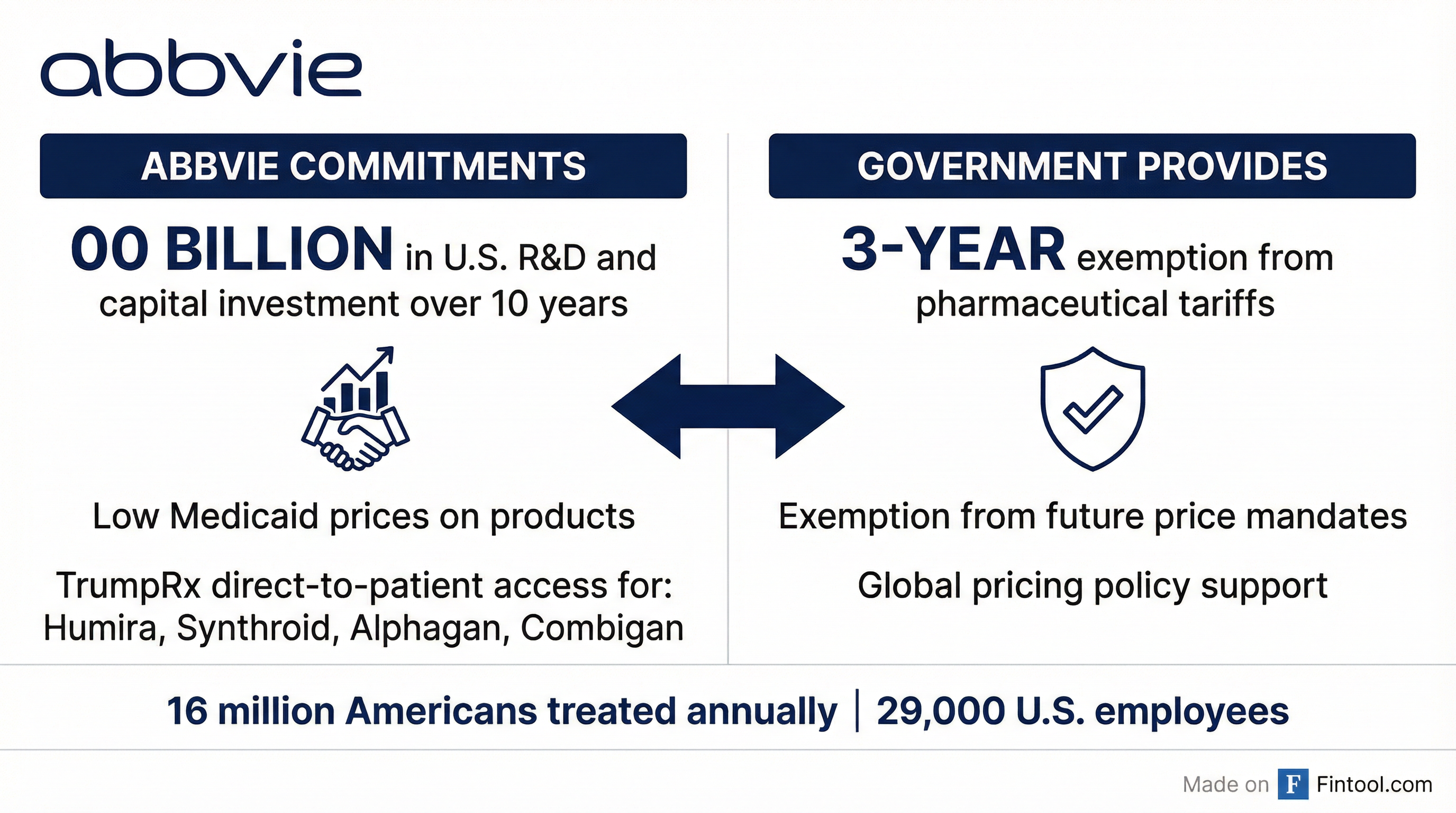
Abbvie announced the largest single investment commitment in the Trump administration's drug pricing campaign Monday evening, pledging $100 billion in U.S.-based research, development, and manufacturing over the next decade in exchange for a three-year exemption from pharmaceutical tariffs.
The voluntary agreement makes AbbVie the 16th of 17 pharmaceutical companies to sign a Most-Favored-Nation (MFN) pricing deal with the administration, leaving Regeneron as the sole holdout.
The Deal Structure
Under the three-year agreement, AbbVie will provide low prices on its products in the Medicaid program while expanding direct-to-patient offerings through TrumpRx for medicines used by millions of Americans, including:
- Humira (adalimumab) — once the world's best-selling drug, used for rheumatoid arthritis and other autoimmune conditions
- Synthroid (levothyroxine) — a thyroid hormone replacement taken by millions
- Alphagan and Combigan — glaucoma eye treatments
"AbbVie is following President Trump's call to action by reaching this agreement, allowing us to collectively move beyond policies that harm American innovation," said Robert A. Michael, chairman and chief executive officer of AbbVie.
 Ask Fintool AI Agent
A Pattern Emerges: Tariff Relief for Price Cuts
AbbVie's deal follows a template established by Pfizer in late September 2025, when the administration first announced the TrumpRx platform and struck its inaugural MFN agreement.
The pattern is consistent across all 16 agreements: pharmaceutical companies voluntarily agree to lower Medicaid prices, participate in the TrumpRx direct-to-consumer portal, and commit to launching new drugs at prices comparable to other developed nations. In exchange, they receive multi-year protection from the administration's threatened 100% tariff on imported branded pharmaceuticals and exemption from future mandatory pricing regulations.
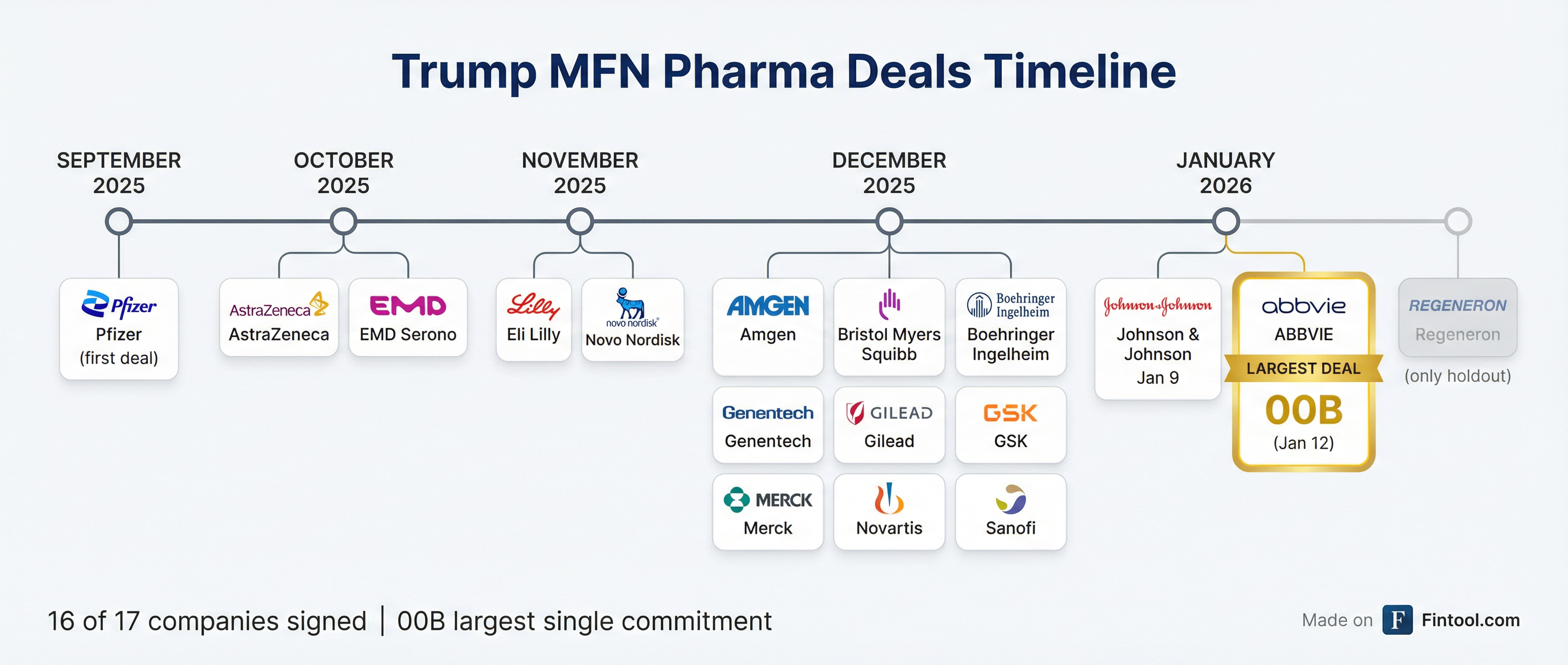
The deals have escalated in investment commitments since September:
| Company | Date | U.S. Investment Commitment |
|---|---|---|
| Pfizer | Sep 2025 | Not disclosed |
| Astrazeneca | Oct 2025 | $50B by 2030 |
| Eli Lilly | Nov 2025 | Existing expansion |
| Merck | Dec 2025 | $70B+ total |
| Johnson & Johnson | Jan 9, 2026 | $55B by 2029 |
| Abbvie | Jan 12, 2026 | $100B over 10 years |
AbbVie's Financial Position
AbbVie enters the deal from a position of strength. The North Chicago-based company generated $56.3 billion in revenue in FY 2024 and maintains EBITDA margins near 47%.
| Metric | FY 2023 | FY 2024 |
|---|---|---|
| Revenue | $54.3B | $56.3B |
| EBITDA Margin | 48.5%* | 47.4%* |
| Cash from Operations | $22.8B* | $18.8B* |
| Gross Margin | 69.2%* | 70.4%* |
*Values retrieved from S&P Global
With approximately 29,000 U.S.-based employees and products treating 16 million Americans annually, AbbVie has substantial domestic presence already.
The company trades at $220.08 per share with a market cap of approximately $389 billion, making it the largest pharmaceutical company by market capitalization to sign a Trump pricing deal.
Ask Fintool AI AgentRegeneron: The Last Holdout
With AbbVie's signature, Regeneron remains the only company among the original 17 contacted by President Trump in July 2025 that has not reached an agreement.
The administration has not publicly commented on negotiations with Regeneron, which makes Eylea (a leading treatment for macular degeneration) and Dupixent (a blockbuster immunology drug co-commercialized with Sanofi). Given that Sanofi signed a deal in December, Regeneron faces increasing pressure as the sole non-participant.
What TrumpRx Means for Consumers
The TrumpRx platform, scheduled to fully launch in early 2026, acts as a government-facilitated direct-to-consumer portal where Americans can purchase medications at discounted cash prices—bypassing traditional pharmacy benefit manager (PBM) channels.
For AbbVie products, exact discount percentages were not disclosed, but previous deals have featured reductions of 60-80% off list prices for products sold through TrumpRx. Amgen, for example, offers Repatha at $239/month through the platform versus its $573 list price.
The platform's impact remains to be seen. Critics note that cash-pay prices, even with discounts, may still exceed copays for insured patients, while supporters argue it creates an important access pathway for the uninsured and those with high-deductible plans.
What to Watch
- Regeneron's decision: Will the last holdout sign, or will it face the full brunt of threatened tariffs?
- TrumpRx launch: The platform's rollout in early 2026 will test whether consumers actually adopt direct-to-patient purchasing
- Medicaid savings: State Medicaid programs may see meaningful savings, though the interaction with existing drug rebate programs remains complex
- AbbVie execution: A $100 billion commitment over 10 years means roughly $10 billion annually—significant even for a company of AbbVie's scale
Ask Fintool AI AgentRelated Companies: Abbvie | Johnson & Johnson | Merck | Pfizer | Eli Lilly | Regeneron | Amgen